A local labor organization wanted larger hotels to help workers create unions, so they sought a zoning change to make it harder to develop smaller hotels in light manufacturing zones.



"The M1 Hotel Text Amendment adopted by City Council last December, which requires a special permit for the construction of hotels in most light manufacturing zones, was widely expected to have a chilling effect on hotel development in New York City," reports Kevin Sun.
"An analysis by the The Real Deal of Department of Buildings filings for new hotels has found that while developers are continuing to plan larger hotel projects at a rate comparable to historical levels, new plans for smaller hotels have suddenly become rare."
Less than rare, in fact—in the beginning of 2019, new hotel developments with fewer than 70 rooms were completely non-existent. On June 13, a developer broke the streak by submitting plans for "a 61-key, six-story hotel at 3294 Atlantic Avenue in East New York, Brooklyn," according to Sun.
Before the zoning change went into effect, a spate of development proposals were submitted—the fruits of which are still under construction around the city. Meanwhile development of larger hotels has continued at a steady clip, before and after the change.
According to Sun, the effect is exactly what the union behind the M1 Hotel Text Amendment, the New York Hotel and Motel Trades Council, expected.
Read the full story: Go big or go home? Why small hotel development in NYC may be a thing of the past
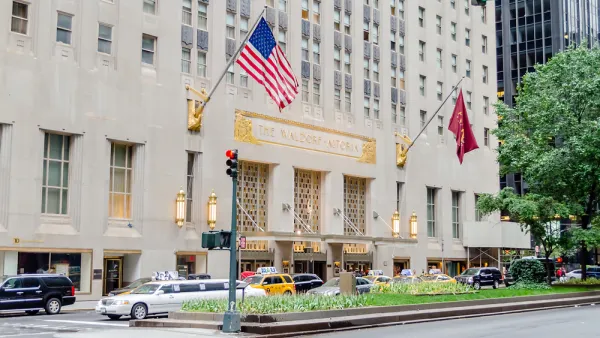
Special Permits Could Be Required for Hotel Development in New York City
Mayor Bill de Blasio is pushing ahead with a controversial approval step for hotel development, despite the warnings of city budget office staff about the long-term consequences of the move.

de Blasio Balancing Act Puts Manufacturing Jobs, Hotel Industry Interest in the Balance
The New York Times reports details about the de Blasio Administration's negotiations concerning land use regulations that will impact industrial and hotel business. With a re-election campaign looming in 2017, the story reveals a lot about the politi

One Year, Zero Conversions: New York Revamps its Hotels-to-Housing Program
The Housing Our Neighbors with Dignity Act (HONDA) was intended to convert dormant hotels into sorely needed housing. So far the law hasn’t worked as intended.

Planetizen Federal Action Tracker
A weekly monitor of how Trump’s orders and actions are impacting planners and planning in America.

California plans to bury El Niño’s downpour
If the state plays its cards right, it may be able to store a billion acre-feet of El Niño’s water in aquifers.

Desperate measures: Advocates weigh draining Lake Powell to fill Colorado River
Draining the reservoir could reduce evaporation losses by a couple hundred thousand acre-feet.

US buildings threatened, destroyed by fires set to triple by 2060
Researchers found a high fire risk for socioeconomically vulnerable neighborhoods in the American West.

LA residents may be allowed to paint their own crosswalks
Councilwoman Katy Yaroslavsky put out a motion instructing the Los Angeles Department of Public Transportation to study the feasibility of allowing volunteers to paint crosswalks.

Dallas moves to overhaul its zoning code
The city's zoning reform will allow more multi-family and mixed-use developments.

FREE Course: Walkable City 1: Why Walkability?
After describing his path towards focusing on walkability as the essence of good planning, Jeff Speck marches through his five principal reasons for making more walkable places.
Reinventing Malls: Planning Alchemy—Turning Gray Fields Into Gold
The course focuses on the opportunities and imperatives that shape reinvention of mall sites.

City of Rosemead
Rutgers University, Edward J. Bloustein School of Planning and Public Policy
One Hundred Miles
Hunter College, City University of New York (CUNY)
The Architects Foundation
University of Cincinnati Online
City of Cambridge
Montrose County
The Pocatello Development Authority