The progressive Northern California project is adapting to the times.


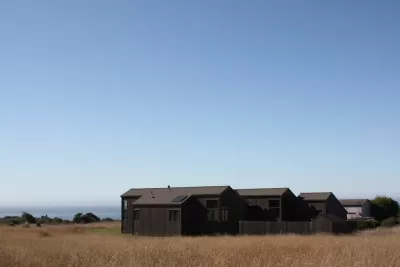
Diana Ketcham writes about the past and present of the Sea Ranch, a development on a remote stretch of Northern California coastline that started in 1964. "For an exhilarating historical moment the energies of postwar suburban development, an emerging ecology movement and Modernist architecture found a common purpose: transforming a 5,200 acre sheep ranch here into a progressive residential community, built in a way that was not only in tune with nature, but driven by nature."
In the mid-1960s, the Sea Ranch’s architectural influence was global, notes Ketcham. "And in the following decade, its particular combination of the shed roof, the window seats and ladders, the ingenious overhead spaces for outlooks and skylights as well as sleeping, would be thoroughly absorbed by the mainstream."
More recently, however, a changing world has meant aspects of the Sea Ranch have had to shift as well. Increased density, more year-round residents able to live and work in the community, and environmental concerns, such as the threat of wildfires, mean architects and planners are adapting to the area’s needs.
Ketcham traveled to the Sea Ranch and describes in more detail the features of a number of new projects as well as the construction challenges, including the use of fire-resistant building materials, removal of hazardous trees, and design updates that retain the character and architectural spirit of the original buildings.
FULL STORY: Sea Ranch, California’s Modernist Utopia, Gets an Update

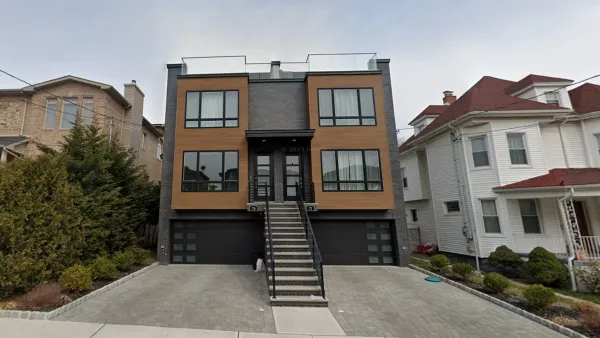
New Jersey Duplexes Elicit Mixed Reactions
Modern, two-unit residences are proliferating in northern New Jersey communities, signaling for some a boon to the housing supply and to others a loss of historic architecture.

The Mystique of the 13th Floor: Superstitions, Sustainability, and the Future of Electrical Building Design
How engineers adapt a common superstition to maximize the utility of a stigmatized space.
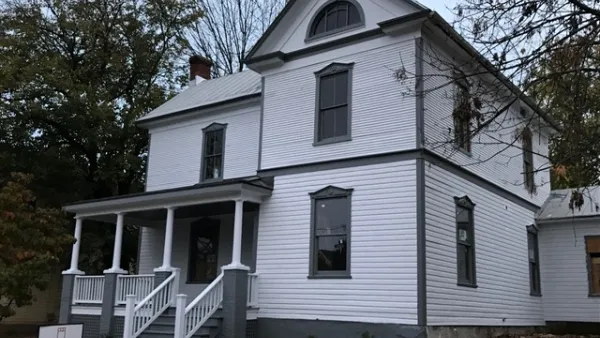
Restoring the Vacant Middle: Creating Middle Housing Through Historic Preservation
How flexible zoning in historic districts can support preservation and create affordable housing.

Planetizen Federal Action Tracker
A weekly monitor of how Trump’s orders and actions are impacting planners and planning in America.

The state-sanctioned urbicide of Austin
People don’t kill cities. Freeways do.

US to reduce Colorado River water deliveries to Mexico
A new Colorado Treaty amendment reduces Mexico’s Colorado River water allocation by 250,000 acre feet.

5 New England states march closer to 800 megawatt wind energy project
Securing federal approval for the project may be complicated under the Trump administration, which has historically been hostile towards domestic wind power.

Baltimore to break ground on $50 million Transit Priority Project
The project will bring faster bus trips, safer streets and better bike connections to Baltimore.

Airbnb launches $250 million 'last-dollar financing' housing accelerator, makes first investment in Austin
The company will put $6.4 million towards affordable housing development in Texas’ capital.

FREE Course: Walkable City 1: Why Walkability?
After describing his path towards focusing on walkability as the essence of good planning, Jeff Speck marches through his five principal reasons for making more walkable places.
Reinventing Malls: Planning Alchemy—Turning Gray Fields Into Gold
The course focuses on the opportunities and imperatives that shape reinvention of mall sites.

Eagle County Government
Harvard University Graduate School of Design
Nashville Planning Department
The Architects Foundation
University of Cincinnati Online
The Pocatello Development Authority
The Urban Renewal Agency of the City of Pocatello
Journal of the American Planning Association