Failing golf courses pose a choice for cities that can use tax dollars to turn them public or put the land to use in other ways.



A downward trend in business has lead many private golf courses to close in Illinois. The Chicago suburbs have seen a number of golf course closures, like "West of Geneva, Mill Creek Golf Club, centerpiece of a 2,100-acre subdivision, failed to open this spring. The struggling Big Run Golf Club in Lockport is applying for city water and sewer service and zoning for more than 500 homes. The Klein Creek Club in Winfield was taken over by lender Fifth Third Bank two years ago and is looking for a buyer," H. Lee Murphy writes for Crain’s Chicago.
The decline in golf isn't limited to Illinois. According to a 2019 report by the National Golf Foundation (an organization tasked with promoting and analyzing the sport) the number of rounds of golf played fell almost 5% between 2017 and 2018, though the report credits some of the decline to weather. The report does, however, admit that the country is oversupplied with golf courses, describing many of the closures as a market correction after a 20-year "building boom" in golf course construction.
As golf courses close in oversupplied parts of the country, other cities are evaluating the incentives to maintain their courses, as some argue the land used by golf courses could be put to better use. Murphy writes that subsidizing the conversion of private golf courses to public courses with taxpayer money could be a "toxic political issue."
FULL STORY: More private golf courses biting the dust

Boom in Utah Town
Growth is at a standstill in most western boomtowns, but not in well-planned, thriving South Jordan, UT. An expedited permitting process and good planning are given credit as catalysts for growth.
Land Use Reform Picks Up Momentum in Connecticut Again
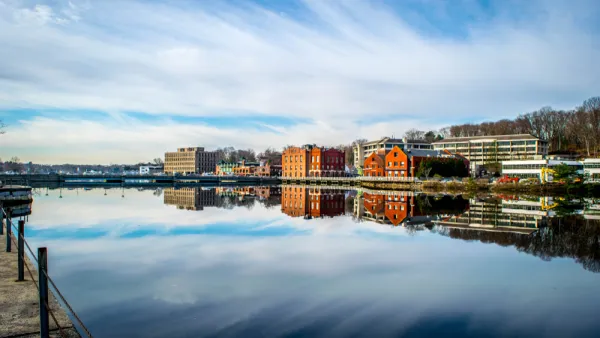
Multiple statewide land use reform proposals are up for debate in the Nutmeg State. Which, if any, will become law?

New Ideas in Urban Research 2019
Research questions and findings from Penn IUR's emerging scholars.

The state-sanctioned urbicide of Austin
People don’t kill cities. Freeways do.

US to reduce Colorado River water deliveries to Mexico
A new Colorado Treaty amendment reduces Mexico’s Colorado River water allocation by 250,000 acre feet.

New Jersey’s second-largest city bans standalone data centers
Jersey City will continue to allow co-location facilities, such as those meant for research institutions that store their own data.

Amtrak not solely to blame for New Jersey commuter rail's unreliability, report finds
A new study from the Garden State Initiative found that NJ Transit’s budget grew 20% across a 4 year period, but reliability declined significantly over the same period.

EPA erases limits on planet-warming pollution from power plants
Under Monday’s plan, power plants would still have some limits on how much mercury, arsenic and other contaminants they can emit.

Phoenix announces new on-demand transit service, more frequent RAPID buses
Both new services will launch in October, and are part of Phoenix's Project Effective Access Solutions for Easing Congestion.

FREE Course: Walkable City 1: Why Walkability?
After describing his path towards focusing on walkability as the essence of good planning, Jeff Speck marches through his five principal reasons for making more walkable places.
Reinventing Malls: Planning Alchemy—Turning Gray Fields Into Gold
The course focuses on the opportunities and imperatives that shape reinvention of mall sites.

Eagle County Government
Harvard University Graduate School of Design
Nashville Planning Department
The Architects Foundation
University of Cincinnati Online
The Pocatello Development Authority
The Urban Renewal Agency of the City of Pocatello
Journal of the American Planning Association