Minnesota is the latest state to enact fines for a law already on the books requiring slow drivers to merge right. As such laws gain popularity, it's time again to consider the sometimes counterintuitive facts of traffic safety.


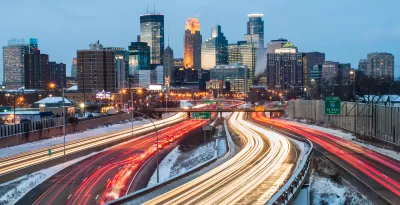
"Slower motorists in Minnesota best stick to the right lane — or face a possible fine come Aug. 1," reports Janet Moore.
The Minnesota State Legislature approved a law in May that makes it illegal for drivers to liner in the farthest left lane, also known as the passing lane or the fast lane.
While every state has a law requiring slower vehicles to move to the right lane, only about a dozen have full-fledged edicts that involve a financial penalty, according to the National Conference of State Legislatures. Fines vary across the country, from as little as $20 to more than $250.
Moore's description checks out with previous coverage of passing lane cloggers, and a trend toward increasingly punitive response to the practice, picked up by Planetizen in both 2014 and 2017. The article from 2014, for instance, digs into the complicated question of whether making room for drivers to speed in the left lane is actually safer than allowing slow drivers to clog the lane, thus force faster drivers to slow and merge.
One big remaining question for Minnesota, now that it's passed the new law, is how to enforce the standard. "The law doesn’t quantify how slow a vehicle must be traveling in the left lane in order to be cited," according to Moore. "It just states, 'a person must move out of the left-most lane to allow another vehicle to pass' when practical."
Read the full story: New Minnesota law to fine slower drivers in the left lane

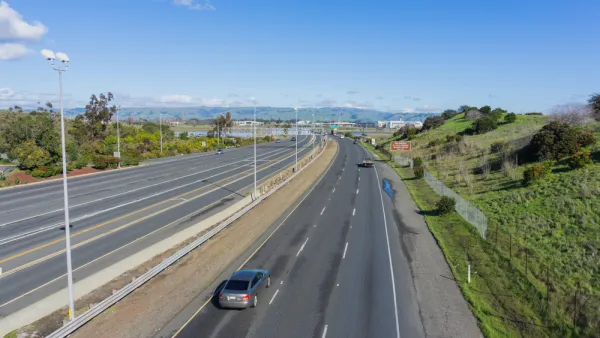
More States Cracking Down on Slow Drivers in the Passing Lane
Some people just can't help but help themselves to the fast lane.
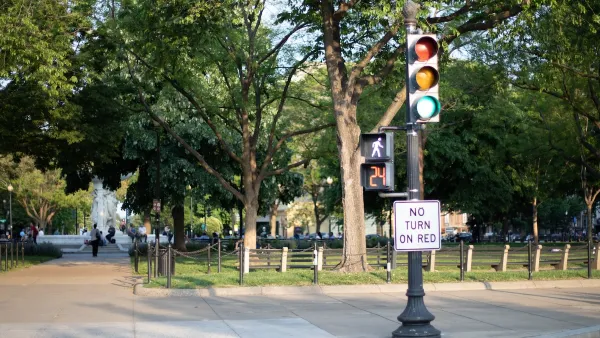
Why Right Turns on Red Are Bad for Traffic Safety
The practice creates dangerous conditions for pedestrians, cyclists, and anyone crossing in front of turning vehicles.
Jaywalking Up for Decriminalization in Denver
Like other city and state leaders, Denver’s city council will weigh a proposal to decriminalize jaywalking in an effort to reduce interactions with law enforcement and improve transportation equity.

Planetizen Federal Action Tracker
A weekly monitor of how Trump’s orders and actions are impacting planners and planning in America.

The state-sanctioned urbicide of Austin
People don’t kill cities. Freeways do.

US to reduce Colorado River water deliveries to Mexico
A new Colorado Treaty amendment reduces Mexico’s Colorado River water allocation by 250,000 acre feet.

Nation's most wind-powered state turns to coal as data centers increase energy demand
For the first time in decades, Iowa has increased its generation of coal power.

NYC cools commuters with city's first rain garden above a bus stop
New York City officials say the plants in the rain garden can absorb 16 gallons of rainwater during heavy storms.

Brightline West’s future may rely on $6 billion federal loan
The company has until Nov. 2 to make a $400 million equity investment into its proposed high-speed rail line.

FREE Course: Walkable City 1: Why Walkability?
After describing his path towards focusing on walkability as the essence of good planning, Jeff Speck marches through his five principal reasons for making more walkable places.
Reinventing Malls: Planning Alchemy—Turning Gray Fields Into Gold
The course focuses on the opportunities and imperatives that shape reinvention of mall sites.

Greater Baltimore Committee
Eagle County Government
Harvard University Graduate School of Design
The Architects Foundation
University of Cincinnati Online
The Pocatello Development Authority
The Urban Renewal Agency of the City of Pocatello
Journal of the American Planning Association