Before the recession, bumper Arizona home sales led to predictions that the state's two largest cities might merge by 2040. The downturn stalled those forecasts, but now they're being revisited.


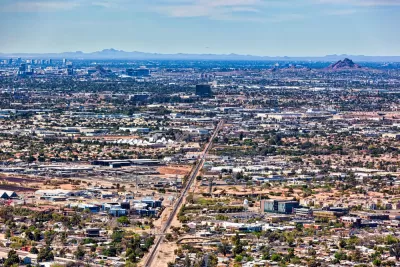
"New census data shows Maricopa County grew faster than any other county in the nation for the second year in a row," Catherine Reagor writes. "Population projections for metro Phoenix could mean it will join with Tucson somewhere in Pinal County in about two decades, if the numbers are right and the Valley's growth engine doesn't stall again."
Pre-recession, rampant housing speculation led to inflated home sales numbers, convincing some urban researchers that the Phoenix metropolitan area might join with that of Tucson to become a "super-sized" megaregion.
But despite the fact that previous estimates were overly high, "the state's population growth numbers aren't as dependent on housing, and tallies during the crash have been revised."
"Arizona's population, now at almost 7.2 million, is expected to grow 1.6 percent in 2018 and 1.5 percent 2019, adding a bit more than 100,000 residents both years," Reagor writes. "Most of Arizona's residents live in metro Phoenix and Tucson."
Read the full story: Could population growth propel Phoenix and Tucson to merge?

The 'Mountain Lion' Cities Rising in the U.S. West
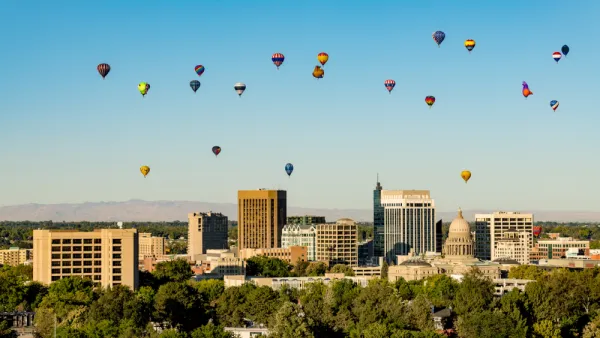
An economist identifies the growth in nine U.S. cities—scattered from Utah to Texas, Arizona, Washington, and Idaho—as similar to the economic power generated in parts of Asia.
Phoenix and Tucson create emergency water reserve, anticipating Colorado River cuts
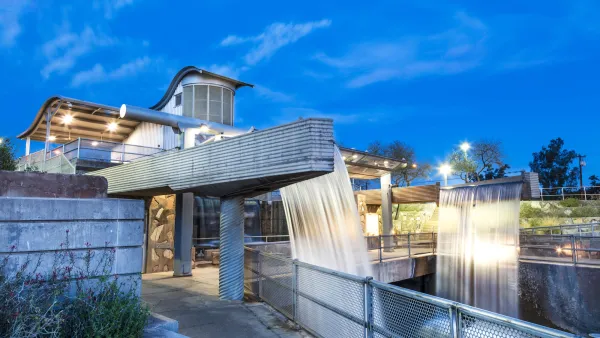
The Secure Water Arizona Program will allow participating cities to use a reserve of water or make agreements to buy it from other jurisdictions.

The 15 Fastest-Growing Cities in the US
The U.S. Census Bureau released new 2023 population estimates on May 16 showing a slew of data for cities of all sizes and regions. Do you know the population change last year for the 15 largest cities in your state?

Planetizen Federal Action Tracker
A weekly monitor of how Trump’s orders and actions are impacting planners and planning in America.

California plans to bury El Niño’s downpour
If the state plays its cards right, it may be able to store a billion acre-feet of El Niño’s water in aquifers.

Chicago breaks ground on $3 billion megadevelopment
The new neighborhood, titled Foundry Park, will one day host 3,700 residences.

Satanic Place Names
From streams and lakes to valleys and canyons, I mapped more than 1,000 places named after the Devil.

California High-Speed Rail Authority CEO resigns after $600,000 scandal
Under Ian Choudri, the authority used taxpayer dollars to fund first class flights and trips to nightclubs.

Want to study the Missouri River? Soon, you may need unanimous approval from 10 states
Legislation would require 10 governors’ permission to study or build projects moving water outside the basin.

FREE Course: Walkable City 1: Why Walkability?
After describing his path towards focusing on walkability as the essence of good planning, Jeff Speck marches through his five principal reasons for making more walkable places.
Reinventing Malls: Planning Alchemy—Turning Gray Fields Into Gold
The course focuses on the opportunities and imperatives that shape reinvention of mall sites.

City of Rosemead
Rutgers University, Edward J. Bloustein School of Planning and Public Policy
One Hundred Miles
Hunter College, City University of New York (CUNY)
The Architects Foundation
University of Cincinnati Online
City of Cambridge
Montrose County
The Pocatello Development Authority