When it comes to identifying and repairing the underlying causes of gentrification, there's plenty of blame to go around.



Joe Cortright lists, from A to Z, everything that has ever been blamed for gentrification. Cortright makes it obvious from the beginning that this list is intended as satire more than as an authoritative list on the subject:
It may be cathartic to point the finger of blame at someone or something else, but as this list shows, the blame game sheds precious little light on what’s really causing gentrification, and none at all on what we might do to minimize its negative effects. Any discernible symptom of change in a neighborhood is likely to change the way it is perceived by residents and others.
So the list starts with artists before stopping by climate change and giving a shout out to Richard Florida. ("[L]ast year, a Washington DC lawyer sued the city government for following Florida’s ideas, which he claimed led to gentrification and displacement.)
If you're wondering how Cortright found something to blame starting with those most troublesome Scrabble letters, consider a little lettersmithing with LGBTQ, vouchers, and GenX. Zoning was probably an easier prediction to make for inclusion on the list.
The article also includes a sincere appeal for understanding and action on the real cause of gentrification, according to Cortright: a shortage of cities. "Now that we’ve rediscovered the long-established virtues of urban living, we don’t have enough great urban neighborhoods, or enough housing in the few great urban neighborhoods that we have, to accomodate all those who would like to live there. This shortage coupled with growing demand is running head on into land use planning systems that make it impossible to build more of the kind of neighborhoods more and more people value."
Read the full story: Everything that causes gentrification, from A to Z
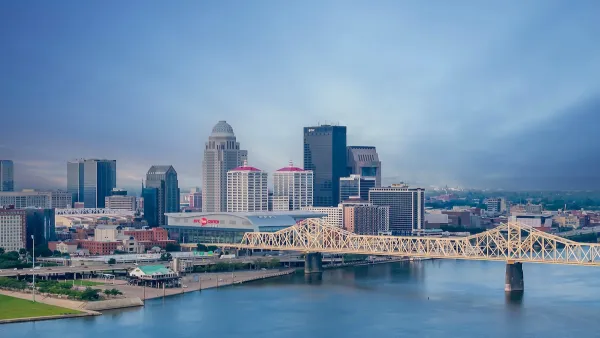
Louisville Launches ‘Anti-Displacement Tool’
After a years-long, tenant-led effort, Louisville will use a new tool to analyze whether a proposed housing development can meet a neighborhood’s housing needs and income levels. If it doesn’t, the city won’t subsidize it.

Inequality Grows in Western Zoom Towns
As demand for housing grows, small Western towns are experiencing skyrocketing housing costs and rising displacement.
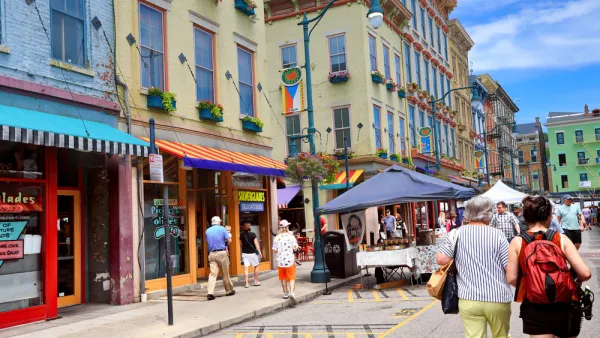
Black Residents Leaving Cincinnati's Fast Growing Urban Area
The housing market in the neighborhood of Over-the-Rhine is a 'segregation machine.'

Planetizen Federal Action Tracker
A weekly monitor of how Trump’s orders and actions are impacting planners and planning in America.

California plans to bury El Niño’s downpour
If the state plays its cards right, it may be able to store a billion acre-feet of El Niño’s water in aquifers.

Desperate measures: Advocates weigh draining Lake Powell to fill Colorado River
Draining the reservoir could reduce evaporation losses by a couple hundred thousand acre-feet.

Housing is the top priority of Seattle’s sole new councilmember
Jenks campaigned on building 1,000 new units of affordable housing.

New tax cuts may slash $1.5 billion in funding for Miami transit, public parks
Amendment 3 will save Miami-Dade homeowners $2,700 in 2028.

Arizona, Wisconsin, Pennsylvania hope to finally advance climate goals post-midterms
The three states have spent years under Republican or divided control.

FREE Course: Walkable City 1: Why Walkability?
After describing his path towards focusing on walkability as the essence of good planning, Jeff Speck marches through his five principal reasons for making more walkable places.
Reinventing Malls: Planning Alchemy—Turning Gray Fields Into Gold
The course focuses on the opportunities and imperatives that shape reinvention of mall sites.


City of Rosemead
Rutgers University, Edward J. Bloustein School of Planning and Public Policy
One Hundred Miles
University of Michigan School for Environment and Sustainability (SEAS)
Hunter College, City University of New York (CUNY)
The Architects Foundation
City of Cambridge
Montrose County
The Pocatello Development Authority