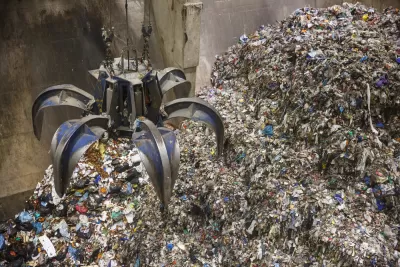
China's decision to halt imports of most recyclables from the United States has caused turmoil. With few markets for their recyclables, Philadelphia is sending half of them to a waste-to-energy incinerator in Chester not designed to burn them.


[Updated March 5, 2019]
The problem started last May when China abruptly halted accepting recyclables from U.S. markets unless they were free of contamination, a standard few recyclers can meet. Without the China market, municipalities have had to scramble to find alternative outlets.
"There isn’t much of a domestic market for US recyclables – materials such as steel or high-density plastics can be sold on but much of the rest holds little more value than rubbish – meaning that local authorities are hurling it into landfills or burning it in huge incinerators," writes Oliver Milman, an environment reporter for The Guardian.
In Philadelphia, half of the city's recyclables have been sent to the Covanta Delaware Valley Resource Recovery Facility, a waste-to-energy facility, also known as an incinerator, located in Chester, a largely African American community of 34,000 residents, and what many environmentalists would call a classic case of environmental injustice.
Some experts worry that burning plastic recycling will create a new fog of dioxins that will worsen an already alarming health situation in Chester.
Nearly four in 10 children in the city have asthma, while the rate of ovarian cancer is 64% higher than the rest of Pennsylvania and lung cancer rates are 24% higher, according to state health statistics.
The facility, which generates up to 87 megawatts of electricity, is the fourth largest waste-to-energy facility in the nation. According to the U.S. Energy Information Administration, in 2015, there were "71 waste-to-energy (WTE) plants that generated electricity in 20 U.S. states, with a total generating capacity of 2.3 gigawatts."
According to Waste360, about half of the waste-to-energy facilities are privately owned while the rest are publicly-owned. The bulk of the privately owned facilities, as well as many of the public facilities, are operated either by Covanta Energy or Wheelabrator Technologies.
Covanta "argues that incineration is a better option than simply heaping plastic and cardboard in landfills," adds Milman.
“In terms of greenhouse gases, it’s better sending recyclables to an energy recovery facility because of the methane that comes from a landfill,” said Paul Gilman, Covanta’s chief sustainability officer. “Fingers crossed Philadelphia can get their recycling program going again because these facilities aren’t designed for recyclables, they are designed for solid waste.”
Frank Kummer, an environment reporter for The [Philadelphi] Inquirer, exposed the city's diversion of recyclables to Covanta on Jan. 29. The level of contamination in its recyclables was the determining factor why it lost access to the China export market.
Philadelphia’s contamination rate is anywhere from 15 percent to 20 percent. That meant its previous contractor for recycling, Republic Services, had to find other markets for processing or begin disposing of portions of contaminated loads in other ways, such as in landfills or by incineration.
[Update: Covanta, the company that owns and operates the waste-to-energy facility in Chester, Penn., refutes many of the claims made in the source article. They strongly assert that they run the facility in "a manner that is protective of human health and the environment." Readers are encouraged to click on "A Message From Covanta."
Related in Planetizen:
-
Waste-to-Energy Plants, or Incinerators, Make Comeback, January 13, 2015
-
Can America Salvage Its Waste-to-Energy Opportunities? July 29, 2013
Read the full story: Moment of reckoning': US cities burn recyclables after China bans imports

First New U.S. Waste-to-Energy Plant in 20 Years to Open in Florida
Waste-to-energy plants, or incinerators, are classified as renewable power plants by the EPA. A controversial Baltimore plant is under construction as well. More common in Europe, they may be catching on stateside due to low recycling rates.
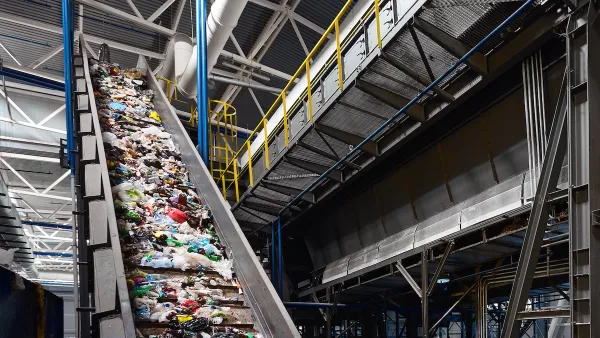
Recycling’s Real Impact: Challenges, Misconceptions, and the Path Forward
Recycling offers modest environmental benefits but faces significant challenges in effectiveness and scalability, requiring systemic changes like reducing plastic production and exploring alternative waste reduction strategies.
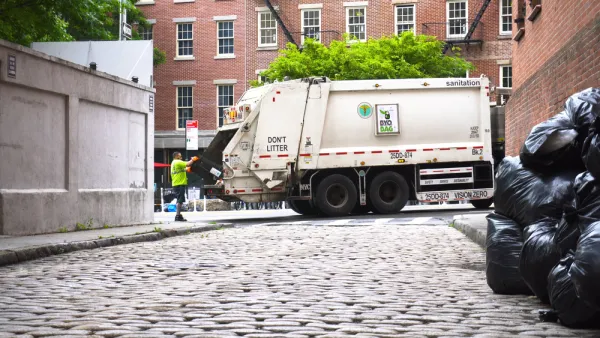
Waste Management Best Practices (And Their Impact on Urban Planning)
Urban planners can play a role in ensuring the best possible waste management practices are implemented whenever possible.

Planetizen Federal Action Tracker
A weekly monitor of how Trump’s orders and actions are impacting planners and planning in America.

Colorado’s Largest Data Center Could Rise Next to Homes — Without a Public Hearing
The proposed campus would consume 11 times the power of Denver International Airport; as it has across the country, opposition mounts.

US to reduce Colorado River water deliveries to Mexico
A new Colorado Treaty amendment reduces Mexico’s Colorado River water allocation by 250,000 acre feet.

Judges permit Denver to divert 77,000 acre feet from the Colorado River for reservoir expansion
Overuse and climate change have caused the Colorado River’s water levels to plummet.

Amtrak, CN end decades-long dispute with eight-year agreement
The new operating agreement establishes an updated framework for the companies to work together, including processes to resolve disputes.
Raised interest rates may kill financially vulnerable construction projects
The chief economist at ConstructConnect warns that if construction project owners are negatively impacted by the raised rates, it could result in delayed payments to contractors.

FREE Course: Walkable City 1: Why Walkability?
After describing his path towards focusing on walkability as the essence of good planning, Jeff Speck marches through his five principal reasons for making more walkable places.
Reinventing Malls: Planning Alchemy—Turning Gray Fields Into Gold
The course focuses on the opportunities and imperatives that shape reinvention of mall sites.

KFH Group Inc.
Greater Baltimore Committee
Eagle County Government
The Architects Foundation
University of Cincinnati Online
The Pocatello Development Authority
The Urban Renewal Agency of the City of Pocatello