Sandpoint, Idaho removed minimum parking requirements a decade ago. The city's director of planning describes what happened since.


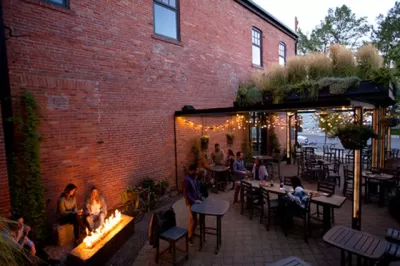
Aaron Qualls is the Director of Planning & Community Development for the city of Sandpoint, Idaho. This essay about the benefits Sandpoint has seen in the ten years since it removed all minimum parking requirements in its downtown was originally published on Strong Towns, and Planetizen is republishing it with permission.
In 2009, as buildings were being bulldozed for surface parking to meet minimum standards in Historic Downtown Sandpoint, Idaho, city leadership took bold action. Downtown area off-street parking requirements were completely eliminated. The decision was preceded by heated debate and was not unanimous. Now, ten years later, what was the result?
Since that contentious decision by the Sandpoint City Council, millions have been invested downtown—projects that would not have been feasible, but for the elimination of parking requirements. Several jobs, building renovations, and expansions by local businesses were essentially made possible by adding a single line of code.
Arguably, no city ordinance is more underestimated for its long term impacts than off-street parking requirements. Many cities are now starting to recognize the negative effects parking minimums can have on housing affordability, historic preservation, the environment, small businesses, walkability and municipal budgets. In Sandpoint, some of these effects were not hypothetical but happening right before our eyes. The 2009 approval of a 60,000 square foot, 3-story bank headquarters in the heart of downtown ended up requiring 218 parking spaces. Because only 110 were provided (which was plenty), the bank was subjected to in-lieu parking fees totaling over $700,000. Well, being bankers, they soon realized the cheaper alternative was to buy up adjacent properties and demolish the buildings for surface lots. Consequently, small businesses were evicted and the much-beloved downtown historic development pattern was diminished.
This experience caused city leaders to pause, reflect, and take action to ensure this would not happen again. Now we are realizing the dividends paid over time. That single line of code abolishing off-street parking minimums downtown has enabled four distinct projects that would have been otherwise impractical. Each of these projects has enriched Sandpoint by contributing vibrancy, economic productivity and an increase in tax base.
Four Success Stories Made Possible by Parking Reform
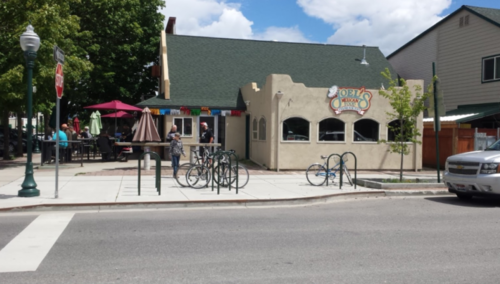
The first was an expansion of a popular taqueria. A modest increase of seating area prior to the code change would have required 7 additional parking spaces, or $70,000 in fees. That’s just too many tacos. For a small local restaurant (one which began as a food truck), this would have ended the project before it began. Instead, the venture ushered in other business expansions and downtown improvements.
The local winery soon after not only expanded but the owners were able to transform "…a defunct former furniture store into a vibrant mixed-use showcase blend of old and new materials and design ... bringing renewed prominence and economic energy to this corner of Sandpoint’s downtown," according to Idaho Smart Growth, which bestowed a Grow Smart Award for the renovation in 2015. Had there been off-street parking requirements in place, it never could have happened.


The same is true for Sandpoint’s premier music venue downtown which now brings in world renowned musicians consistently and is attended by music lovers regularly—some of whom travel considerable distances from Washington, Montana and even Canada.
More recently, a small local tech startup started to feel extreme growing pains once their platform became recognized for its innovation. Rather than relocating, they renovated an old, dilapidated steel frame building downtown that was originally constructed to house lumber supplies. It is now a modern tech campus, which houses close to 100 full time employees. Despite having a sizable surface parking lot, the owners would have needed to roughly double the amount of parking (or pay exorbitant fees). This last example alone, compared to tax assessor data from the year before, resulted in an assessed value increase of over $2 million. Beyond an increase in property tax, the centrally located tech jobs have had many other positive rippling effects through Sandpoint’s economy.


One. Line. Of. Code.
At this point you’re probably wondering about the fears of those who opposed the rule change. “So, is there now a parking problem?” If you believe that in a downtown area you should not have to walk a couple of blocks at certain times, then yes, there is a problem. But is that really a problem or an indicator of success?
A vibrant downtown is where people go to see and be seen by others. If Downtown Sandpoint were vacant and subsequently full of empty parking spaces, why would anyone go there at all? In this sense, the only thing worse than having a parking problem is not ever having a parking problem.
Now, this is not to say the city should ignore the issue of parking altogether. It should also be pointed out that not every new development elects not to provide parking. There are other solutions beyond mandated parking minimums, however, which won’t sack a downtown or diminish economic productivity.
A Positive Precedent

Towards the close of 2018, Sandpoint expanded the de-regulated area and completely overhauled off-street parking requirements throughout the rest of the city—substantially reducing minimum requirements. It was much easier this time around. The reason? The City was able to see the millions invested downtown as a result of that bold action taken in 2009. Since that time (even during the recession), Downtown Sandpoint has seen the local winery building expand, a new music venue open, a beloved restaurant expand, and a local high tech startup enjoy relocation and growth to nearly 100 employees right in the middle of it all. Not one of these investments would have been possible under the old paradigm of mandated parking minimums. Was it easy? No. Is there more work to be done? Likely, yes. Has it been worth it so far? Absolutely.
Aaron Qualls is the Planning and Community Development Director for the City of Sandpoint, Idaho.
Photos courtesy of Winterhawk Construction, Kochava, Belwood 301, The Hive, Joel’s Mexican
Read the full story: The Hive music venue after expansion.


Berkeley to Remove Parking Requirements for Residential Properties
Berkeley is the second city in Northern California to approve landmark zoning reforms so far in 2021.
Statewide Zoning Changes Adopted in Oregon to Limit Parking, Add Missing Middle
The state of Oregon made planning history in 2019 by adopting House Bill 2001, paving the way for the state to preempt local exclusionary zoning laws. Now, over a year later, the state land use board has decided how to implement that goal.
Minimum Parking Requirements Lifted to Support Outdoor Dining in Connecticut
Connecticut Governor Ned Lamont included an historic measure in a May 10 executive order: statewide suspension of parking minimums to facilitate outdoor activities.

Planetizen Federal Action Tracker
A weekly monitor of how Trump’s orders and actions are impacting planners and planning in America.

Northwest rail fans eager for Sept. 30 debut of Amtrak’s Airo fleet
Get ready for that new train smell and more seats. But they won’t go faster or run more frequently on the Cascades route in Washington and Oregon.
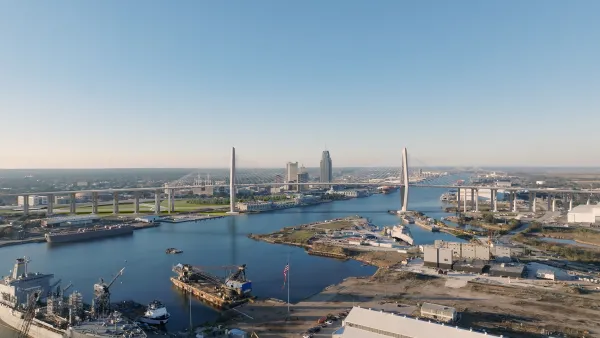
Alabama scores up to $2.5 billion federal loan for largest infrastructure project in state’s history
The Mobile River Bridge and Bayway Project aims to ease congestion at Alabama’s worst bottleneck.

Novel study finds extreme state-by-state disparity in housing construction timelines
The first comprehensive working paper on U.S. construction timelines also found that the permitting process for multi-family projects has slowed nationwide.

California may destroy its beaches trying to save homes from El Niño
Boulders and seawalls can protect homes from waves, but ultimately destroy sandy beaches.

California high-speed rail accomplishes only one legislative goal in 2026
The majority of the agency's failed pitches were never developed into written proposals.

FREE Course: Walkable City 1: Why Walkability?
After describing his path towards focusing on walkability as the essence of good planning, Jeff Speck marches through his five principal reasons for making more walkable places.
Reinventing Malls: Planning Alchemy—Turning Gray Fields Into Gold
The course focuses on the opportunities and imperatives that shape reinvention of mall sites.

City of Thousand Oaks
City of Wisconsin Rapids
Harvard University Graduate School of Design
The Architects Foundation
University of Cincinnati Online
Northern Illinois Transit Authority (NITA)
The Pocatello Development Authority
The Urban Renewal Agency of the City of Pocatello