Now that Seattle has proven they don't need the new Highway 99 tunnel that will replace the Alaskan Way Viaduct, will enough people use it in the future to cover the costs of construction, operation, and maintenance?


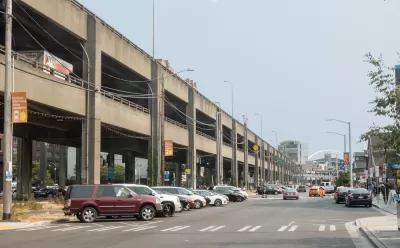
"The Washington State Department of Transportation (WSDOT) is spending $4.4 million begging you to drive under Downtown Seattle," reports Ryan Packer.
WSDOT might have reason to worry that commuters won't use the new Highway 99 tunnel that went $223 million over budget. Commuters managed without the Alaskan Way Viaduct or the yet-to-be-opened tunnel for most of this month.
In response, the WSDOT has launched a marketing campaign, "with expensive TV spots and billboards wants to ensure that the new tunnel is full of motorists when it opens."
Still, some of the WSDOT's interest in the success of the tunnel's success is connected to the tolling that will help finance the project. "WSDOT’s financing plan (even before the overruns climbed to $223 million with no sign of stopping) relies on $200 million in tolling profits," according to Packer. "That tolling largesse is extracted from more than $1 billion in tolls projected over the next 25 years, due to considerable tolling overhead and maintenance and financing costs."
FULL STORY: It’s a Thing that WSDOT Is Spending $4.4 Million Begging People to Drive

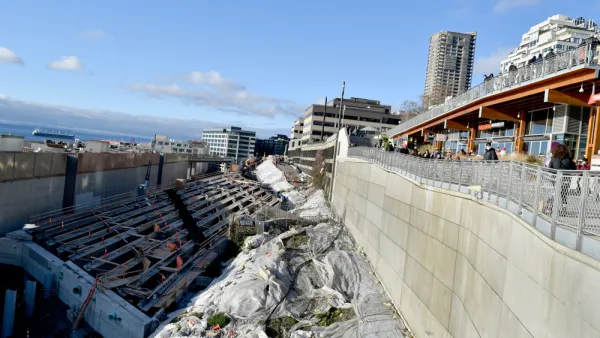
A Permanent Decline in Revenue Forecasted for the Tunnel Bertha Built in Seattle
Public transit isn't the only mode struggling to attract the expected number of users in 2022. State Route 99 in Downtown Seattle is also failing to live up to expectations and struggling to make ends meet.
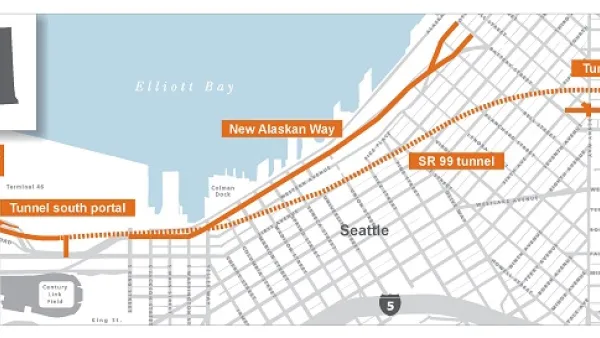
Seattle's Most Dramatic Traffic Reduction Will Occur Next Month
There will be no road closures, no traffic bans, no loss of parking, and no new transit lines opening. Call it the "tolling effect" on Nov. 9 when motorists have to pay to drive through the two-mile State Route 99 tunnel that opened last February.
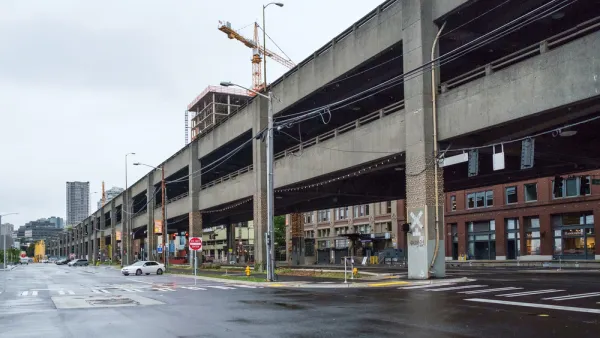
Another, Final(?) Delay for Alaskan Way Viaduct Replacement
The Washington Department of Transportation announced that Seattle's Alaskan Way Viaduct will close permanently in January 2019, with service switching over the tunnel Bertha built. The previous plan expected the switch to occur in the Fall.

Planetizen Federal Action Tracker
A weekly monitor of how Trump’s orders and actions are impacting planners and planning in America.

The state-sanctioned urbicide of Austin
People don’t kill cities. Freeways do.

US to reduce Colorado River water deliveries to Mexico
A new Colorado Treaty amendment reduces Mexico’s Colorado River water allocation by 250,000 acre feet.

5 New England states march closer to 800 megawatt wind energy project
Securing federal approval for the project may be complicated under the Trump administration, which has historically been hostile towards domestic wind power.

Baltimore to break ground on $50 million Transit Priority Project
The project will bring faster bus trips, safer streets and better bike connections to Baltimore.

Airbnb launches $250 million 'last-dollar financing' housing accelerator, makes first investment in Austin
The company will put $6.4 million towards affordable housing development in Texas’ capital.

FREE Course: Walkable City 1: Why Walkability?
After describing his path towards focusing on walkability as the essence of good planning, Jeff Speck marches through his five principal reasons for making more walkable places.
Reinventing Malls: Planning Alchemy—Turning Gray Fields Into Gold
The course focuses on the opportunities and imperatives that shape reinvention of mall sites.

Eagle County Government
Harvard University Graduate School of Design
Nashville Planning Department
The Architects Foundation
University of Cincinnati Online
The Pocatello Development Authority
The Urban Renewal Agency of the City of Pocatello
Journal of the American Planning Association