Markets for residential property income of East Asia's most expensive cities are slowing down. The U.S.-China trade war is one factor, along with local controls and a mainland Chinese economy applying the brakes.


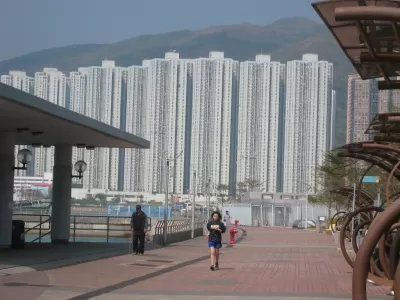
A piece in the Vancouver Sun looks at slumping property markets in several cities across the Pacific. "While each city in the region has its own distinct characteristics, there are a few common denominators: rising borrowing costs, increased government regulation and volatile stock markets. There's also dwindling demand from a force so powerful it pushed prices to a record in many places — Chinese buyers."
In Hong Kong, "after an almost 15-year bull run that made Hong Kong notorious for having the world's least affordable property market, home prices have taken a battering." Some experts attribute the slump to a slowing mainland Chinese economy, as well as the "simmering trade war" between China and the United States.
In Singapore, "government policies are mainly to blame" for falling prices, with the luxury market particularly hard hit.
In Sydney, "while prices are still about 60 per cent higher than they were in 2012, meaning few existing homeowners are actually underwater, [...] forecasts of a further 10 per cent fall [are] making nervous investors think twice about extraneous spending."
And in Shanghai and Beijing, values are down about 5 percent from their peak, prompting developer giveaways. "One developer in September was giving away a BMW Series 3 or X1 to anyone wishing to purchase a three-bedroom unit or townhouse at its project in Shanghai."
See also: San Francisco Home Construction Expected to Slump This Year
FULL STORY: It’s not just Vancouver: Property market slump goes global, jolting cities from Hong Kong to Sydney

China's Drive Toward Carbon Neutrality
By 2030, China will have 220 cities containing a population of 1 million or more, 24 of which will be megacities. The boom China is expected to go through, 'boggles the imagination of North Americans and Europeans.'
6 International Models of Urban Revitalization
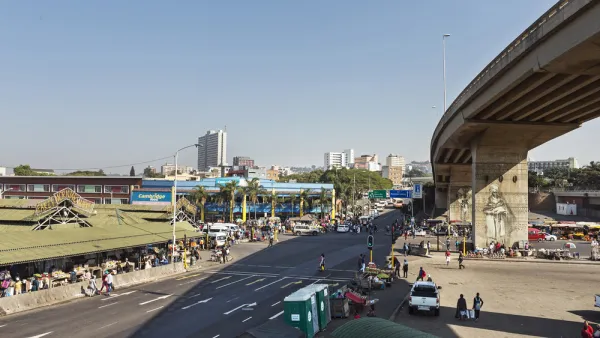
The New York Times recently published an article exploring six cities from around the world reinventing themselves for the 21st century: Paris, Sydney, Medellin, Lisbon, Singapore, and Durban.
The Singapore Exception
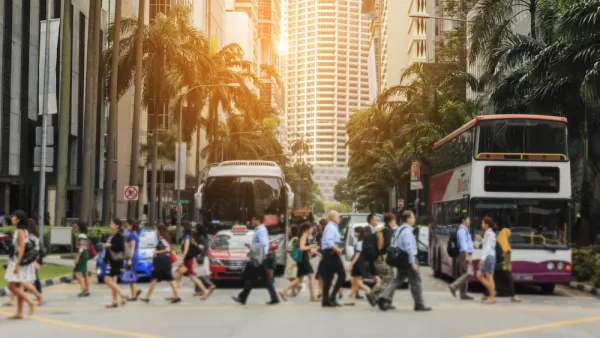
Singapore, Taiwan, and Hong Kong were credited early in the pandemic with having successfully contained the coronavirus without resorting to lockdowns. However, Singapore lost its standing in that elite group. Crowding vs. density may explain why.

Planetizen Federal Action Tracker
A weekly monitor of how Trump’s orders and actions are impacting planners and planning in America.

The state-sanctioned urbicide of Austin
People don’t kill cities. Freeways do.

US to reduce Colorado River water deliveries to Mexico
A new Colorado Treaty amendment reduces Mexico’s Colorado River water allocation by 250,000 acre feet.

Mamdani overhauls NYC's Vision Zero plan with 100 new policy goals
The overhaul aims to reduce traffic deaths and make streets safer for pedestrians, cyclists and drivers through lower speed limits, new safety infrastructure and more.

Amtrak not solely to blame for New Jersey commuter rail's unreliability, report finds
A new study from the Garden State Initiative found that NJ Transit’s budget grew 20% across a 4 year period, but reliability declined significantly over the same period.

EPA erases limits on planet-warming pollution from power plants
Under Monday’s plan, power plants would still have some limits on how much mercury, arsenic and other contaminants they can emit.

FREE Course: Walkable City 1: Why Walkability?
After describing his path towards focusing on walkability as the essence of good planning, Jeff Speck marches through his five principal reasons for making more walkable places.
Reinventing Malls: Planning Alchemy—Turning Gray Fields Into Gold
The course focuses on the opportunities and imperatives that shape reinvention of mall sites.

Eagle County Government
Harvard University Graduate School of Design
Nashville Planning Department
The Architects Foundation
University of Cincinnati Online
The Pocatello Development Authority
The Urban Renewal Agency of the City of Pocatello
Journal of the American Planning Association