Linking up the last part of the Grand Rounds trail would create a continuous pedestrian and biking loop around the city.


A newly proposed master plan for Minneapolis includes details for a five-mile link that would close the gap in the city’s Grand Rounds trail, reports Jessica Lee. If the last leg is completed, the route would extend the now 50-mile trail and provide a continuous loop around the city.
Lee says that city officials by 2009 had made five unsuccessful attempts to build the extension. This latest effort is part of the East of the River Park Master Plan and would connect trails in the southeast and northeast of the city.
Stakeholders generally agree about what should happen on the north and south ends of the proposed extension. The middle section, however, would include land owned by the University of Minnesota, which is not fully on board with the plan. The route would also traverse a BNSF Railway rail yard and require the construction of bridges, a costly prospect, notes Lee.
The city’s park and recreation board will vote on the master plan in February. If approved, it will continue on to the Metropolitan Council, the Minneapolis regional planning organization, which oversees funding for the trail.
Read the full story: Momentum building to fill in Grand Rounds’ missing link
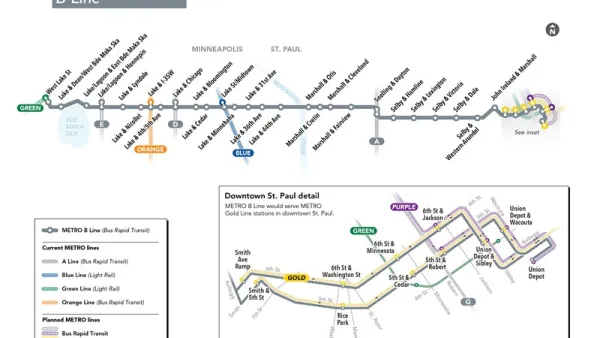
New Bus Rapid Transit Route Breaks Ground in the Twin Cities
The Twin Cities are on a mission to become the bus rapid transit capital of the United States. The latest improvement to advance that ambition broke ground earlier this week.

Minneapolis LRT Facing Delays, Cost Increases
Construction on the Kenilworth Tunnel has been plagued by problems and threatens the foundation of a nearby condo complex.
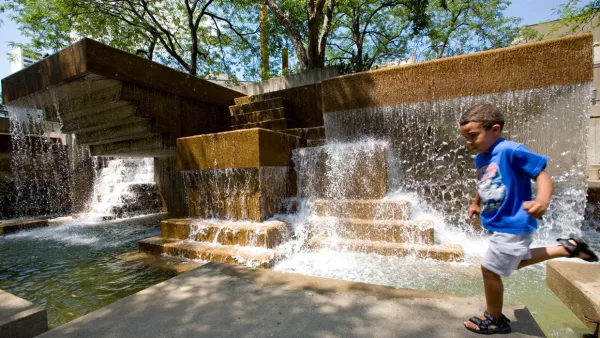
Twin Cities Climate Vulnerability: Extreme Heat
State climatologists are highly confident that heat waves are likely to trend upwards in future summers in Minnesota. To address extreme heat, researchers are identifying the factors that exacerbate extreme heat.

Planetizen Federal Action Tracker
A weekly monitor of how Trump’s orders and actions are impacting planners and planning in America.

California plans to bury El Niño’s downpour
If the state plays its cards right, it may be able to store a billion acre-feet of El Niño’s water in aquifers.

Desperate measures: Advocates weigh draining Lake Powell to fill Colorado River
Draining the reservoir could reduce evaporation losses by a couple hundred thousand acre-feet.

Post election, Texas is no longer Musk’s 'AI oasis'
Elon Musk dolled out $446 million on the 2026 midterms, the most ever spent by a non-canidate.

Chicago voters approve permanent festival grounds, penalty for vacant property owners
Currently, major summer and fall festivals take over public parks for weeks at a time, drawing criticism from nearby residents

NYC votes to cut outdoor dining red tape, speed up permitting
New York City also voted to allow the Department of Transportation to begin work on urgent projects before notifying elected officials.

FREE Course: Walkable City 1: Why Walkability?
After describing his path towards focusing on walkability as the essence of good planning, Jeff Speck marches through his five principal reasons for making more walkable places.
Reinventing Malls: Planning Alchemy—Turning Gray Fields Into Gold
The course focuses on the opportunities and imperatives that shape reinvention of mall sites.


City of Rosemead
Rutgers University, Edward J. Bloustein School of Planning and Public Policy
One Hundred Miles
Hunter College, City University of New York (CUNY)
The Architects Foundation
University of Cincinnati Online
City of Cambridge
Montrose County
The Pocatello Development Authority