American suburbs are growing, and understanding the evolution of suburban sprawl is a useful guide for the future.


[Updated 11/19/2018] In a piece written for his new book, “The Urban Fix: Resilient Cities in the War against Climate Change, Heat Islands and Overpopulation,” Doug Kelbaugh reflects on the history of suburban sprawl and the challenges its continued growth brings.
Kelbaugh isn’t a fan of suburbs — he refers to suburbia as a virus — and he draws from the writings of various academics and journalists to look back at the spread of modern suburbs in the United States, starting after World War II. Suburbs were not only heavily subsidized notions of the American Dream, says Kelbaugh; they were also an attack on nature. “It’s tragic that America not only smeared the suburban compromise of town and country across its 50 states, but it also exported it a world only too happy to embrace the seemingly happy lifestyle they’d seen in the movies and on TV,” he laments.
He continues through the many problems with suburbs. They are unsustainable by encouraging auto dependence, low density, big houses, and environmentally unfriendly lawns. The architecture is soulless. The parking lots are expansive. The intersections are too big. “This is the land of big asphalt, which absorbs solar radiation and creates heat islands even in low-density suburbia,” Kelbaugh notes.
But while cities offer more of what millennials want, they still are moving to the suburbs. Kelbaugh, however, thinks millennials will drive the transformation of suburbs with their desire for more sustainable communities:
Drone deliveries, ride-sharing, car-sharing, AVs that park themselves and connect to house lights and thermostats will be commonplace, as will up to a 50 percent reduction in paved area. Less hardscape won’t be difficult, given the absurdly wide streets in contemporary subdivisions. There will be fewer fences and more common land for recreation, gardens, ponds, woods and wetlands.
The environmental issues with suburbs — the heat, the consumption of precious resources, the air pollution — make reining them in a global concern, says Kelbaugh. Particularly in developing countries with fast-growing metropolises, he believes containing sprawl is imperative in maintaining the quality of life of residents in highly populated areas.
Read the full story: Reconfronting sprawl: Still paved with good intentions and asphalt

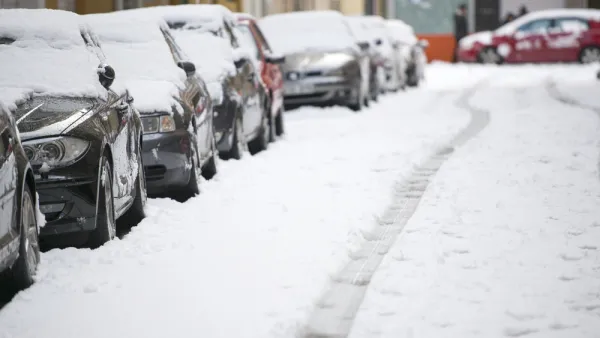
Snowstorm That Stranded Thousands Prompts Questions About Auto-Centric Development
After thousands of motorists spent over a day on a snowbound Virginia highway, experts are warning that auto-centric sprawl will worsen the impacts of extreme weather events.
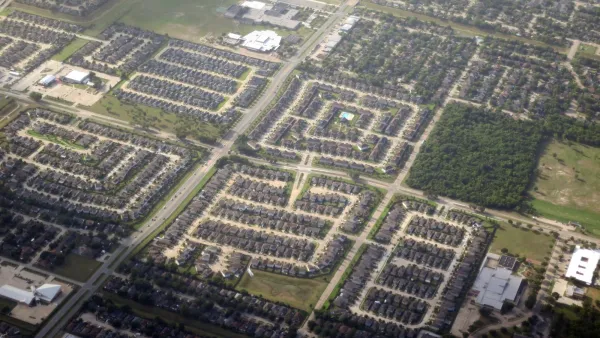
How to Fix Racist Housing Policies: Sue the Suburbs
Strengthening U.S. Department of Housing and Urban Development's civil rights enforcement could send a powerful signal to communities resistant to changing discriminatory housing rules.
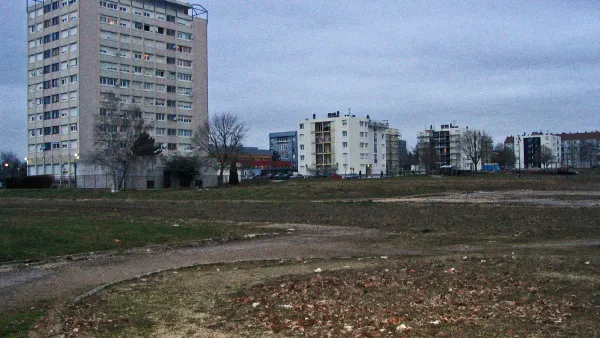
Renzo Piano on the Potential of Suburbs
In an interview, architect Renzo Piano says European suburbs are not desolate. He argues they shouldn't be treated as such in the quest for cohesive cities.

Planetizen Federal Action Tracker
A weekly monitor of how Trump’s orders and actions are impacting planners and planning in America.

Northwest rail fans eager for Sept. 30 debut of Amtrak’s Airo fleet
Get ready for that new train smell and more seats. But they won’t go faster or run more frequently on the Cascades route in Washington and Oregon.
Trump is considering data centers on 6 states' public land — some state officials say they had no idea
If the administration approves the proposed projects, data center and data center-related developments will cover 17,600 acres of public land.

After decades of planning, Sacramento gains new light rail station
Trains will arrive every 15 minutes during peak hours and every 30 minutes during non-peak hours.

Massive tunnel-boring machine breaks ground on Gateway Project
The Trump administration revoked funding for the project in October 2025, and then restored it earlier this year.

Airo trainsets begin service on Amtrak Cascades route
The trains feature panoramic windows, complementary wifi and over 300 seats per train set.

FREE Course: Walkable City 1: Why Walkability?
After describing his path towards focusing on walkability as the essence of good planning, Jeff Speck marches through his five principal reasons for making more walkable places.
Reinventing Malls: Planning Alchemy—Turning Gray Fields Into Gold
The course focuses on the opportunities and imperatives that shape reinvention of mall sites.

City of Thousand Oaks
City of Wisconsin Rapids
Harvard University Graduate School of Design
The Architects Foundation
University of Cincinnati Online
The Pocatello Development Authority
The Urban Renewal Agency of the City of Pocatello