More landlords are refusing Section 8 vouchers for housing, neither willing to deal with the federal bureaucracy nor to risk missing out on the peak windfall of an expansive rental market.


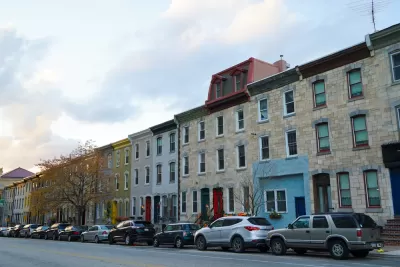
Glenn Thrush reports in detail about the plague of landlords refusing to accept Section 8 vouchers from renters.
The news follows and expands on findings from an August report by the Urban Institute, and commissioned by the U.S. Department of Housing and Urban Development.
The report "found that 67 percent of Philadelphia’s landlords refused to even consider voucher holders, some candidly citing the low subsidies and their desire to cash in on a hot market," according to Thrush. "The rejection rates were even higher in Fort Worth and Los Angeles, where three-quarters of landlords turned away Section 8 tenants."
Thrush focuses on the city of Philadelphia as an informative case study of the larger problem. Rasheedah Phillips, managing attorney at Community Legal Services of Philadelphia’s housing unit, is cited in the article describing the state of the Section 8 program in Philadelphia as a crisis.
Read the full story: With Market Hot, Landlords Slam the Door on Section 8 Tenants

Missouri Law Would Ban Protections for Housing Voucher Users
A state law seeks to overturn source-of-income discrimination bans passed by several Missouri cities.

Eight Ohio Towns Ban Source of Income Discrimination in Housing
The group doesn’t include Cleveland, where landlords can explicitly exclude housing voucher recipients from rental properties.
HUD Considering Cash Housing Assistance Pilot
Cash housing assistance in lieu of bureaucracy-laden vouchers could make affordable housing more accessible to low-income households.

Planetizen Federal Action Tracker
A weekly monitor of how Trump’s orders and actions are impacting planners and planning in America.

California plans to bury El Niño’s downpour
If the state plays its cards right, it may be able to store a billion acre-feet of El Niño’s water in aquifers.

Desperate measures: Advocates weigh draining Lake Powell to fill Colorado River
Draining the reservoir could reduce evaporation losses by a couple hundred thousand acre-feet.

Housing is the top priority of Seattle’s sole new councilmember
Jenks campaigned on building 1,000 new units of affordable housing.

New tax cuts may slash $1.5 billion in funding for Miami transit, public parks
Amendment 3 will save Miami-Dade homeowners $2,700 in 2028.

Arizona, Wisconsin, Pennsylvania hope to finally advance climate goals post-midterms
The three states have spent years under Republican or divided control.

FREE Course: Walkable City 1: Why Walkability?
After describing his path towards focusing on walkability as the essence of good planning, Jeff Speck marches through his five principal reasons for making more walkable places.
Reinventing Malls: Planning Alchemy—Turning Gray Fields Into Gold
The course focuses on the opportunities and imperatives that shape reinvention of mall sites.

City of Rosemead
Rutgers University, Edward J. Bloustein School of Planning and Public Policy
One Hundred Miles
University of Michigan School for Environment and Sustainability (SEAS)
Hunter College, City University of New York (CUNY)
The Architects Foundation
City of Cambridge
Montrose County
The Pocatello Development Authority