A sizable former AT&T campus in suburban Chicago will be redeveloped into mixed-use, despite "sluggish" local leasing activity and the potential closure of Sears' nearby headquarters.


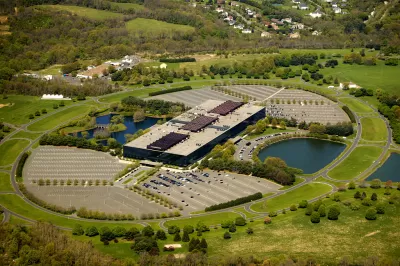
Ryan Ori reports on the planned redevelopment of a former corporate campus, now vacant, several miles from the headquarters of Sears. "If Sears folds, it would lead to mass job losses in the area and would leave the retailer's 2.4 million-square-foot headquarters vacant. Already, Hoffman Estates is in an area of the Chicago suburbs where office leasing is sluggish."
The developers are pressing forward with the project, which they characterize as a "metroburb, a metropolis in suburbia." Ori writes, "[Somerset Development] is betting that it can overcome a location far from downtown Chicago and soft leasing demand by providing a unique setting to work, shop, dine and live."
Plans include a variety of uses. "Somerset wants to convert the vacant buildings into 1.2 million square feet of offices, 60,000 square feet of shops and restaurants, and 80,000 square feet of conference space. The developer also has approval for construction of 379 rental apartments, 171 for-sale townhomes and a hotel on the land."
FULL STORY: Developer says huge Hoffman Estates project moving forward, with or without Sears in town


The Crucial Role of Suburban Voters in the Midterms
Suburban voters were instrumental in preventing a 'red wave' on Election Day and on December 6 in the Georgia U.S. Senate runoff election, enabling the Democrats to win a 51st Senate seat.
Chicago Suburbs Luring Back Major Employers
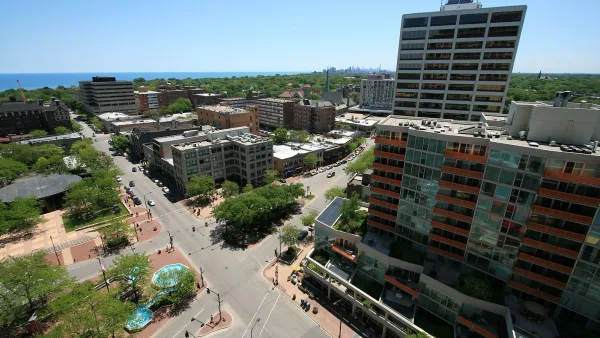
As more workers move away from the central city due to high costs and remote work opportunities, companies that once relocated downtown are eyeing Chicago’s suburbs once again.

Opinion: Revise Zoning and Tax Codes To Support Adaptive Reuse of NYC Office Space
With office buildings facing an uncertain future in their current form, cities can tweak regulations to encourage innovative new uses.

Planetizen Federal Action Tracker
A weekly monitor of how Trump’s orders and actions are impacting planners and planning in America.

The state-sanctioned urbicide of Austin
People don’t kill cities. Freeways do.

US to reduce Colorado River water deliveries to Mexico
A new Colorado Treaty amendment reduces Mexico’s Colorado River water allocation by 250,000 acre feet.

Mamdani overhauls NYC's Vision Zero plan with 100 new policy goals
The overhaul aims to reduce traffic deaths and make streets safer for pedestrians, cyclists and drivers through lower speed limits, new safety infrastructure and more.

Amtrak not solely to blame for New Jersey commuter rail's unreliability, report finds
A new study from the Garden State Initiative found that NJ Transit’s budget grew 20% across a 4 year period, but reliability declined significantly over the same period.

EPA erases limits on planet-warming pollution from power plants
Under Monday’s plan, power plants would still have some limits on how much mercury, arsenic and other contaminants they can emit.

FREE Course: Walkable City 1: Why Walkability?
After describing his path towards focusing on walkability as the essence of good planning, Jeff Speck marches through his five principal reasons for making more walkable places.
Reinventing Malls: Planning Alchemy—Turning Gray Fields Into Gold
The course focuses on the opportunities and imperatives that shape reinvention of mall sites.


Eagle County Government
Harvard University Graduate School of Design
Nashville Planning Department
The Architects Foundation
University of Cincinnati Online
The Pocatello Development Authority
The Urban Renewal Agency of the City of Pocatello
Journal of the American Planning Association