A new initiative will provide access to the city’s shared mobility services to get commuters to find alternatives to driving alone.


Denver is taking on the #DitchYourCar challenge to encourage commuters to use alternative modes of transportation in the metro area. Fifty participants will be chosen, and each will get a $300 Lyft credit, a $150 Lyft Scooter credit, a one-month bus and rail pass, and a one-month Zipcar membership along with a $100 credit.
One of the big goals is to help commuters tackle the first-mile, last-mile hurdle that often keeps them from leaving their cars at home. By demonstrating viable means to get to and from transit, the Regional Transportation Districts hopes to show that solo car travel is not the only option.
Dockless scooters are one of the newer modes featured in the initiative. After a somewhat unsuccessful launch by Lime and Bird in the spring, Lyft recently started making scooters available throughout Denver. They will be located near bus and transit stops, where they can be used in conjunction with other modes in the Ditch Your Car program.


Denver Transit Now Part of Uber App
Linking Uber and transit is an attempt to bridge the first-and-last-mile issue for Denver users.
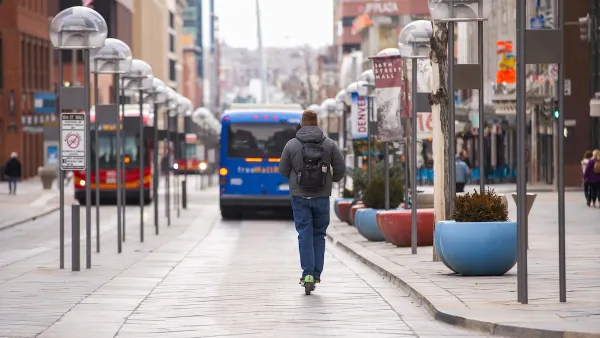
Denver Transit Agency Will Subsidize First Mile of Shared Scooter Trips
A pilot program seeks to address the problem of transit access by paying for the first mile of trips to and from two light rail stations.
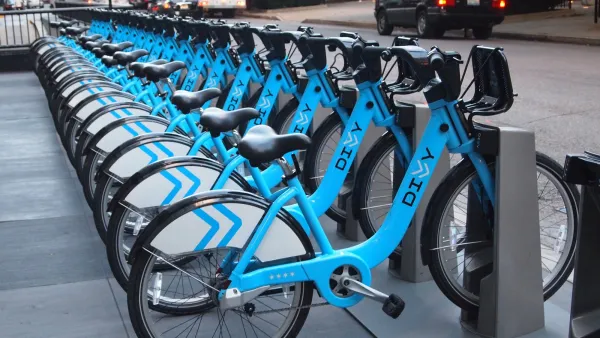
The Year in Micromobility
The industry is seeing uneven support despite high ridership numbers.

Planetizen Federal Action Tracker
A weekly monitor of how Trump’s orders and actions are impacting planners and planning in America.

The state-sanctioned urbicide of Austin
People don’t kill cities. Freeways do.

US to reduce Colorado River water deliveries to Mexico
A new Colorado Treaty amendment reduces Mexico’s Colorado River water allocation by 250,000 acre feet.

Mamdani overhauls NYC's Vision Zero plan with 100 new policy goals
The overhaul aims to reduce traffic deaths and make streets safer for pedestrians, cyclists and drivers through lower speed limits, new safety infrastructure and more.

Amtrak not solely to blame for New Jersey commuter rail's unreliability, report finds
A new study from the Garden State Initiative found that NJ Transit’s budget grew 20% across a 4 year period, but reliability declined significantly over the same period.

EPA erases limits on planet-warming pollution from power plants
Under Monday’s plan, power plants would still have some limits on how much mercury, arsenic and other contaminants they can emit.

FREE Course: Walkable City 1: Why Walkability?
After describing his path towards focusing on walkability as the essence of good planning, Jeff Speck marches through his five principal reasons for making more walkable places.
Reinventing Malls: Planning Alchemy—Turning Gray Fields Into Gold
The course focuses on the opportunities and imperatives that shape reinvention of mall sites.


Eagle County Government
Harvard University Graduate School of Design
Nashville Planning Department
The Architects Foundation
University of Cincinnati Online
The Pocatello Development Authority
The Urban Renewal Agency of the City of Pocatello
Journal of the American Planning Association