One journalist argues that missing ingredient for a flourishing bike culture isn't rental bikes; it's safe places to ride.


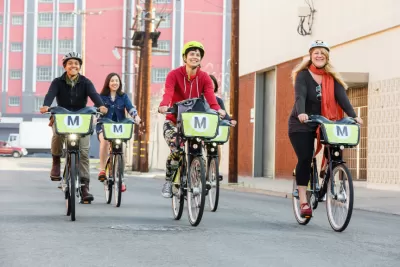
Expectations were high for Pasadena's entry into LA Metro bikeshare—the system's first expansion out of the urban core of Downtown Los Angeles. So when Pasadena exited the program just a year later, citing low ridership and high costs, it came as a surprise to many.
But transportation writer Steve Scauzillo suggests that the root cause of the program's failure was simple all along: Bikeshare addressed the wrong problem. Access to bikes wasn't the factor keeping Pasadenans in their cars, he argues. Instead, the barrier to bike ridership was a lack of safe infrastructure to ride on.
As Pasadena turns to private services to try the bikeshare experiment anew, Scauzillo urges the city to first consider the experience of riding any company's bicycle on its suburban streets.
Read the full story: Lessons from a failed bike-share program in Pasadena

Bikeshare Coming to Pasadena
L.A. County's transit agency runs a bikeshare program that so far has only been implemented in Downtown Los Angeles. The suburban city of Pasadena, however, will soon be a transit-oriented addition to the system.
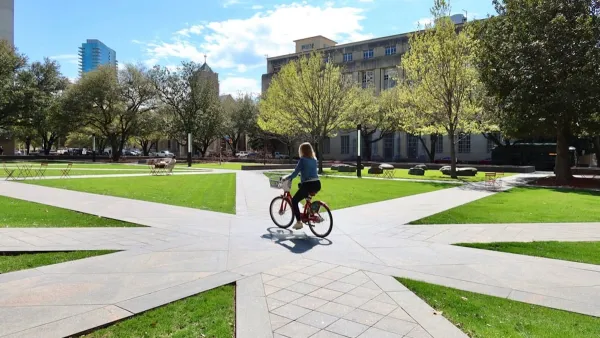
Fort Worth To Relaunch Bike Share System in January
Trinity Metro shuttered its current system at the end of November and plans to relaunch with a mostly-electric system.
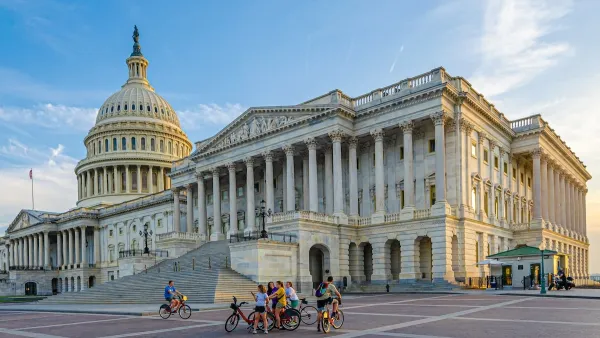
Biking Outpaces Transit Use in DC
D.C. residents and visitors take as many as 30 million trips on bikes or shared mobility, yet bike lanes cover just one quarter of one percent of the District’s streets.

Planetizen Federal Action Tracker
A weekly monitor of how Trump’s orders and actions are impacting planners and planning in America.

California plans to bury El Niño’s downpour
If the state plays its cards right, it may be able to store a billion acre-feet of El Niño’s water in aquifers.

Desperate measures: Advocates weigh draining Lake Powell to fill Colorado River
Draining the reservoir could reduce evaporation losses by a couple hundred thousand acre-feet.

In Texas, data centers are swallowing promised parkland
Residents who moved to Taylor, Texas for a rural community now have to contend with three data centers in their backyard.

How a Chicago-sized wind farm beat the odds and powered on
The project spanned five presidential administrations and a standoff with a U.S. military base.

MTA gives itself 30 days to transform pit into basketball court
The site has been under construction since 2022; the city originally estimated it would finish the court in 2024.

FREE Course: Walkable City 1: Why Walkability?
After describing his path towards focusing on walkability as the essence of good planning, Jeff Speck marches through his five principal reasons for making more walkable places.
Reinventing Malls: Planning Alchemy—Turning Gray Fields Into Gold
The course focuses on the opportunities and imperatives that shape reinvention of mall sites.

City of Rosemead
Rutgers University, Edward J. Bloustein School of Planning and Public Policy
One Hundred Miles
Hunter College, City University of New York (CUNY)
The Architects Foundation
University of Cincinnati Online
City of Cambridge
Montrose County
The Pocatello Development Authority