A new book on adaptive reuse of industrial buildings is reviewed by Carol Berens.



A new book examines 20 examples of adaptive reuse of industrial buildings in the United States. The book is titled RE–USA: 20 American Stories of Adaptive Reuse. It’s written by Matteo Robiglio, an architecture professor at the Politecnico di Torino’s Design Architecture Department in Italy. Carol Berens, a New York City based architect and author, reviews the book. As a former vice president of the Empire State Development Corporation, she has interest and experience in the topic.
Berens writes that the book looks both at reuse of the buildings themselves as well as the impact of the reuse on the surrounding neighborhood. As a "toolkit," the book is written to assist those interested in embarking on such projects themselves. Moreover, while the book can be used by municipal agencies, it is really addressed to concerned citizens trying to revitalize their neighborhoods. Berens continues:
Consisting of eight steps and addressed to “you and your family,” the processes outlined are intended to chart a path of redevelopment and acknowledge and build upon the industrial legacy by emphasizing adaptive reuse.
For more information, please see the review.
FULL STORY: Book Review: RE-USA 20 american stories of adaptive reuse

Op-Ed: Reintroduce California's Historic Restoration Tax Credit
Despite a veto by Governor Jerry Brown, California’s Assembly Speaker Toni Atkins should keep trying to pass legislation to encourage preservation, says Bay area preservation architect Jerri Holan.
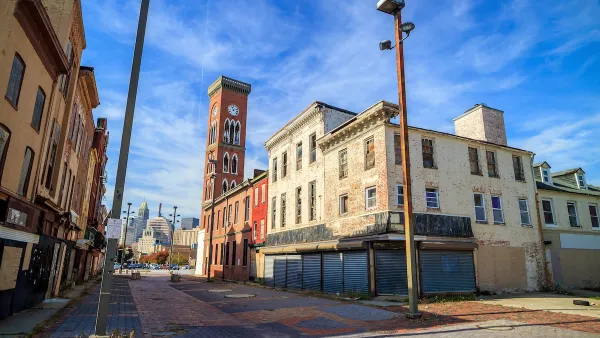
Does Historic Preservation Really Define a “Successful” City?
One common argument against new housing is that a successful city is an historic city. The data says otherwise.

Houston's East River Redevelopment Threatens Historic Black Neighborhoods
Longtime residents are being left behind by new development that has raised housing costs and property taxes for some of Houston's most vulnerable communities, according to an article in the Houston Chronicle.

Planetizen Federal Action Tracker
A weekly monitor of how Trump’s orders and actions are impacting planners and planning in America.

The state-sanctioned urbicide of Austin
People don’t kill cities. Freeways do.

US to reduce Colorado River water deliveries to Mexico
A new Colorado Treaty amendment reduces Mexico’s Colorado River water allocation by 250,000 acre feet.

Mamdani overhauls NYC's Vision Zero plan with 100 new policy goals
The overhaul aims to reduce traffic deaths and make streets safer for pedestrians, cyclists and drivers through lower speed limits, new safety infrastructure and more.

Amtrak not solely to blame for New Jersey commuter rail's unreliability, report finds
A new study from the Garden State Initiative found that NJ Transit’s budget grew 20% across a 4 year period, but reliability declined significantly over the same period.

EPA erases limits on planet-warming pollution from power plants
Under Monday’s plan, power plants would still have some limits on how much mercury, arsenic and other contaminants they can emit.

FREE Course: Walkable City 1: Why Walkability?
After describing his path towards focusing on walkability as the essence of good planning, Jeff Speck marches through his five principal reasons for making more walkable places.
Reinventing Malls: Planning Alchemy—Turning Gray Fields Into Gold
The course focuses on the opportunities and imperatives that shape reinvention of mall sites.

Eagle County Government
Harvard University Graduate School of Design
Nashville Planning Department
The Architects Foundation
University of Cincinnati Online
The Pocatello Development Authority
The Urban Renewal Agency of the City of Pocatello
Journal of the American Planning Association