In a new book, Hans Westlund and Tigran Haas argue that the global knowledge economy is radically reshaping urban development. Eventually, they say, it'll render meaningless our present notions of "urban," "suburban," and "rural."


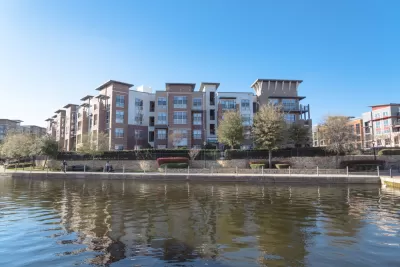
Heralding the arrival of a new urban development paradigm, Hans Westlund and Tigran Haas' book In The Post-Urban World makes the case that "multifunctional city regions" connected in "global city networks" constitute the world's urban future.
The term "urban" itself, they argue, will become less meaningful as the global knowledge economy gathers human capital into dense regional amalgamations. That densification will blur the line between urban and suburban as multifamily becomes the norm in places previously restricted to single family dwellings. Transportation and telecommunications will increasingly facilitate those ends.
In such a future, Westlund and Haas see smaller cities and rural settlements fading away unless they're integrated into wider city regions. "The more peripheral cities, towns and rural areas suffer of lack of sufficient concentrations of the now most important production factor, human capital, which means that their labor markets remain small and the knowledge economy has difficulties to develop there."
FULL STORY: A New Perspective on Urban Development


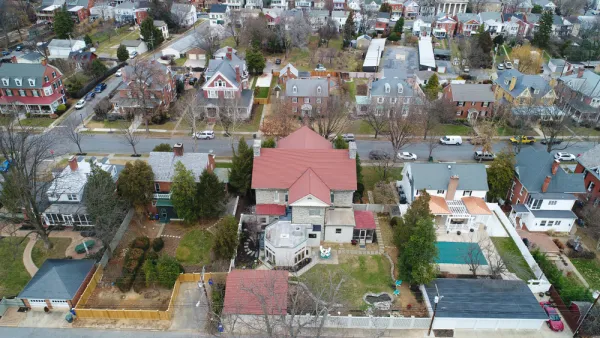
Urban, Suburban, or Rural?
The Pew Research Center digs into a question of definitions, fraught with exceptions and subjectivity.
Urban Link: UN Endorses a Uniform Measure for Urbanization
The Penn Institute for Urban Research's latest issue of Urban Link features Lewis Dijkstra writing on the Degree of Urbanisation, the first global definition of cities, towns and rural areas endorsed by the UN.

Expert Voices 2019: Why Cities?
As cities define our world in new ways every day, Penn Institute for Urban Research asked nearly dozen urban experts, “Why cities?”

The state-sanctioned urbicide of Austin
People don’t kill cities. Freeways do.

US to reduce Colorado River water deliveries to Mexico
A new Colorado Treaty amendment reduces Mexico’s Colorado River water allocation by 250,000 acre feet.

New Jersey’s second-largest city bans standalone data centers
Jersey City will continue to allow co-location facilities, such as those meant for research institutions that store their own data.

Amtrak not solely to blame for New Jersey commuter rail's unreliability, report finds
A new study from the Garden State Initiative found that NJ Transit’s budget grew 20% across a 4 year period, but reliability declined significantly over the same period.

EPA erases limits on planet-warming pollution from power plants
Under Monday’s plan, power plants would still have some limits on how much mercury, arsenic and other contaminants they can emit.

Phoenix announces new on-demand transit service, more frequent RAPID buses
Both new services will launch in October, and are part of Phoenix's Project Effective Access Solutions for Easing Congestion.

FREE Course: Walkable City 1: Why Walkability?
After describing his path towards focusing on walkability as the essence of good planning, Jeff Speck marches through his five principal reasons for making more walkable places.
Reinventing Malls: Planning Alchemy—Turning Gray Fields Into Gold
The course focuses on the opportunities and imperatives that shape reinvention of mall sites.

Eagle County Government
Harvard University Graduate School of Design
Nashville Planning Department
The Architects Foundation
University of Cincinnati Online
The Pocatello Development Authority
The Urban Renewal Agency of the City of Pocatello
Journal of the American Planning Association