Thinking beyond the MetroCard.


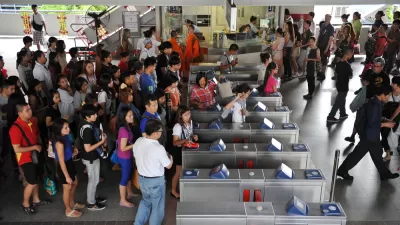
Tomas Likar, vice president of Strategy and Business Development at Hyperwallet, writes a guest post for Smart Cities Dive that expresses the importance of state-of-the-art payment infrastructure to any manner of "smart city" technology.
What I’m proposing here is that payment systems — the solutions that enable citizens to use other infrastructure in a quick, easy, and productive manner — should be planned and implemented with the same control and attention to detail as a new rapid transit line or bus route. That's because payment infrastructure and the data that’s connected to it has the power to influence almost every aspect of civic planning.
The star witness in Likar's case is the New York MTA's MetroCard, which is now a source of major frustration, but will eventually (i.e., in 2023) be replaced with a contactless payment system. It's not enough just to gain access to buses and subways, argues Likar, a "proprietary open-loop payment system" can help improve service, cut costs, and enable access for all kinds of city services.
Read the full story: Your city can't become 'smart' without proper payment infrastructure
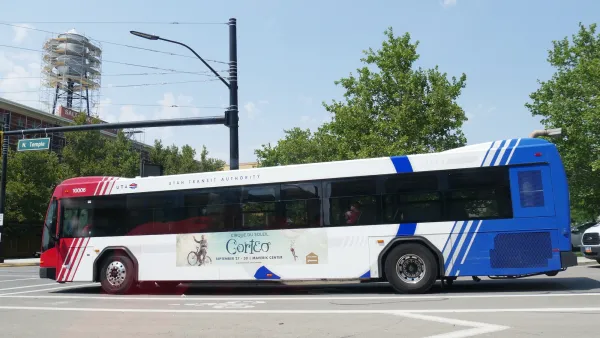
Salt Lake City debuts new bus rapid transit line
The third BRT line in the Utah Transit Authority system connects destinations from Taylorsville to the West Valley.

AI for Planners Explained: Urban Digital Twins
When AI stops talking and starts showing.
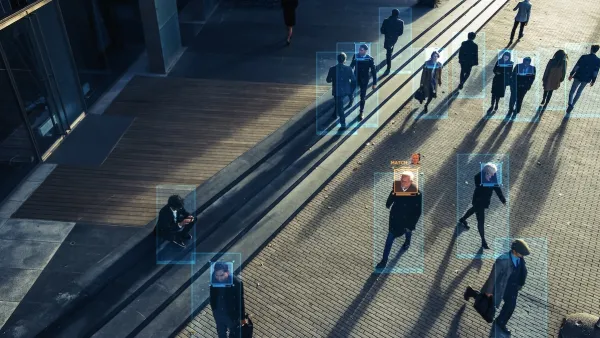
In Planning, the Possibilities With AI are High. So are the Stakes.
Planning history tells us that public trust is both fragile and essential. With AI, the time to set the right course is now.

Planetizen Federal Action Tracker
A weekly monitor of how Trump’s orders and actions are impacting planners and planning in America.

California plans to bury El Niño’s downpour
If the state plays its cards right, it may be able to store a billion acre-feet of El Niño’s water in aquifers.

Desperate measures: Advocates weigh draining Lake Powell to fill Colorado River
Draining the reservoir could reduce evaporation losses by a couple hundred thousand acre-feet.

Mamdani’s pied-à-terre tax survives legal challenge
A panel of judges found that the plaintiffs failed to demonstrate injury as a result of New York City's implementation of the tax.

Eastern Nebraska is running out of electricity
Data centers and electrification are straining eastern Nebraska’s grid, throttling economic development.

Seattle passes record-breaking transit services expansion
Proposition 1 will double the city’s transit tax to add 95,000 more bus trips and preserve 180,000 bus trips annually.

FREE Course: Walkable City 1: Why Walkability?
After describing his path towards focusing on walkability as the essence of good planning, Jeff Speck marches through his five principal reasons for making more walkable places.
Reinventing Malls: Planning Alchemy—Turning Gray Fields Into Gold
The course focuses on the opportunities and imperatives that shape reinvention of mall sites.

City of Rosemead
Rutgers University, Edward J. Bloustein School of Planning and Public Policy
One Hundred Miles
University of Michigan School for Environment and Sustainability (SEAS)
Hunter College, City University of New York (CUNY)
The Architects Foundation
City of Cambridge
Montrose County
The Pocatello Development Authority