With a year-end deadline approaching, reports indicate progress by agencies and optimism that vulnerable systems will meet this year’s requirements.


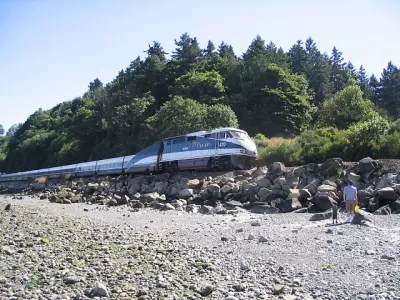
Commuter rail systems are facing a December 31 deadline to put into place parts of positive train control (PTC) safety features, mandates stipulated by Congress in the 2008 Rail Safety Improvement Act. Paul Skoutelas of the American Public Transportation Association recently told reporters that rail systems had made progress in the last quarter, and he is optimistic that this progress would continue.
“Earlier this year, the Federal Railroad Administration (FRA) sent letters to several commuter rail systems it felt were in danger of missing this year's deadline, but Skoutelas said he is confident in every agency’s ability to meet the FRA’s requirements,” reports Chris Teale. Skoutelas, however, did acknowledge that agencies are facing challenges related to the cost of implementing the safety measures as well as the limited number of PTC technology vendors.
FULL STORY: Rail leaders 'optimistic' about hitting train safety deadlines after federal warnings

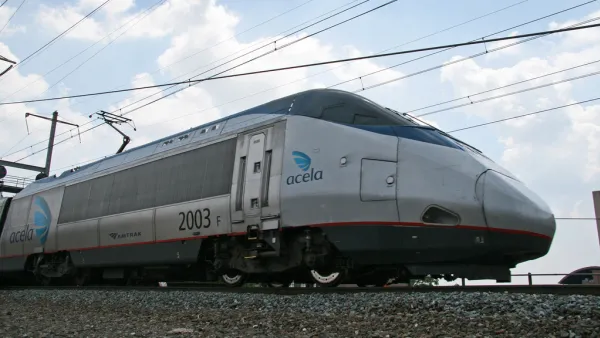
Positive Train Control Deadline: Rail Systems Go 4 for 41
A decade after Congress set a deadline for rail systems to implement positive train control, only 4 rail systems were able to get the job done on time.
Would Advanced Technology Have Prevented the Metro-North Derailment?
As federal investigators focus on the likelihood of human error being the cause of the Dec. 1 derailment that killed four passengers, attention has been placed on the federal requirement for all railroads to install positive train control systems.
Feds Open $5B in Rail Safety Grants
The reissued call for applications omits equity and climate requirements and prioritizes “family-friendly” project proposals.

Planetizen Federal Action Tracker
A weekly monitor of how Trump’s orders and actions are impacting planners and planning in America.

The state-sanctioned urbicide of Austin
People don’t kill cities. Freeways do.

US to reduce Colorado River water deliveries to Mexico
A new Colorado Treaty amendment reduces Mexico’s Colorado River water allocation by 250,000 acre feet.

Mamdani overhauls NYC's Vision Zero plan with 100 new policy goals
The overhaul aims to reduce traffic deaths and make streets safer for pedestrians, cyclists and drivers through lower speed limits, new safety infrastructure and more.

Amtrak not solely to blame for New Jersey commuter rail's unreliability, report finds
A new study from the Garden State Initiative found that NJ Transit’s budget grew 20% across a 4 year period, but reliability declined significantly over the same period.

EPA erases limits on planet-warming pollution from power plants
Under Monday’s plan, power plants would still have some limits on how much mercury, arsenic and other contaminants they can emit.

FREE Course: Walkable City 1: Why Walkability?
After describing his path towards focusing on walkability as the essence of good planning, Jeff Speck marches through his five principal reasons for making more walkable places.
Reinventing Malls: Planning Alchemy—Turning Gray Fields Into Gold
The course focuses on the opportunities and imperatives that shape reinvention of mall sites.


Eagle County Government
Harvard University Graduate School of Design
Nashville Planning Department
The Architects Foundation
University of Cincinnati Online
The Pocatello Development Authority
The Urban Renewal Agency of the City of Pocatello
Journal of the American Planning Association