The reissued call for applications omits equity and climate requirements and prioritizes “family-friendly” project proposals.


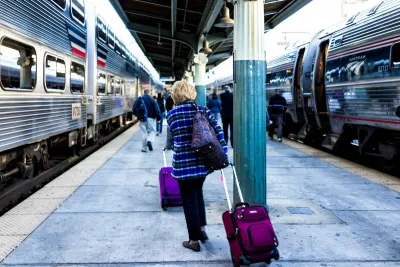
The Federal Railroad Administration (FRA) reopened applications for $5 billion in passenger rail safety grants after withdrawing a grant notice issued in 2024 earlier this month.
As Dan Zukowski explains in Smart Cities Dive, the agency reissued the notice with changes that remove, in the worlds of Transportation Secretary Duffy, “radical Biden-Buttigieg DEI and green grant requirements” and add a new emphasis on “family-friendly” projects.
“The notice emphasized the administration’s pro-family agenda, encouraging applicants to include projects such as ‘adding new family restrooms, creating children’s play areas, and other projects improving overall travel for families in U.S. intercity passenger rail stations,’” Zukowski explains.
The FRA will evaluate projects based on projected benefits such as improved travel time and reliability, better integration with other transportation modes, and economic and employment benefits around stations. “The FRA also looks to improve safety at roadway grade crossings, where it says more than 200 fatalities occur each year. However, these projects are only eligible if they also improve intercity passenger rail service.”
FULL STORY: FRA opens applications for $5B in passenger rail safety grants

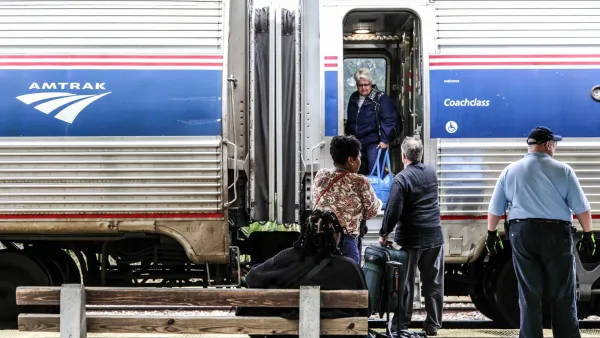
Trump budget slashes passenger rail funding by 82%
The White House's proposed FY2027 budget makes drastic cuts to public transit and eliminates high-speed rail funding altogether.
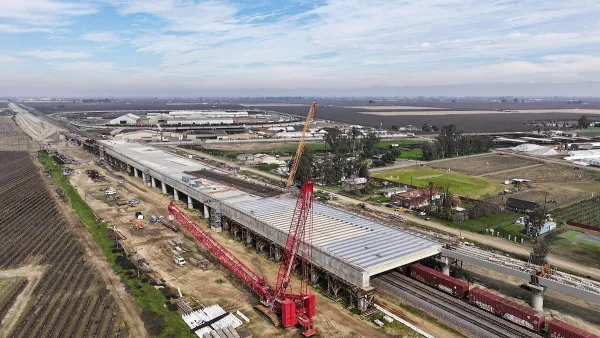
DOT Officially Cancels California High-Speed Rail Funding
The Trump administration has repeatedly taken aim at the LA-to-Bay Area rail project, blaming Democratic leaders for cost overruns and delays.
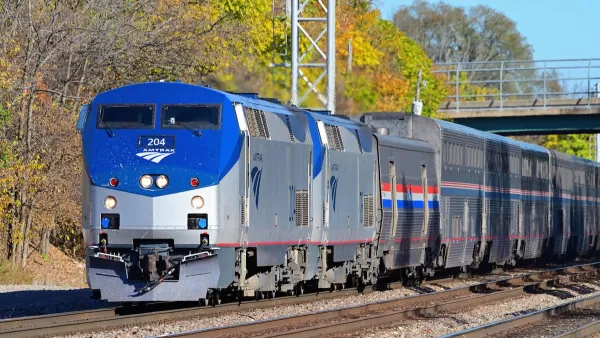
Amtrak Cutting Jobs, Funding to High-Speed Rail
The agency plans to cut 10 percent of its workforce and has confirmed it will not fund new high-speed rail projects.

Planetizen Federal Action Tracker
A weekly monitor of how Trump’s orders and actions are impacting planners and planning in America.

The state-sanctioned urbicide of Austin
People don’t kill cities. Freeways do.

US to reduce Colorado River water deliveries to Mexico
A new Colorado Treaty amendment reduces Mexico’s Colorado River water allocation by 250,000 acre feet.

5 New England states march closer to 800 megawatt wind energy project
Securing federal approval for the project may be complicated under the Trump administration, which has historically been hostile towards domestic wind power.

Baltimore to break ground on $50 million Transit Priority Project
The project will bring faster bus trips, safer streets and better bike connections to Baltimore.

Airbnb launches $250 million 'last-dollar financing' housing accelerator, makes first investment in Austin
The company will put $6.4 million towards affordable housing development in Texas’ capital.

FREE Course: Walkable City 1: Why Walkability?
After describing his path towards focusing on walkability as the essence of good planning, Jeff Speck marches through his five principal reasons for making more walkable places.
Reinventing Malls: Planning Alchemy—Turning Gray Fields Into Gold
The course focuses on the opportunities and imperatives that shape reinvention of mall sites.

Eagle County Government
Harvard University Graduate School of Design
Nashville Planning Department
The Architects Foundation
University of Cincinnati Online
The Pocatello Development Authority
The Urban Renewal Agency of the City of Pocatello
Journal of the American Planning Association