Downzoning and building height restrictions have kept supply well behind demand in New York City, according to this article.


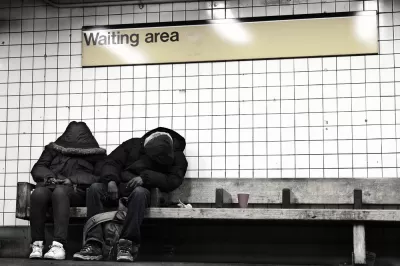
"There are currently about 59,000 New Yorkers staying in homeless shelters and several thousand more sleeping on the streets, figures that fluctuate seasonally," Ben Adler writes for City and State New York. Others would rent but are forced to stay with friends and family because they cannot afford the city's high rates. "Add it all up, and New York City’s homeless rate is the highest it has been since the Great Depression, even as the national economy verges on full employment," Adler writes.
Rents have risen twice as fast as wages in the city since the recession. And competition is fierce at the low end of the rent scale. Besides the problem of scarcity driving the prices of affordable homes, there's simply not enough cheaper housing for all the people who would rent it. "The major increase in homelessness is among people who simply lack a place to live and wind up in a homeless shelter. In May, there were 15,023 families, with 22,538 children, sleeping each night in New York City’s municipal shelters, according to the Coalition for the Homeless," Adler reports.
While New York Mayor Bill de Blasio has done some work to allow for more homes near transit, Midtown New York has imposed new height restrictions. Adler argues that this process of treading water on housing production is exacerbating the New York's homelessness issue.
FULL STORY: Homelessness is a housing problem

New York Still Not Tracking Vacancies
Despite de Blasio's campaign promises, the city of New York still doesn't count vacant properties, a negligence that advocates for the homeless have been fighting for years.
Texas Legislature’s Surprising Pro-Housing Swing
Smaller homes on smaller lots, office to apartment conversions, and 40% less say for NIMBYs, vote state lawmakers.
How Houston Can Be a Model for Housing Reform
The city builds more new housing than almost any other and has dramatically reduced homelessness, yet low-income families struggle to find affordable housing.

Planetizen Federal Action Tracker
A weekly monitor of how Trump’s orders and actions are impacting planners and planning in America.

The state-sanctioned urbicide of Austin
People don’t kill cities. Freeways do.

US to reduce Colorado River water deliveries to Mexico
A new Colorado Treaty amendment reduces Mexico’s Colorado River water allocation by 250,000 acre feet.

5 New England states march closer to 800 megawatt wind energy project
Securing federal approval for the project may be complicated under the Trump administration, which has historically been hostile towards domestic wind power.

Baltimore to break ground on $50 million Transit Priority Project
The project will bring faster bus trips, safer streets and better bike connections to Baltimore.

Airbnb launches $250 million 'last-dollar financing' housing accelerator, makes first investment in Austin
The company will put $6.4 million towards affordable housing development in Texas’ capital.

FREE Course: Walkable City 1: Why Walkability?
After describing his path towards focusing on walkability as the essence of good planning, Jeff Speck marches through his five principal reasons for making more walkable places.
Reinventing Malls: Planning Alchemy—Turning Gray Fields Into Gold
The course focuses on the opportunities and imperatives that shape reinvention of mall sites.

Eagle County Government
Harvard University Graduate School of Design
Nashville Planning Department
The Architects Foundation
University of Cincinnati Online
The Pocatello Development Authority
The Urban Renewal Agency of the City of Pocatello
Journal of the American Planning Association