The Daily Source of Urban Planning News
Placemaking: Geek Niche or the Root of Pretty Much Everything?
Placemaking: what does the term really mean? And how it can most effectively serve the needs of the most people. Scott Doyon shares some ideas.

Portland's Biketown to Include 'Adaptive Bikes' to Ensure Universal Access
The city of Portland is wearing the Yellow Jersey on equity issues connected to the Biketown bikeshare system.

How Los Angeles Can Design for Density
Good urban design can make growth more appealing.

Council Proposes Plan for Transit-Oriented Development in Philadelphia
Philadelphia City Council seeks ways to spur development without creating new traffic issues.

Mixed-Income Development in Chicago's Jefferson Park Faces Protest
A development on Chicago's Northside faces protests and picketers who don't want new density, height, or low income residents.
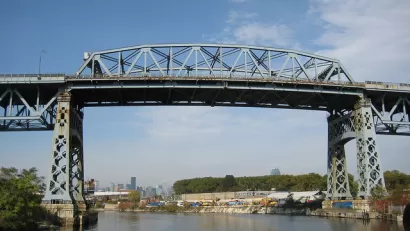
New York City's Kosciuszko Bridge Getting Demolished
Traffic-plagued Kosciuszko will soon be replaced, and some commuters are celebrating its demise.

Israel Plans to Harness the Power of Waze to Save Wildlife
Just in time for United Nations World Wildlife Day, a new initiative in Israel has launched to identify deadly road crossings for animals by harnessing data collected from the Waze app.

An Ordinance to Curb Street Performance in Chicago Draws Criticism
Chicago Aldermen are considering an ordinance to outlaw street performances audible from more than 20 feet away, but in a segregated city, some fear that a quieter downtown might be more unwelcoming.

Big Idea: One Less Highway Through Kansas City
Eric Bunch argues that removing I-70 from downtown Kansas City presents a big opportunity for the city.

Trump Administration Reviewing U.S. DOT's Automated Vehicle Guidelines
Among the many guidelines and rules going back to the drawing board (or ceremonial execution by executive order) at the federal level are guidelines for self-driving cars released only months ago by the U.S. Department of Transportation.

Nation's Newest Transit Funding Income Tax Approved in Indianapolis
It took awhile, but the city of Indianapolis has finally approved the nation's newest income tax to raise revenue for the IndyGo public transit system.
How to Build a $12 Billion High-Speed Rail Line at No Cost to Taxpayers
Unlike the nation's more well-known high-speed rail project in California, the 205 miles-per-hour, Dallas-to-Houston bullet train will be almost entirely privately financed. How is that possible?
Changes in Environmental Policy Already Apparent on the EPA Website
A group of researchers monitoring government websites noticed changes to the U.S. Environmental Protection Agency's website. The changes fit into the Trump Administration's "America First" politics.

Casinos Still Illegal in Georgia
A nascent effort to legalize casino gambling in the state of Georgia fell short of the necessary legislative support.

Why Aren't We Building Middle Income Housing?
For low-income residents in high-cost areas, there's no substitute for the public sector to provide below-market rate housing. But for middle-income households, the market should be able to produce housing without subsidy. So why doesn't this happen?

Yet Another Flawed Congestion Report
The new INRIX Traffic Scorecard uses "big" data to calculate congestion costs. Like previous studies, it exaggerates traffic congestion costs and roadway expansion benefits.

More than Twenty Bills Introduced in Texas Legislature to Stop High-Speed Rail
The California high-speed rail project is not alone in confronting legal and political obstacles. The main issue in Texas that has aroused opposition to the privately financed, 240-mile Dallas to Houston bullet train is the use of eminent domain.
Seattle Hoping to Extend a Successful Traffic Safety Project
After repainting the lanes on Rainier Avenue in Seattle, the street works better for everyone. If it's that easy, why isn't the model implemented more widely?

Checking In With Cities That 'Lost' the Smart Cities Challenge
Denver and Austin were finalists in the competition. Since then, they've found ways to implement their ideas.

Scottish Town Tackles Speeders with Blow Dryers
Mimicking traffic cops, local townsfolk have resorted to speed checking passing cars with blow dryers.
One Hundred Miles
County of Mendocino
planning NEXT
The Architects Foundation
University of Cincinnati Online
Montrose County
Northern Illinois Transit Authority (NITA)
The Pocatello Development Authority

FREE Course: Walkable City 1: Why Walkability?
After describing his path towards focusing on walkability as the essence of good planning, Jeff Speck marches through his five principal reasons for making more walkable places.
Reinventing Malls: Planning Alchemy—Turning Gray Fields Into Gold
The course focuses on the opportunities and imperatives that shape reinvention of mall sites.