The Daily Source of Urban Planning News

The Road Forward: Cost-Effective Policy Measures To Decrease Emissions From Passenger Land Transport
This new 165-page book, available free, is a resource for identifying practical, cost-effective policies for reducing passenger transport emissions on land, and especially in urban areas.

Fair Fares Program Criticized for Eligibility Threshold
Critics of the city's transit assistance program say limiting eligibility to people living at or below the federal poverty line excludes many low-income New Yorkers who depend on public transit.

Great Lakes To Receive $1 Billion from Infrastructure Bill For Restoration
An additional $1 billion in federal funding will bolster current efforts to clean polluted water sources and restore ecosystems in the Great Lakes region.

New York Subway Will Pilot Platform Barriers To Improve Rider Safety
After a shocking death and an overall rise in violent crime at its stations, New York City's transit authority will install platform barriers to prevent intentional or accidental falls onto tracks.

Virgin Hyperloop Shifts to Cargo Transport, Lays Off Staff
The company sees cargo as a more promising and cost-efficient use of its technology.
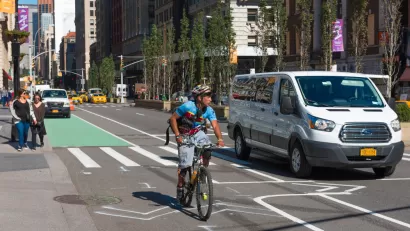
New York Legislature To Vote on Complete Streets Bills
A set of proposed laws would make streets safer for all road users in an effort to reduce traffic deaths.

Exclusionary Zoning and Poverty: A New Hampshire Case Study
A deep dive into the history of zoning and development in Manchester, New Hampshire.

Let the Endemic Planning Begin
The first state in the nation to issue a stay-at-home order to slow the spread of a novel coronavirus that humans had no immunity from became the first to release an actual endemic plan, complete with a fancy acronym, SMARTER.

Prince William County Upzoning Plan Causes Concern Among Rural Residents
Local officials want to ease concerns about a proposal to increase density in rural parts of Northern Virginia.

BLOG POST
Conservatives, Progressives, and Cities
Are liberals more pro-urban than conservatives? On some issues, yes—but in other ways, reality is more complicated.

Judge Denies Proposed Development in Fire-Prone Area
The decision could signal a new reluctance to allow development in wildland areas at high risk for fires.

Residents Call for Highway Removal in Seattle Neighborhood
As more planners begin to question the value of urban freeways, communities that have long borne the negative impacts of highway construction are fighting back with data.

BLOG POST
Bringing Rurality Back to Planning Culture
Michael Hibbard at the University of Oregon and Kathryn I. Frank at the University of Florida write about their recently published article in the Journal of Planning Education and Research.

Dallas Drafts Infrastructure Wish List
The city hopes to qualify for as much as $3 billion in federal infrastructure funding.

PLANOPEDIA
What Is an Entitlement?
In the context of planning and development, an entitlement is the legal agreement between a government and a landowner to allow a proposed development.

Despite Covid, Planners Expect Return to 'Old Normal,' Survey Says
Although the survey collects data from a small sample, it looks like North American planners don't expect the pandemic to change much about the way cities are planned.

Bike Helmets No Longer Required in Seattle After Research Reveals Enforcement Disparities
The data on bike helmets have changed. Laws are starting to change too.

Democrats Balk at Gov. Newsom's Gas Tax Holiday
Saving motorists 3 cents a gallon may be a slam dunk for Republican leaders in the California legislature who opposed hiking the gas tax in the first place, but Democratic leaders are reluctant to tamper with a hard-fought legislative and ballot win.

'Charging as a Service' Could Accelerate Decarbonization
The proliferation of private EV charging services, coupled with federal investment in charging stations, has the potential to reduce 'charging anxiety' and encourage a faster switch to electric vehicles.

How Infrastructure Improvements Spur Economic Development
A formerly underutilized corridor in Citrus Heights, California is being transformed into a vibrant, walkable street—and stimulating economic growth in the process.
City of Thousand Oaks
City of Wisconsin Rapids
Harvard University Graduate School of Design
The Architects Foundation
University of Cincinnati Online
Northern Illinois Transit Authority (NITA)
The Pocatello Development Authority
The Urban Renewal Agency of the City of Pocatello

FREE Course: Walkable City 1: Why Walkability?
After describing his path towards focusing on walkability as the essence of good planning, Jeff Speck marches through his five principal reasons for making more walkable places.
Reinventing Malls: Planning Alchemy—Turning Gray Fields Into Gold
The course focuses on the opportunities and imperatives that shape reinvention of mall sites.