The Daily Source of Urban Planning News

Land Use Changes Could Improve Walkability Along Bus Rapid Transit Corridor in Denver
Denver councilmembers are proposing an overhaul of land use regulations along a long stretch of East Colfax Avenue—the route of a planned Bus Rapid Transit line expected to open in 2026.

California Bill Would Streamline Permitting for Farmers’, Night Markets
The state currently has no unified process for night markets and other recurring events, making it difficult and costly for organizers.

Transit Ridership Surges in Minneapolis
The city’s transit agency is reporting high rates of return to transit, aided by college students and Taylor Swift fans.

Largest TOD in North Texas Breaks Ground Near Dallas
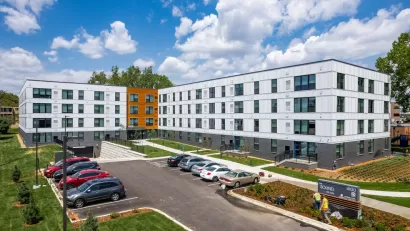
The mixed-use complex features over 400 housing units, offices, retail, and park space.

Chicago Flood Mitigation Scrambles to Keep up With Climate Change
The city’s geography and the growing intensity of storms due to climate change are making it difficult for local officials to prevent neighborhood flooding and wastewater spills.
FEATURE
Nonprofit Affordable Housing Developers Navigate Troubled Waters
As housing and building costs rise, nonprofit developers find themselves with strained resources as pandemic relief dries up and tenants need housing assistance more than ever.
Bus Rapid Transit Plans Scrapped in Tacoma
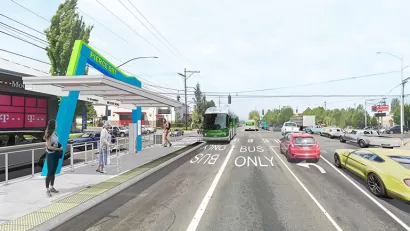
A planned bus rapid transit (BRT) line known as “Stream” will have to move forward in some new, as-yet-unplanned form in Tacoma, Washington.

Union Shakeup Could Have Implications for California Housing Policy
One of the most powerful opponents to California’s YIMBY legislators, the Trades union of building and construction workers, is under new leadership. Some observers speculate that the change could indicate a new era of development politics.

California On Schedule to Launch Second Road Charge Pilot Program
The California Transportation Commission met the initial deadline specified in 2021 state legislation requiring the state to perform a fully operational pilot program where participants will pay for the miles they drive.

New Study Debunks Homeless Migration Theory
More evidence finds that the root cause of homelessness is, ultimately, a lack of sufficient housing.

The Double-Edged Sword of ‘Healthfields’
Building hospitals and other health-oriented facilities on former brownfield sites can benefit the community, but can also perpetuate historic inequities and exploit undervalued land at the expense of local residents.

PLANOPEDIA
What Is Transportation Demand Management?
When a government creates incentives or disincentives to influence how and when you travel—that's transportation demand management.

Champaign-Urbana Awarded Grant to Electrify Bus Fleet
Funding from the Low or No Emission Vehicle federal program will help the city replace its buses with new electric and other zero- or low-emission vehicles.

Institutional Investors Gaining a Larger Footprint in the Housing Market, Report Says
The locations with the fastest growing populations are seeing the most dramatic increase in investor-owned single-family housing rentals.


New Plans for Palo Alto: Updated Zoning and 6,000 Housing Units
The city of Palo Alto, a city central to the geographic and economic might of Silicon Valley, is planning a significant overhaul to its plans for the future, making space for over 6,000 new housing units in the next eight years.

Report: Trolley Buses Best Zero-Emissions Option for San Francisco
To decarbonize its bus system, a new study recommends adding more substantial battery packs to the city’s historic—and all-electric—trolley bus fleet rather than replacing trolley buses with electric buses that require lengthy charging periods.

How to ID Urban Wildflowers
Ever wonder what those flowers growing through a crack in the sidewalk are? This guide from Streetsblog has you covered.

Oklahoma City Solicits Public Input on New BRT Lines
City officials presented preliminary plans for new bus routes aimed at connecting neighborhoods previously underserved by transit.

Commentary: Place-Based Policy Must Target Chronically Poor Areas
As more evidence shows that neighborhood-level factors heavily impact future outcomes, place-based policies should use more accurate measurements to ensure persistently poor places don’t fall through the cracks.
Eagle County Government
Harvard University Graduate School of Design
Nashville Planning Department
The Architects Foundation
University of Cincinnati Online
The Pocatello Development Authority
The Urban Renewal Agency of the City of Pocatello
Journal of the American Planning Association

FREE Course: Walkable City 1: Why Walkability?
After describing his path towards focusing on walkability as the essence of good planning, Jeff Speck marches through his five principal reasons for making more walkable places.
Reinventing Malls: Planning Alchemy—Turning Gray Fields Into Gold
The course focuses on the opportunities and imperatives that shape reinvention of mall sites.