Metropolitan Transit Authority officials say the cost of healthcare, wages, electricity and fuel is outpacing revenue from tolls, taxes and fares.


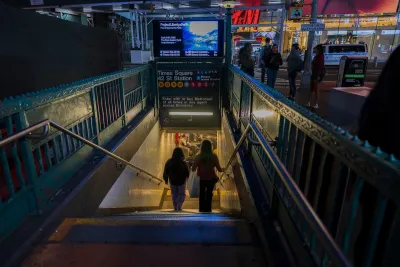
The Metropolitan Transit Authority will face a $585 million budget deficet by 2028 if “the city, state and federal governments don’t help balance its books,” Ramsey Khalifeh writes for Gothamist. By 2030, the agency’s financial plan predicts a deficit as large as $979 million without government interference.
MTA officials say the cost of healthcare, wages, electricity and fuel is outpacing revenue from tolls, taxes and fares. In the past, NYC has approved tax hikes to keep the MTA funded.
Gothamist reports:
MTA Chair Janno Lieber said he hoped the incoming Democratic majority in Congress would approve more funding for the agency. He also called on the city to pay for a larger share of the MTA’s paratransit service.
The city currently covers a majority of the cost to run that program. Lieber said lawmakers in Albany could approve legislation requiring the city to pay a larger share, which could save the state-run agency $300 million annually.
The mayor's office didn't immediately comment on Lieber's remarks.
Read the full story: MTA warns of major budget deficit without help from city, state and feds

Data reveals that NYC’s bet on congestion pricing has paid off
After almost two years of the program, reports show positive impacts on traffic and air quality and no disruptions to parking.
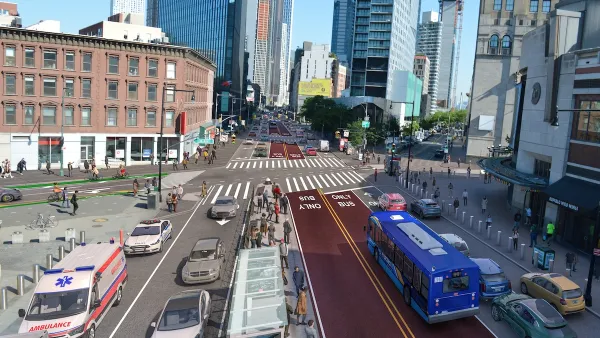
Mamdani unveils his ‘most ambitious bus lane project’ so far
The city has added two new bus lanes, which it expects to speed up tens of thousands of bus riders’ commutes.
DSA members accuse Mamdani of 'abandoning values' over housing redevelopment
New York City's mayor plans to replace about 2,000 units of public housing with private, mixed-income housing.

Planetizen Federal Action Tracker
A weekly monitor of how Trump’s orders and actions are impacting planners and planning in America.

Washington state to charge fee to drivers with fuel-efficient cars
Revenue from the fee will go towards supporting the state’s highways.

Illinois considers spending $1 billion in taxpayer money on data center
A quantum computing campus and data center are currently under construction in Chicago.

Nearly billion-dollar budget deficit looms over MTA
Metropolitan Transit Authority officials say the cost of healthcare, wages, electricity and fuel is outpacing revenue from tolls, taxes and fares.

Senate passes bill overhauling permitting
The bill still needs to pass the House.

Did data centers change how voters cast their ballots?
Texas, Ohio, and Georgia all flipped party control. But in rural counties, the effect of local data centers was mixed.

FREE Course: Walkable City 1: Why Walkability?
After describing his path towards focusing on walkability as the essence of good planning, Jeff Speck marches through his five principal reasons for making more walkable places.
Reinventing Malls: Planning Alchemy—Turning Gray Fields Into Gold
The course focuses on the opportunities and imperatives that shape reinvention of mall sites.

City of Charlotte
City of Rosemead
Rutgers University, Edward J. Bloustein School of Planning and Public Policy
University of Michigan School for Environment and Sustainability (SEAS)
Hunter College, City University of New York (CUNY)
The Architects Foundation
University District Partnership