The bill makes it very difficult to revoke permits, amplifying the power of whoever is issuing them.


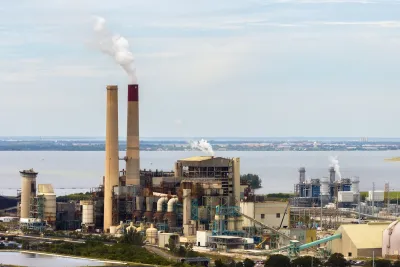
Last week, the Senate voted to open debate on the Bipartisan American Affordability and Jobs Act; on Monday, the Senate voted to close it. A final vote may happen as soon as this week. BAAJA aims to speed up large energy projects, and in doing so, makes it very difficult for government agencies to revoke permits. As such, the bill's impact on climate and energy will depend largely on government leadership: Kate Waxman writes for Inside Climate News, “Permit durability, in other words, is an amplifier. It strengthens whoever happens to be issuing permits.”
What the Trump administration would do if BAAJA passes is uncertain: “Sen. Martin Heinrich (D-N.M.) argues that the bill cuts permitting for a major power line from about two decades to about five years — still too slow for President Donald Trump to finish much, so the next president collects. Earthjustice President Abigail Dillen argues the reverse: Favored industries of the current administration will rush to lock in approvals that no successor can undo. They aren’t disagreeing about the law. They’re making competing forecasts about what could get approved between now and January 2029,” Inside Climate News reports.
Climate models also don’t provide clear results: BAAJA’s impact varies wildly depending on how much fossil fuel production the model assumes will happen. Only time will tell what permits the act will expedite. “Either way, BAAJA doesn’t end the permitting wars. It raises the stakes of every win, for both sides,” Waxman writes.
Read the full story: The New Rules of Permitting
Senate passes bill overhauling permitting
The bill still needs to pass the House.
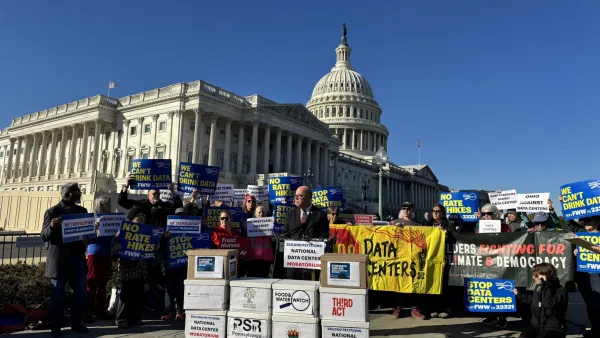
Some incoming, leading US House Dems urge a national moratorium new data centers
McGovern, the top Democrat on the House Rules Committee, called for “an immediate change to the status quo.”
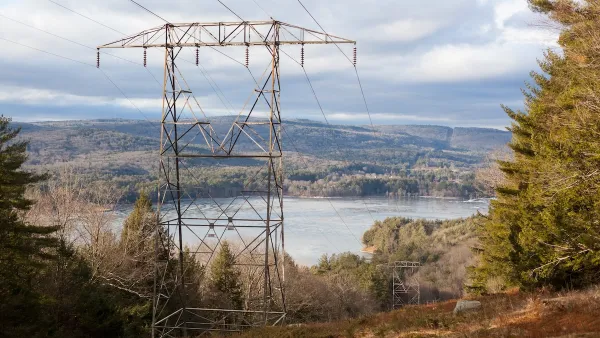
‘Demolition of our heritage:’ Some US tribes speak out against BAAJA
A coalition of indigenous groups in the United States are concerned about provisions in the bill that may weaken their ability to halt large energy projects.

Planetizen Federal Action Tracker
A weekly monitor of how Trump’s orders and actions are impacting planners and planning in America.

Washington state to charge fee to drivers with fuel-efficient cars
Revenue from the fee will go towards supporting the state’s highways.

Trump to blast ‘hydrocarbon highway’ through ‘world’s longest art gallery’
Environmental and historic preservation groups are suing to stop the project.

Army detonates nearly 5 tons of lead in Iowa
The detonation comes after days of delays and public outcry.

Golden Girls bills could bring together older and younger roommates
In more than 30 states, local laws can restrict how many unrelated people can share a home.

Mamdani to replace Rikers Island with four borough-based jails
The four new jails are set to open between 2029 and 2032.

FREE Course: Walkable City 1: Why Walkability?
After describing his path towards focusing on walkability as the essence of good planning, Jeff Speck marches through his five principal reasons for making more walkable places.
Reinventing Malls: Planning Alchemy—Turning Gray Fields Into Gold
The course focuses on the opportunities and imperatives that shape reinvention of mall sites.

City of Charlotte
City of Rosemead
Rutgers University, Edward J. Bloustein School of Planning and Public Policy
University of Michigan School for Environment and Sustainability (SEAS)
Hunter College, City University of New York (CUNY)
The Architects Foundation
University District Partnership