California and Maryland residents have seen their water bills grow especially high.



The cost of water spiked 62% between 2015 and 2025, outpacing inflation, grocery prices — and the median household income. According to a first-of-its-kind report from Food and Water Watch, water in New Hampshire, Louisiana, California and Maryland has become particularly expensive.
Inside Climate News reports:
Fifty-two percent of the 25 most expensive systems reviewed by Food & Water Watch were in California, despite the state’s systems representing just 18 percent of the 500 systems in the dataset.
In Louisiana, Maryland and West Virginia, water bills grew about twice as fast as state median household incomes, the report found.
In New Hampshire, bills grew nearly five times faster.
According to the report, the average U.S. water system now charges $531 a year per household for water, up from $336 a year in 2015, or about $457 when adjusted for inflation. A water system in San Jose, California charged the most for water in the report: $1,416 per year.
Read the full story: Water Bills Surged More Than Other Costs in US Homes Over 10 Years, a ‘Striking’ New Report Shows


Does every planner need an AI policy?
From a hundred-person agency to a one-person consultancy, the answer is yes. The difference is what “policy" means.

Google Razed 80 Acres in Downtown San Jose. Then… Nothing Happened.
The project was expected to generate about $79 million annually in property taxes.
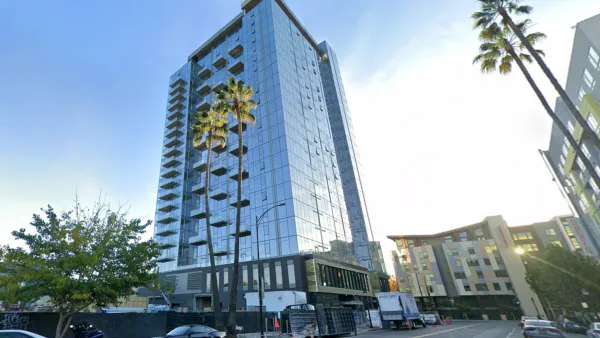
San Jose to Lease Units in Downtown High-rise for Affordable Housing
An innovative pilot program subsidizes rent in a market-rate building for middle-income residents.

Planetizen Federal Action Tracker
A weekly monitor of how Trump’s orders and actions are impacting planners and planning in America.

‘Going backwards:’ Baltimore mayor, students rally against state's transit funding plan
Maryland's proposed six-year plan provides no funding for Baltimore’s BMORE bus program and reduces its road maintenance funding.

Detroit to transform waterfront with $2.2 billion investment
Developers will convert about 18 acres of unused parking lot space into civic spaces.

HUD modernizes 50-year-old manufactured housing framework
The Next Generation Manufactured Housing Action Plan establishes new energy-efficiency standards for manufactured homes, and new guidelines for anchoring them.

New CA housing laws tear down development red tape
Recently-signed legislation makes building starter homes and ADUs cheaper and faster in California.

Metrolink finishes first expansion in 20 years
The transit agency is now one of very few in the United States to connect two major airports.

FREE Course: Walkable City 1: Why Walkability?
After describing his path towards focusing on walkability as the essence of good planning, Jeff Speck marches through his five principal reasons for making more walkable places.
Reinventing Malls: Planning Alchemy—Turning Gray Fields Into Gold
The course focuses on the opportunities and imperatives that shape reinvention of mall sites.

One Hundred Miles
County of Mendocino
planning NEXT
The Architects Foundation
University of Cincinnati Online
Montrose County
Northern Illinois Transit Authority (NITA)
The Pocatello Development Authority