After a close call with wildfire, Roslyn has embraced prescribed burns to protect the community.


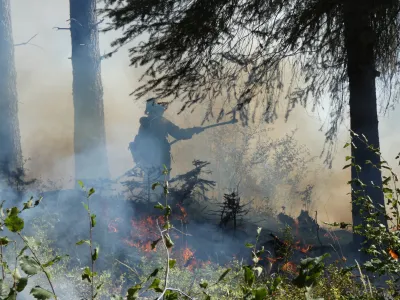
ROSLYN, Wash. — Francisco Martinez hefts a canister filled with a mixture of diesel fuel and gasoline. A tongue of flame dances above the nozzle. He tips the drip torch forward — whoosh — and a stream of blazing liquid races across the forest floor.
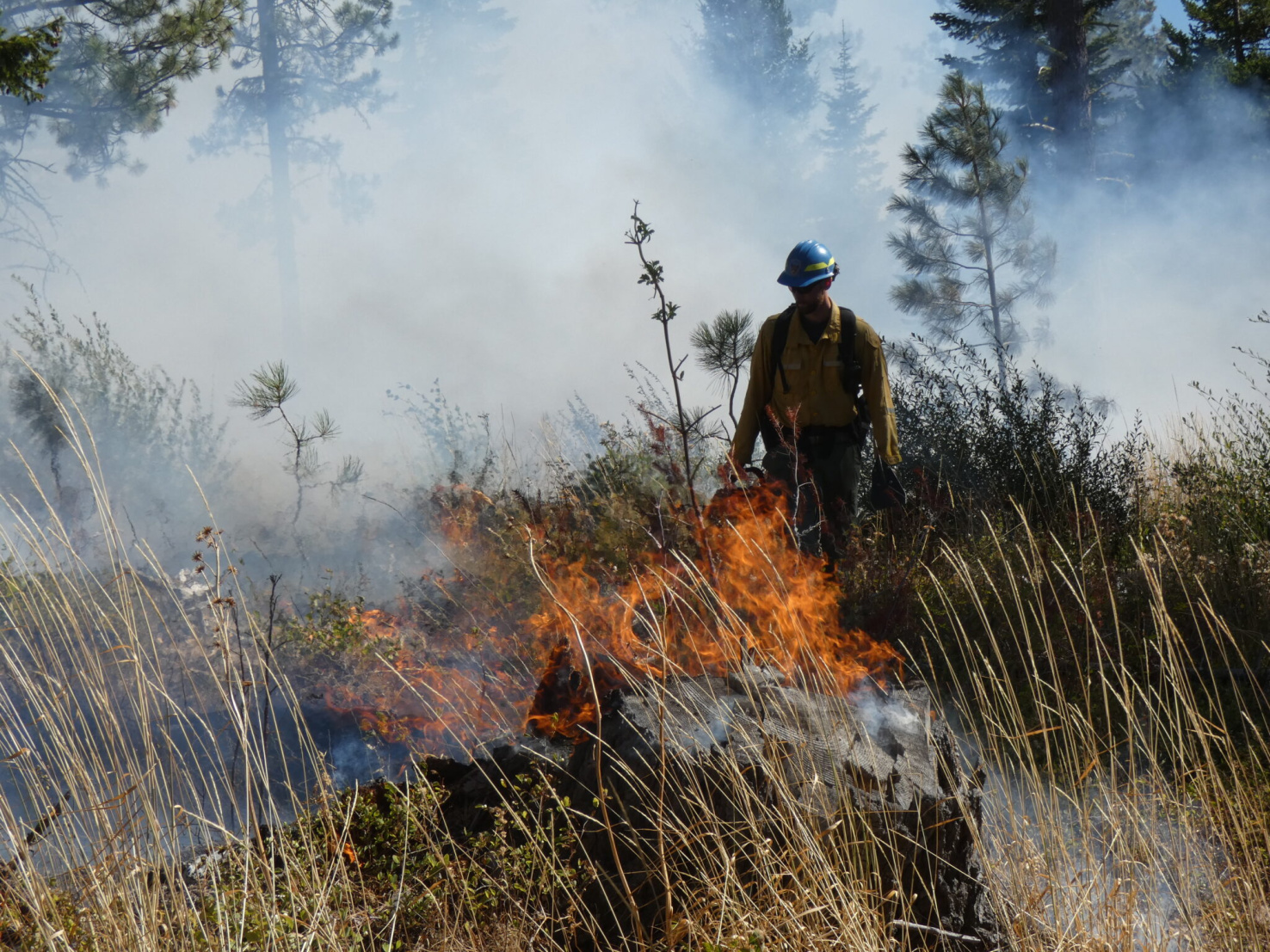
In less than a minute, a long wall of fire is spreading across the slope as Martinez and a small team of igniters fan out along the hillside. They walk in parallel, lighting grasses and shrubs, moving forward as flames spread into a dancing orange curtain behind them.
Dense columns of dark smoke billow uphill. Ashes swirl, and radiant heat warms the skin of the crew members on the line. A vortex of flame coils up a tree. Thousands of pine needles combust in an explosive shower like a fireworks show.
Radios crackle with updates as other crews race to put out spot fires caused by embers falling outside the prescribed burn area. Somewhere up the hill in the thick of the smoke, a dozen or more people are furiously working to make sure this blaze stays under control.
The scene is intense but not chaotic. The crews, assembled from local fire districts and conservation groups, move with practiced urgency instead of panic. They eat a quick lunch on the ground just a few dozen feet from the downslope edge of the fire. Some grab a fresh pouch of nicotine, and they all get back to work.
This team is conducting a prescribed burn on a forested ridge in central Washington, above a small town, Roslyn, that was nearly wiped out by a wildfire just a few years ago. The specter of wildfire is one that increasingly haunts hundreds of communities throughout the West, and the work here could point them toward a new model of living with fire.
But it won’t be easy.
FIRE belongs on this landscape.
Before white settlers arrived in the late 1800s, the forests in this part of Washington burned roughly every decade — fires sparked by lightning or set by local tribes to manage the land. These ponderosa pine forests thrive on fire, which mostly spares mature trees but opens the understory for lush regrowth that feeds many animals.
For more than a century, though, state and federal land managers kept fire away. Smokey Bear taught generations of Americans that wildfire was a scourge to be prevented. Officials throughout the country invested heavily in firefighting resources to suppress such blazes quickly.
Without fire, forests grew denser. Trees competed for water even as climate change dried the landscape further. The parched trees grew vulnerable to pests and diseases. Brush, pine needles and dead branches piled up. The forests that had been spared from fire for 100 years became primed for infernoes.
Over those same decades, more and more Americans moved into communities bordering these areas. Nothing from the recent past gave them warning that their spot on the map was supposed to burn every few years.
In recent years, wildfires have swept through communities in the West, devastating small towns and urban areas alike. The Camp Fire in 2018 destroyed much of Paradise, California, and killed 85 people. Wildfires in Los Angeles destroyed thousands of homes in January 2025 and killed at least 31. And earlier this summer, hundreds of homes went up in flames when fires ripped through neighborhoods of Spokane, Washington.
Roslyn’s wake-up call came in 2017. The Jolly Mountain Fire, sparked by lightning strikes in the nearby Wenatchee National Forest, advanced toward the town on Labor Day weekend. The fire’s incident commander gave local leaders a grim assessment.
“(He said), ‘I hate to tell you, but if fire gets into these woods, we’re going to have to write off large portions of your town as indefensible,’” recalls Chris Martin, emergency management coordinator with the Roslyn Fire Department. “That was the change-of-underwear moment for Roslyn.”
Thankfully, the fire changed course, but Roslyn now knew it was sitting on a tinderbox. The idyllic mountain community of 950 with a rich coal mining history is now a thriving tourist town that plays host to campers, mountain bikers, artists and foodies. It also ranks in the 99th percentile for wildfire risk nationwide.
Just a few months after Roslyn’s near-miss, Martin offered to host a prescribed burn on forestland he owns above the town. The burn doubled as a training exercise for state, local and federal agencies — many of which were just beginning to rethink fire’s role on the landscape. Residents, still shaken by the recent wildfire, were alarmed to see smoke rising nearby. But Martin and others built an outreach program to convince their neighbors that it was time to fight fire with fire.
Roslyn has been burning ever since.
Martin keeps a map showing an ever-growing patchwork of black and yellow blobs surrounding the town. The black spots mark the 500-plus acres that local leaders have burned since 2017. The yellow represents areas where they’ve brought in logging equipment to thin trees and brush. Together, they form a rough semicircle around Roslyn that’s meant to act as a shield. If a wildfire hits this area, it will quickly be deprived of fuel — giving firefighters a chance to make a stand.
PLENTY of other towns face a predicament like Roslyn’s.
More than 1,800 communities in the Western United States are threatened by wildfire, federal researchwarns. Nationwide, nearly 72 million homes sit in areas with some wildfire risk, the climate research company First Street has found. As climate change dries the landscape in the coming decades, the risk will only expand.
“A lot of people have the perception that this is a problem with large federal and state land ownership and that private citizens don’t have a role to play,” said Greg Dillon, director of the U.S. Forest Service’s Fire Modeling Institute. “But in many places, there’s a stretch of private lands between (public forests) and homes that can catch on fire. It’s a really important and less understood piece of the fire risk picture.”
Mike Norris, an assistant division manager in the prescribed fire program with the Washington Department of Natural Resources, said the state averages about 20,000 acres of prescribed burns across all lands each year. But Washington’s forests need three to five times that amount to stay healthy.
Many states face a similar fire deficit. And private lands are a big part of what’s missing.
But burning on private lands is hard. One section of forest may include dozens of landowners, many of whom are skeptical of fire. And even with community buy-in, burns require an incredible collaboration of resources.
“Historically, it would have been easier to burn those areas when there weren’t property lines and structures in the way,” said Kyle Lapham, who runs Washington’s Certified Prescribed Burn Manager program. “These places should be burning multiple times in our lifetime, and we’re not even scratching the surface with that first burn on tens of thousands of acres.”
The burn in Roslyn brought together 30 people from multiple fire districts and Upper Kittitas County Fuels, an interagency network that works on prescribed burns and forest thinning projects. They worked alongside staff from The Nature Conservancy, a nonprofit that manages the parcel that was burned and is perhaps the foremost practitioner of prescribed fire on private lands.
To burn just 55 acres, half a dozen organizations had to coordinate for two full days of burning and an extended monitoring period after the fire. Long before, crews dug boundary lines to hold the fire, filled portable tanks with water, laid out hoses and positioned fire engines and water tenders. Burn leaders conducted extensive briefings on safety, contingency plans and objectives.
After all that, had atmospheric conditions changed slightly, the whole thing could have been canceled. The painstaking efforts can fizzle in an instant because of strict clean air rules designed to protect communities from smoke. Fire advocates say their “burn windows” can be severely limited by well-intentioned regulations.
While catastrophic fires are far worse for smoke, prescribed burners do need to account for its very real effects on communities. They conduct extensive outreach before each burn and prepare for scenarios such as an asthmatic neighbor who needs hotel accommodations or visibility concerns on a nearby highway.
Pulling off a burn, given all those hurdles, is no easy feat.
BUT ROSLYN shows that it can be worth the effort.
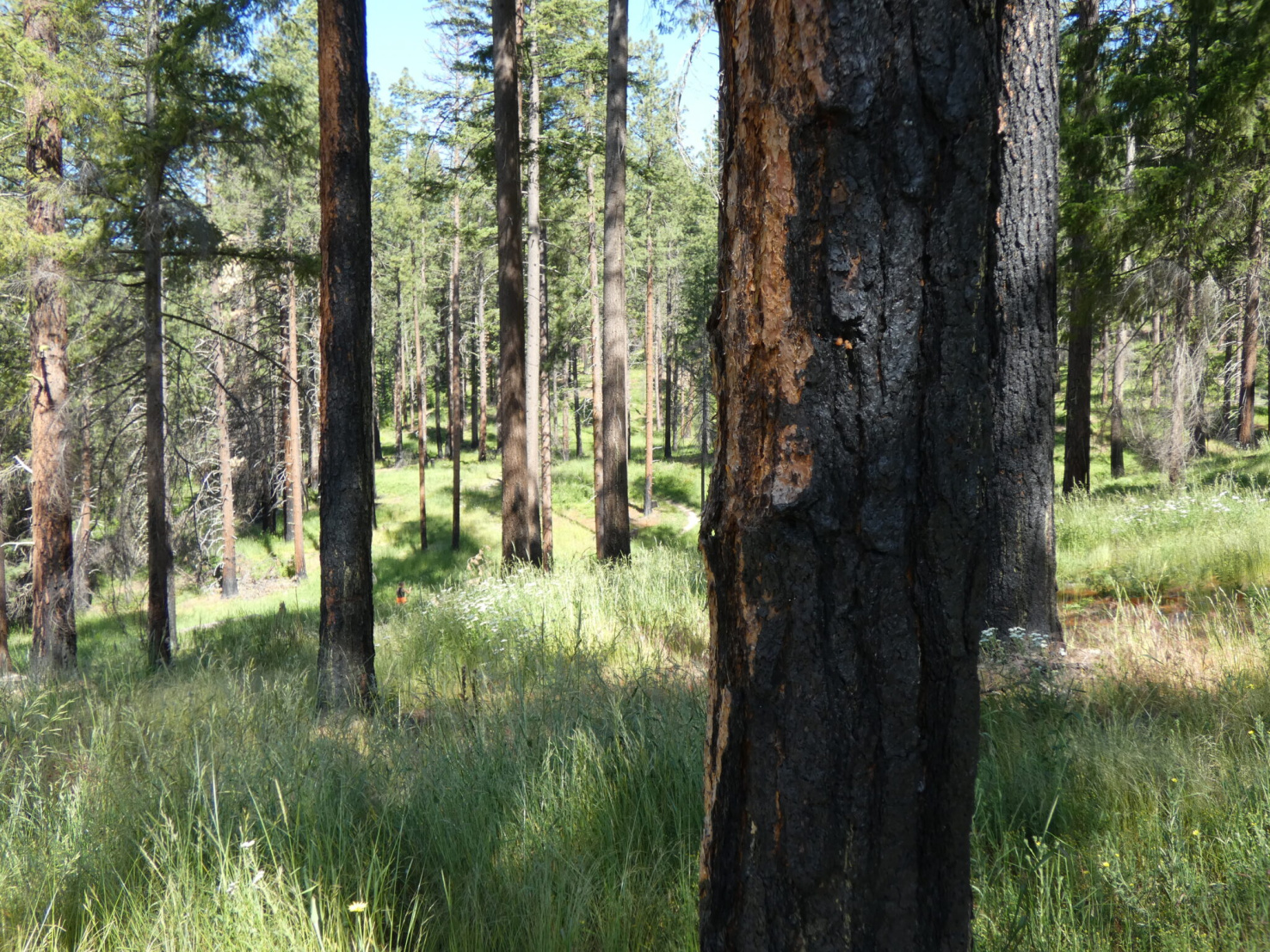
On a bright June morning, Martin led a tour of a nearby forested hillside that was burned in 2021. Along the trails, a lush carpet of green grass and wildflowers grew up beneath the trees, sporting charred bark but still growing strong. A deer grazed peacefully in the distance.
Norris, the prescribed fire official with the state DNR, helped lead the prescribed burn that drastically reduced the dead material, brush and “ladder fuels” that can spread flames into tree canopies.
“It’s safe to say Roslyn’s in a much better place,” Norris said. “They’ve really pushed the needle in the right direction for their community.”
The burns have even become a tourist attraction. Roslyn recently designated a Forest Resilience Trail that has made the scorched forest a feature of the town’s outdoor recreation appeal.
“Now that the burns have been done, people can see the abundant wildlife, they see more flow in the streams because there’s fewer shrubs soaking water out of the landscape,” Martin said.
State leaders hope Roslyn can be a model to help other communities learn to live with fire. They’re seeing growing interest from towns that have faced close calls of their own. The work will be arduous, a few dozen acres at a time. Burn bosses will have to deal with skeptical neighbors, wary regulators and real-world risks. Volunteers will need to put in immense hours and deal with frequent setbacks.
Perhaps the only thing more daunting is the cost of doing nothing.
Read the full story: This Washington town is burning. That’s the plan.
Federal Funding Cuts Spark Concern Among Wildland Firefighters
Federal firefighting forces, already underresourced, are being slashed even as wildfires become a year-round problem.
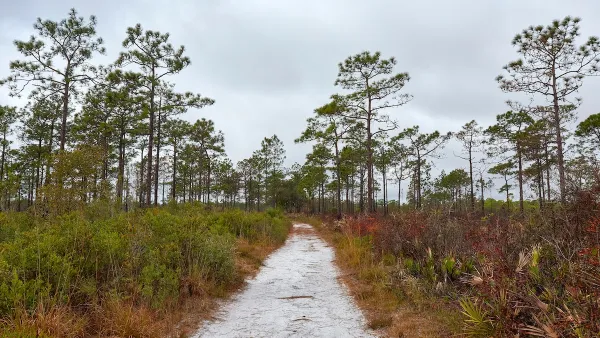
Harnessing GIS and Fire for Longleaf Pine Conservation
Scientists in Florida are using GIS technology to strategically manage prescribed burns, aiding in the restoration and biodiversity of longleaf pine ecosystems while enhancing climate resilience across the Southeast.
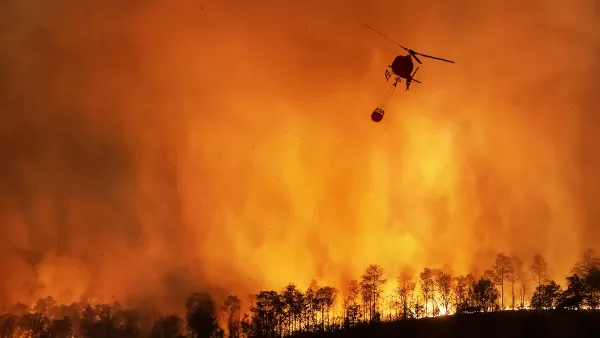
California Fire Dashboard Tracks Statewide Resilience Efforts
The online map builds a comprehensive database of fire prevention and mitigation efforts at every level of government to help agencies coordinate their work and understand the impacts of projects.

Planetizen Federal Action Tracker
A weekly monitor of how Trump’s orders and actions are impacting planners and planning in America.

Eastern Nebraska is running out of electricity
Data centers and electrification are straining eastern Nebraska’s grid, throttling economic development.

Study reveals best places in the U.S. for cycling, walking
New research from Streetlight Data examines bicycle and pedestrian miles per capita in the 100 largest U.S. cities by population.

As Texas embraces carbon storage, a Black community questions the risks
Texas now issues permits for companies to store carbon dioxide underground. East Texas residents fear safety risks, and skeptics doubt the climate benefits.

New BLM proposal would slash public comment periods, environmental protections
The proposed rewrite would also strip legal leverage from Tribal nations and state governments.

DSA members accuse Mamdani of 'abandoning values' over housing redevelopment
New York City's mayor plans to replace about 2,000 units of public housing with private, mixed-income housing.

FREE Course: Walkable City 1: Why Walkability?
After describing his path towards focusing on walkability as the essence of good planning, Jeff Speck marches through his five principal reasons for making more walkable places.
Reinventing Malls: Planning Alchemy—Turning Gray Fields Into Gold
The course focuses on the opportunities and imperatives that shape reinvention of mall sites.

City of Rosemead
Rutgers University, Edward J. Bloustein School of Planning and Public Policy
One Hundred Miles
University of Michigan School for Environment and Sustainability (SEAS)
Hunter College, City University of New York (CUNY)
The Architects Foundation
City of Cambridge
The Pocatello Development Authority
The Urban Renewal Agency of the City of Pocatello