The plan creates more space for sidewalks and bike lanes along Franklin Street, and adds more intersections to help slow traffic.


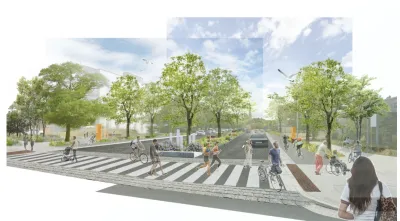
Portland has revealed a new draft plan for redesigning Franklin Street, a major corridor that connects the downtown area with Interstate 295. The plan calls for the large median that divides four lanes of traffic to be removed, creating more space for sidewalks and bike lanes, and adds more intersections to help slow down traffic.
The plan also reduces road widths and lane widths, and shortened intersection crossings, Nicole Ogrysko writes for Maine Public. Kevin Kraft, the city's planning and urban development director, said the goal was to create an “urban street” rather than a highway.
The new design also brings additional on-street parking, and Kraft said the design should open up more housing and retail space.
Read the full story: Portland unveils draft plan for redesigning one of the city's busiest corridors

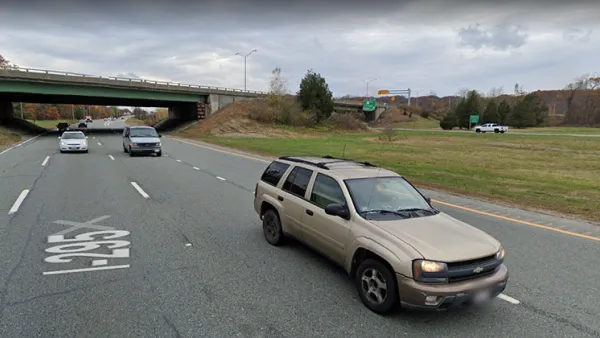
Rhode Island Funding Highway Expansion Despite Poor Road Conditions
In a Strong Towns article passionately argued by Charles Marohn, Rhode Island’s penchant for building new highway capacity while the rest of the state’s roads crumble is compared to Emperor Nero.
Developing the Recipe for a Thriving Corridor in St. Louis
Along an eight-mile corridor that runs westward from the Gateway Arch, the population has jumped 10 percent since 2000. Tim Bryant examines the ingredients that define the place "where St. Louis succeeds as a city."
Neighborhood Units Matter
This just in: Neighborhood Units missing in action as cities continue to attempt 3D governance using 2D laws. Howard Blackson argues why Neighborhood Units are the key element to placemaking.

Planetizen Federal Action Tracker
A weekly monitor of how Trump’s orders and actions are impacting planners and planning in America.

Chicago breaks ground on $3 billion megadevelopment
The new neighborhood, titled Foundry Park, will one day host 3,700 residences.

This MA town is drowning in its own sewage — and residents like it that way
Susan Murcott, a waste water expert, said if Carlisle didn't address their leaking sewage, the problem could turn “deadly.”

Dallas suburbs are turning their downtowns into small towns
Four Texas towns are embracing walkability and density in their downtowns.

Home batteries are ushering in an energy revolution
Batteries capable of storing solar energy can stabilize the grid during peaks and keep homes running on cloudy days.

A sneak peek at NYC’s Midtown Bus Terminal rebuild
The city will turn a deck used for storage during the construction process into a park once construction is complete.

FREE Course: Walkable City 1: Why Walkability?
After describing his path towards focusing on walkability as the essence of good planning, Jeff Speck marches through his five principal reasons for making more walkable places.
Reinventing Malls: Planning Alchemy—Turning Gray Fields Into Gold
The course focuses on the opportunities and imperatives that shape reinvention of mall sites.

City of Rosemead
Rutgers University, Edward J. Bloustein School of Planning and Public Policy
One Hundred Miles
The Architects Foundation
University of Cincinnati Online
Montrose County
The Pocatello Development Authority
The Urban Renewal Agency of the City of Pocatello