The United States has lost nearly a third of its bowling alleys and a fifth of its movie theaters since 2001.


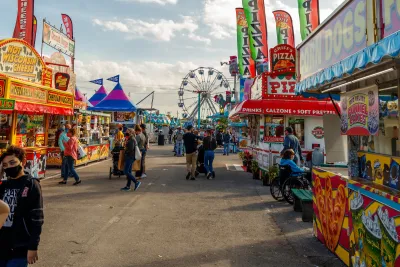
Recreation venues and activities in the United States are getting more expensive — and that's harming the American psyche, writes Ben Steverman in Bloomberg News.
"America appears to be suffering from a fun shortage. For the industries supplying recreational amenities, this deficit is a business opportunity. But for everyone not positioned to profit from the trend, it’s a source of stress and frustration that’s been building for a while."
Steverman defines "fun" as enjoyable social activities such as live shows with friends, a family vacation or small talk with a stranger in a public place. "By those measures, it’s clear that Americans are having less fun than they used to. Since its 2003 inception, the Bureau of Labor Statistics’ American Time Use Survey shows double-digit percentage drops in the hours spent each year on arts and entertainment activities, attending sports or recreational events, and attending or hosting social events."
Even so, younger people seem more eager than ever to travel and engage with friends, going on vacations and out to the movies instead of staying home. But fun is becoming both harder to afford and harder to access, with a fifth of U.S. movie theaters and a third of bowling alleys closing since 2001. "Rising inequality is making the problem worse, as the superwealthy bid up the costs of fun, whether luxury hotels or the best seats at sporting events."
There is a bright side: participation in organized outdoor activities and sports is soaring, and "old-school" hobbies like crafting and birdwatching are making a comeback.
Read the full story: The Fun Shortage Is Real, and It’s Making America Miserable

Montreal Artist Envisions What Cities Would Sound Like if we Deprioritized Cars
What would a city sound like without the noise of vehicles?

The Death of the Living Room
High housing costs are squeezing out common shared spaces in many UK apartments, leading to social isolation and negative mental health impacts.
The Panacea of Outdoor Human Movement
Humans relish in over-complicating things, but the sweetest and healthiest things in life are the simplest.

Planetizen Federal Action Tracker
A weekly monitor of how Trump’s orders and actions are impacting planners and planning in America.

‘Going backwards:’ Baltimore mayor, students rally against state's transit funding plan
Maryland's proposed six-year plan provides no funding for Baltimore’s BMORE bus program and reduces its road maintenance funding.

Detroit to transform waterfront with $2.2 billion investment
Developers will convert about 18 acres of unused parking lot space into civic spaces.

HUD, USDA agree on framework to simplify housing environmental review standards
Their agreement is a requirement of the 21st Century ROAD to Housing Act.

Cost of water rising at a faster pace than inflation, median household income
California and Maryland residents have seen their water bills grow especially high.

NYC building owners overwhelmingly comply with new emissions limits
The New York City Department of Buildings is fining owners who did not file emissions reports.

FREE Course: Walkable City 1: Why Walkability?
After describing his path towards focusing on walkability as the essence of good planning, Jeff Speck marches through his five principal reasons for making more walkable places.
Reinventing Malls: Planning Alchemy—Turning Gray Fields Into Gold
The course focuses on the opportunities and imperatives that shape reinvention of mall sites.

planning NEXT
City of Thousand Oaks
City of Wisconsin Rapids
The Architects Foundation
University of Cincinnati Online
Northern Illinois Transit Authority (NITA)
The Pocatello Development Authority
The Urban Renewal Agency of the City of Pocatello