What would a city sound like without the noise of vehicles?


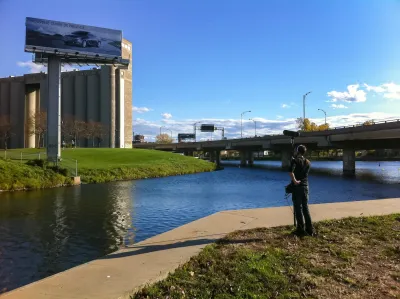
Sound artist Nicola Di Croce wants cities to include sound in tactical urbanism projects. As Kea Wilson explains in Streetsblog USA, a 2022 project by Di Croce documented and manipulated sounds in and around Montreal’s Place de la Paix, tapping into the sensory experience of the city that often goes unnoticed.
“Di Croce argues that by starting with the impacts of our urban design choices that we can't see, though, we can open up a deeper conversation about how people feel in their places — and get to the root causes of why they move the way they do.” Understanding how people respond to sound, then, can help policymakers plan built environments that are more pleasant and inviting.
For the Montreal project, Di Croce blended real sounds from the plaza, transforming and rearranging them into a new soundscape, dimming the noise of cars and elevating the sounds of nature and human activity. “The result is hypnotizing, strangely beautiful, and offers a fascinating sonic preview of how this corner of Montreal might sound if transportation leaders made different design choices — particularly those that deprioritize automobiles.”
For Di Croce, creating soundscapes that people want to hear is more important than policing urban sound, which can quickly devolve into discriminatory enforcement. “He argues that's even more important when neoliberal forces like corporations and repressive governments are aggressively shaping our urban environments — and dictating that certain sounds, like honking car horns, are perfectly acceptable, while others, like an unhoused person busking for change with her guitar, are not.”
FULL STORY: How One Artist Is Helping Neighbors Decide How Their City Should Sound

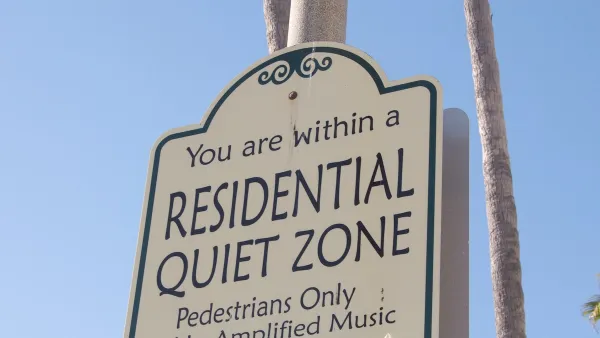
Noise as a Public Health Hazard
New ways of measuring the effects of sound on human health are helping communities fight back against noise pollution.
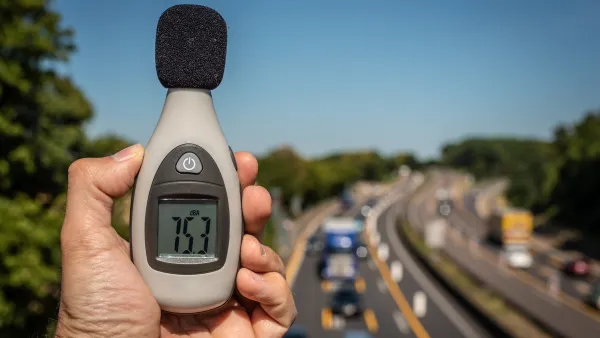
The Case Against Noise Pollution
A detailed description of how noise impacts health and wellbeing.

Sensory Urbanism Fights ‘Visual Bias’ in Planning
Researchers are beginning to understand the effect of sounds, smells, and tastes in the urban experience.

Planetizen Federal Action Tracker
A weekly monitor of how Trump’s orders and actions are impacting planners and planning in America.

The state-sanctioned urbicide of Austin
People don’t kill cities. Freeways do.

US to reduce Colorado River water deliveries to Mexico
A new Colorado Treaty amendment reduces Mexico’s Colorado River water allocation by 250,000 acre feet.

Baltimore to break ground on $50 million Transit Priority Project
The project will bring faster bus trips, safer streets and better bike connections to Baltimore.

Airbnb launches $250 million 'last-dollar financing' housing accelerator, makes first investment in Austin
The company will put $6.4 million towards affordable housing development in Texas’ capital.

Guerilla urbanists are building DIY bus stop benches in Chicago
A before-and-after of one of the bus stops with a new bench. The new benches are not officially sanctioned or permitted, but the residents who placed them hope they will be the start of a network of DIY benches across the city.

FREE Course: Walkable City 1: Why Walkability?
After describing his path towards focusing on walkability as the essence of good planning, Jeff Speck marches through his five principal reasons for making more walkable places.
Reinventing Malls: Planning Alchemy—Turning Gray Fields Into Gold
The course focuses on the opportunities and imperatives that shape reinvention of mall sites.

Eagle County Government
Harvard University Graduate School of Design
Nashville Planning Department
The Architects Foundation
University of Cincinnati Online
The Pocatello Development Authority
The Urban Renewal Agency of the City of Pocatello
Journal of the American Planning Association