The Ivory building is all-electric and offers residents transit passes to encourage car-free living.


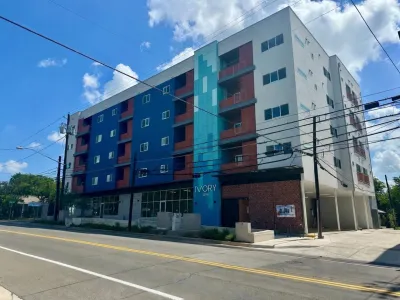
Austin opened its first carless affordable housing condo community, The Ivory, which offers 53 residential units and three commercial spaces.
According to a press release from the city, "The Ivory aims to redefine affordability by reducing both housing and transportation costs. Each home features energy-efficient design elements, including electric appliances, quartz countertops, in-unit washer and dryer hookups, and private or Juliet balconies." The building operates entirely on electricity and includes on-site solar energy that covers roughly 90% of its energy needs.
The building also includes an adjacent bus stop, bike share station and two electric shared vehicles. "Homebuyers will receive mobility credits and transit passes to support car-light or car-free living."
The press release adds, "Funding for The Ivory includes a $4.4 million allocation from the Austin Housing Finance Corporation (AHFC), with $86,345 from the 2022 General Obligation Bonds for pre-construction. The development also received approximately $4.3 million from the Tax Increment Reinvestment Zone (TIRZ) and support from Capital Impact Partners, which included $425,000 for pre-development and a $14.3 million construction loan."
Read the full story: The Ivory Opens as Austin’s First Carless Condominium Community
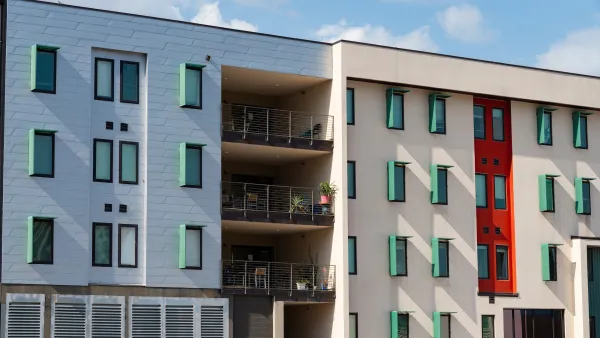
Austin's building boom fails to reach the poorest residents
Although the city has built thousands of new homes, few of them are available to the lowest-earning households.
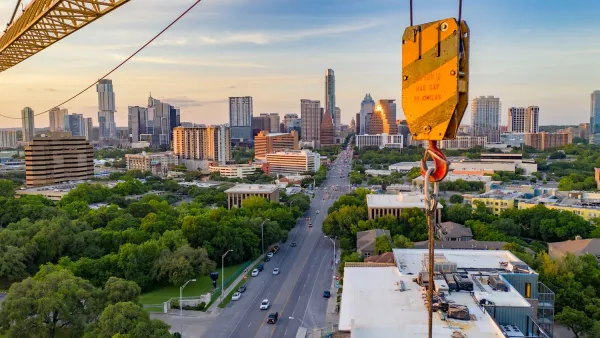
Austin’s Building Boom Not Reaching Lowest-Income Families
Despite having the highest rate of affordable housing construction in the nation, Austin is still underproducing housing for the neediest households.
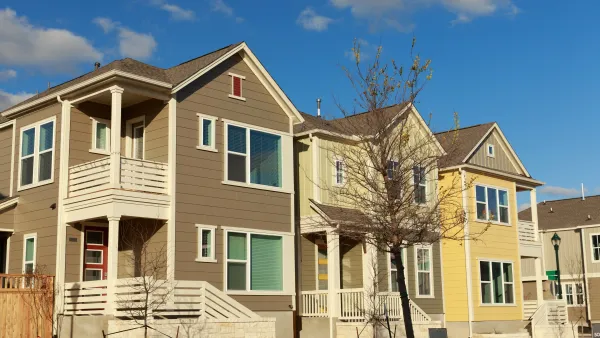
Austin Council Proposes Multi-Family Affordable Housing Program
The proposal would permit larger buildings on single-family lots.

Planetizen Federal Action Tracker
A weekly monitor of how Trump’s orders and actions are impacting planners and planning in America.

Eastern Nebraska is running out of electricity
Data centers and electrification are straining eastern Nebraska’s grid, throttling economic development.

Study reveals best places in the U.S. for cycling, walking
New research from Streetlight Data examines bicycle and pedestrian miles per capita in the 100 largest U.S. cities by population.

Next-generation nuclear reactors are coming to Texas
The reactors will not require towering containment structures thanks to new safety features.

California distributes $1.3 billion to prevent transit service cuts, bolster projects
Twenty-eight projects across California received a portion of the funding.

Pennsylvania Democrats have 15 affordability, clean energy bills for flipped state Senate
Bills in consideration include a bill supporting geothermal energy and a bill supporting solar on warehouses.

FREE Course: Walkable City 1: Why Walkability?
After describing his path towards focusing on walkability as the essence of good planning, Jeff Speck marches through his five principal reasons for making more walkable places.
Reinventing Malls: Planning Alchemy—Turning Gray Fields Into Gold
The course focuses on the opportunities and imperatives that shape reinvention of mall sites.

City of Charlotte
City of Rosemead
Rutgers University, Edward J. Bloustein School of Planning and Public Policy
University of Michigan School for Environment and Sustainability (SEAS)
Hunter College, City University of New York (CUNY)
The Architects Foundation
City of Cambridge
The Pocatello Development Authority
The Urban Renewal Agency of the City of Pocatello