Although the city has built thousands of new homes, few of them are available to the lowest-earning households.



Despite making progress on its affordable housing goals, the city of Austin has not done enough to support its lowest-income households, according to new data assessing the city's 10-year Strategic Housing Blueprint.
As Ben Thompson explains in Community Impact, the plan aims to create at least 60,000 new income-restricted housing units by 2028. But affordability is based on median family income, which has risen by 56% since 2018.
While Austin already passed its goal of adding at least 15,000 new units for 61%-80% MFI earners, "The 2024 blueprint scorecard noted almost no progress toward Austin goals for housing at 30% MFI and below, the extremely low-income level that includes tenants exiting homelessness." New housing was also concentrated in specific geographic areas. While a few districts have surpassed their housing goals, most are no more than 45% of the way there.
Read the full story: Austin added tens of thousands of affordable units since 2018, but gaps for lowest-income residents remain

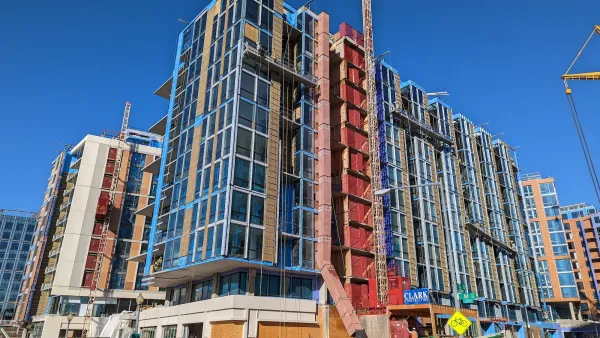
Analysis: DC needs tens of thousands of new homes — not just 'zoned capacity'
Estimates for Washington DC's housing needs range from 15,000 to 170,000.

Oakland opens first affordable housing for teachers
The school district says 70% of its teachers can't afford to live in Oakland.
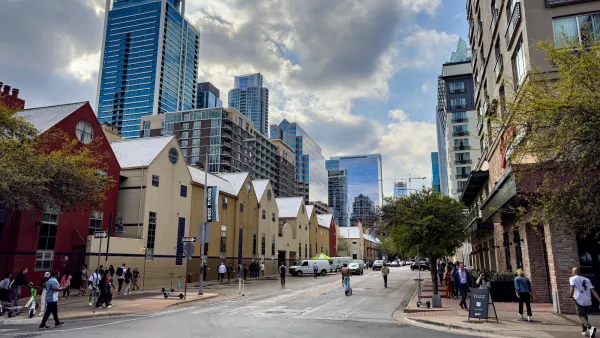
How Austin Became Texas’ Most Expensive City
The average mortgage payment in Austin was $2,955 in 2024.

Planetizen Federal Action Tracker
A weekly monitor of how Trump’s orders and actions are impacting planners and planning in America.

California plans to bury El Niño’s downpour
If the state plays its cards right, it may be able to store a billion acre-feet of El Niño’s water in aquifers.

Chicago breaks ground on $3 billion megadevelopment
The new neighborhood, titled Foundry Park, will one day host 3,700 residences.

Satanic place names
From streams and lakes to valleys and canyons, I mapped more than 1,000 places named after the Devil.

California High-Speed Rail Authority CEO resigns after $600,000 scandal
Under Ian Choudri, the authority used taxpayer dollars to fund first class flights and trips to nightclubs.

Want to study the Missouri River? Soon, you may need unanimous approval from 10 states
Legislation would require 10 governors’ permission to study or build projects moving water outside the basin.

FREE Course: Walkable City 1: Why Walkability?
After describing his path towards focusing on walkability as the essence of good planning, Jeff Speck marches through his five principal reasons for making more walkable places.
Reinventing Malls: Planning Alchemy—Turning Gray Fields Into Gold
The course focuses on the opportunities and imperatives that shape reinvention of mall sites.

City of Rosemead
Rutgers University, Edward J. Bloustein School of Planning and Public Policy
One Hundred Miles
Hunter College, City University of New York (CUNY)
The Architects Foundation
University of Cincinnati Online
City of Cambridge
Montrose County
The Pocatello Development Authority