The 1902 skyscraper, one of the world's earliest, is being retrofitted as luxury homes.


New York City's iconic Flatiron Building was lit up for the first time since it was completed 124 years ago, reports Soo Kim in Newsweek.
The 24-story building, one of the world's first skyscrapers, is being converted into private residences. "Images of its historic lighting, including a never-before-released new image of the building’s façade, which were shared with Newsweek as an exclusive first, show the upper half of the historic structure glowing softly in the early evening, offering a rare glimpse of the tower as it enters a new chapter."
According to Kim, the building is being renovated to preserve its facade while converting interior spaces into homes that will cost upwards of $15 million. "The project is part of a wider trend of historic structures being restored and repurposed across New York City and the country, with nearly half of America’s 125 million buildings being 50 years old, according to the American Institute of Architects (AIA)."
Read the full story: Historic 1902 Skyscraper Hits Major Milestone as It Prepares to Re-Open

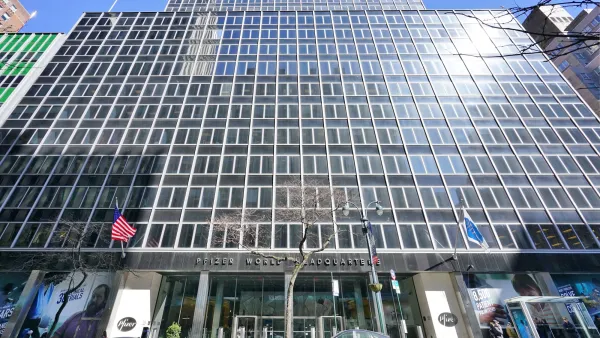
NYC building scare highlights the complexity of adaptive reuse
A near-collapse at the former Pfizer headquarters raised concerns about the office-to-housing project.

A ‘Happy Accident’ Made This 183-Unit Luxury NY Building Affordable Housing
After an apartment building failed to sell its units at market rate, it was sold to a nonprofit that rents the units exclusively to housing voucher recipients.
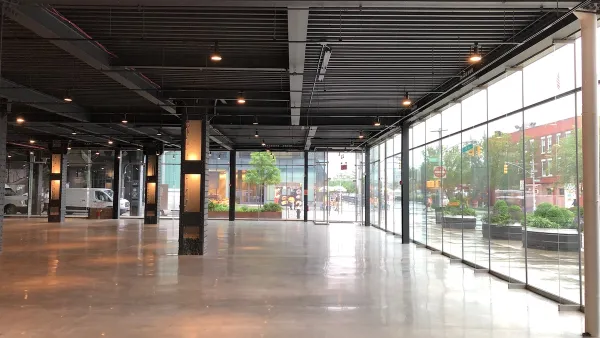
Manhattan Office-to-Apartment Conversions Doubled in 2024
Thanks in part to recent zoning changes, a record number of office space is being converted to housing in the city’s former business districts.

Planetizen Federal Action Tracker
A weekly monitor of how Trump’s orders and actions are impacting planners and planning in America.

California plans to bury El Niño’s downpour
If the state plays its cards right, it may be able to store a billion acre-feet of El Niño’s water in aquifers.

Desperate measures: Advocates weigh draining Lake Powell to fill Colorado River
Draining the reservoir could reduce evaporation losses by a couple hundred thousand acre-feet.

Metra may invest $9.1 billion in regional rail
The agency released a draft of a study examining potential ways to offer more frequent train service.

California city breaks ground on transit connector
The project includes three mobility hubs and a pedestrian bridge.

After public outcry, Massachusetts city releases housing development tracker
Cambridge’s tracker currently shows 250 housing projects in various stages of development.

FREE Course: Walkable City 1: Why Walkability?
After describing his path towards focusing on walkability as the essence of good planning, Jeff Speck marches through his five principal reasons for making more walkable places.
Reinventing Malls: Planning Alchemy—Turning Gray Fields Into Gold
The course focuses on the opportunities and imperatives that shape reinvention of mall sites.

City of Rosemead
Rutgers University, Edward J. Bloustein School of Planning and Public Policy
One Hundred Miles
Hunter College, City University of New York (CUNY)
The Architects Foundation
University of Cincinnati Online
City of Cambridge
Montrose County
The Pocatello Development Authority