The analysis highlights how sprawl and a lack of transit investment perpetuate car dependency for most Americans.


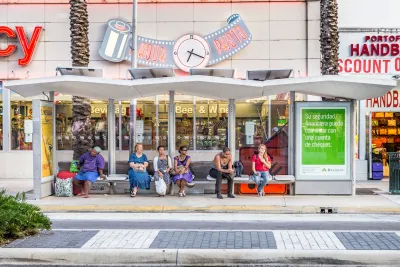
An analysis from the Urban Institute reveals that just 10% of American homes are located within half a mile of frequent, reliable public transit.
According to an article by Jared Brey in Governing, big, dense cities like New York, Chicago and Boston have the highest share of residents living near transit. At the bottom end, just 1% of households in Miami, Tampa and Detroit are near frequent transit. "At the state level, Mississippi has the smallest share of homes near any transit, at 10 percent, and California has the highest share, at 73.4 percent."
The analysis shows how U.S. infrastructure and urban design perpetuate car dependency. But the tide is starting to turn: "States like California and Massachusetts have recently adopted new transit-oriented development policies, allowing taller, denser buildings in neighborhoods served by trains and buses. And according to the report, since the year 2000, every urban area in the country has concentrated more of its new housing near transit than in the decades prior."
The report recommends that cities continue supporting zoning policies that allow denser housing near transit and invest in frequent transit and quality-of-life improvements in transit-adjacent areas that can attract new development.
FULL STORY: Where Do States Rank on Access to Public Transit?

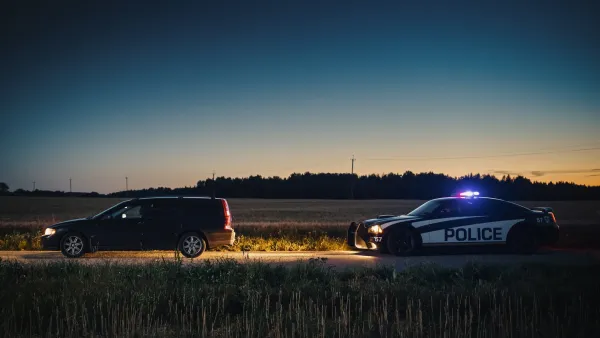
Yes, another thing that car dependency makes worse: DUIs
In the land of the free (and the cars), design incites drinking and driving.

Cost of living too high? Planners to the rescue!
Excessive costs of living force many people to work more than optimal hours, leaving less time for family and fun. Local policies that favor affordable housing and transportation increase freedom, opportunity and happiness.
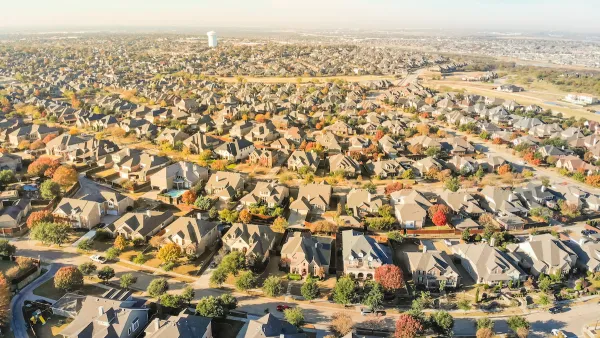
Zoning for Good
A new book highlights the power of zoning to change communities for the better.

Planetizen Federal Action Tracker
A weekly monitor of how Trump’s orders and actions are impacting planners and planning in America.

The state-sanctioned urbicide of Austin
People don’t kill cities. Freeways do.

US to reduce Colorado River water deliveries to Mexico
A new Colorado Treaty amendment reduces Mexico’s Colorado River water allocation by 250,000 acre feet.

Baltimore to break ground on $50 million Transit Priority Project
The project will bring faster bus trips, safer streets and better bike connections to Baltimore.

Airbnb launches $250 million 'last-dollar financing' housing accelerator, makes first investment in Austin
The company will put $6.4 million towards affordable housing development in Texas’ capital.

Guerilla urbanists are building DIY bus stop benches in Chicago
A before-and-after of one of the bus stops with a new bench. The new benches are not officially sanctioned or permitted, but the residents who placed them hope they will be the start of a network of DIY benches across the city.

FREE Course: Walkable City 1: Why Walkability?
After describing his path towards focusing on walkability as the essence of good planning, Jeff Speck marches through his five principal reasons for making more walkable places.
Reinventing Malls: Planning Alchemy—Turning Gray Fields Into Gold
The course focuses on the opportunities and imperatives that shape reinvention of mall sites.

Eagle County Government
Harvard University Graduate School of Design
Nashville Planning Department
The Architects Foundation
University of Cincinnati Online
The Pocatello Development Authority
The Urban Renewal Agency of the City of Pocatello
Journal of the American Planning Association