The commuter rail agency faces a $15 million budget shortfall and could see diminished contributions from its two top funders.


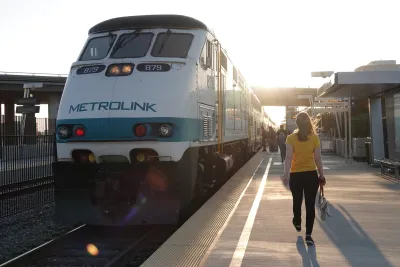
Southern California's Metrolink commuter rail agency says it is forced to reduce service in an effort to save money and address issues with its newer diesel locomotives, reports Joe Linton in Streetsblog LA.
A parts shortage forced the agency to keep trains out of service for extended periods, and this week the agency's CEO announced that the temporary service cuts started in March would continue. The agency is also "evaluating more significant service reductions and a potential fare increase that could take effect as early as October."
In addition to equipment problems and a $15 million budget shortfall, Metrolink could also lose up to $10 million it receives from Los Angeles Metro and OCTA, its two largest funding sources. While it's possible the state could step in with a loan or direct funding, that commitment and timeline is unclear.
FULL STORY: Metrolink Cut Service; Budget Pressure Could Mean More Cuts, Fare Increases


State Leaders Warn of Risks to Southern California Rail Corridor
Coastal erosion and rising sea levels threaten one of the nation’s most scenic—and strategically important—rail corridors.

L.A. County City Calls for New BRT Line
Pico Rivera has released an ambitious plan that would create more transit connections in eastern Los Angeles County.
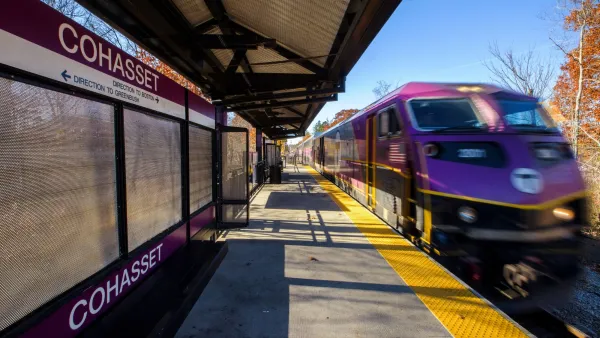
MBTA extends commuter rail discounts and lowers express bus fare to keep passengers riding into the fall
Boston-area commuters can access half-price monthly passes through November.

Planetizen Federal Action Tracker
A weekly monitor of how Trump’s orders and actions are impacting planners and planning in America.

The state-sanctioned urbicide of Austin
People don’t kill cities. Freeways do.

US to reduce Colorado River water deliveries to Mexico
A new Colorado Treaty amendment reduces Mexico’s Colorado River water allocation by 250,000 acre feet.

5 New England states march closer to 800 megawatt wind energy project
Securing federal approval for the project may be complicated under the Trump administration, which has historically been hostile towards domestic wind power.

Baltimore to break ground on $50 million Transit Priority Project
The project will bring faster bus trips, safer streets and better bike connections to Baltimore.

Airbnb launches $250 million 'last-dollar financing' housing accelerator, makes first investment in Austin
The company will put $6.4 million towards affordable housing development in Texas’ capital.

FREE Course: Walkable City 1: Why Walkability?
After describing his path towards focusing on walkability as the essence of good planning, Jeff Speck marches through his five principal reasons for making more walkable places.
Reinventing Malls: Planning Alchemy—Turning Gray Fields Into Gold
The course focuses on the opportunities and imperatives that shape reinvention of mall sites.

Eagle County Government
Harvard University Graduate School of Design
Nashville Planning Department
The Architects Foundation
University of Cincinnati Online
The Pocatello Development Authority
The Urban Renewal Agency of the City of Pocatello
Journal of the American Planning Association