The difference in temperature created by urban trees can translate to as much as 40% less excess heat.


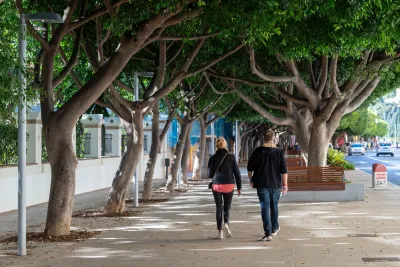
A new study from the Healthy Green Spaces Coalition reveals that city blocks with more trees are significantly cooler than blocks without shade, highlighting the importance of tree canopy for reducing the urban heat island effect.
"This study links a 65-city urban heat island dataset with American Forests’ Tree Equity Score file for every urban census tract in those cities. For each tract (a neighborhood-sized geography), we matched its heat island intensity in degrees Fahrenheit above a nearby rural baseline to its tree canopy percent and related equity indicators, using the shared census tract GEOID (the unique Census identifier for each tract)." Nationally, the greenest tracts averaged close to a one degree difference from the least green tracts, amounting to roughly 9% less excess heat.
In some cities, that gap reaches 20% to 40%. "On a series of extreme heat days, a one‑degree shift in ambient conditions can mean the difference between 'very hot' and 'dangerous,' especially for people with health risks."
While the study is isolated to trees, other factors impact the temperature of cities including lawns, natural turf, and other vegetated ground covers. "We do not quantify those turf and lawn effects in this study, so the cooling dividend we report for trees should be read as conservative: in many neighborhoods, additional cooling from ground‑level vegetation, parks, and other green infrastructure sits on top of the canopy effect."
Read the full story: How Much Cooler Are the Greenest Neighborhoods?

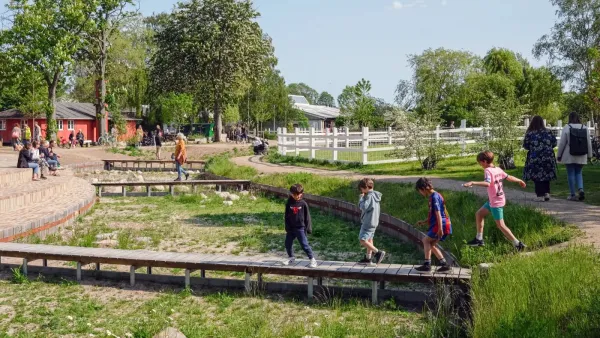
Copenhagen is losing its cool
In a city long designed to maximize light during dark Scandinavian winters, climate change is forcing the Danish capital to rethink its relationship with the sun.
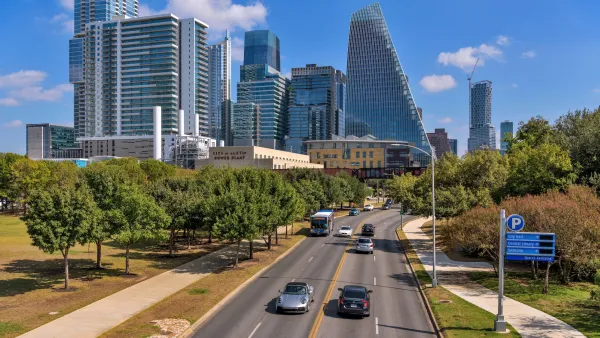
Austin uses satellite data to find gaps in its tree canopy
Layering tree data, heat risk and demographics information is helping the city implement its Climate Equity Plan.
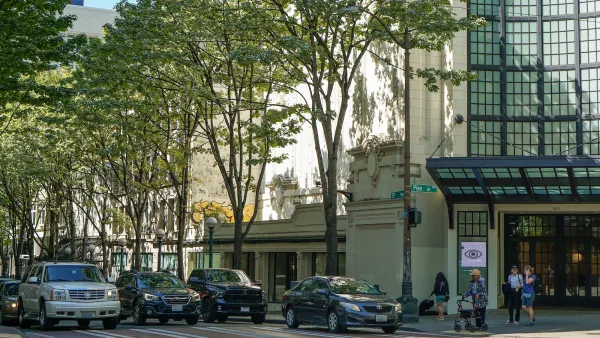
Washington Urban Forestry Program Faces 'Existential' Budget Cut
A proposed budget eliminates funding for a key urban forestry program that funds greening efforts across the state.

Planetizen Federal Action Tracker
A weekly monitor of how Trump’s orders and actions are impacting planners and planning in America.

‘Going backwards:’ Baltimore mayor, students rally against state's transit funding plan
Maryland's proposed six-year plan provides no funding for Baltimore’s BMORE bus program and reduces its road maintenance funding.

Detroit to transform waterfront with $2.2 billion investment
Developers will convert about 18 acres of unused parking lot space into civic spaces.

Planned $2 billion courthouse in MA sparks tension with local government
Springfield owns an essential piece of the land developers intend to build on, and some city officials do not want to see the project come to fruition.

Californians can now transform balconies into power generators
Gov. Gavin Newsom has legalized plug-in solar technology, which allows residents to plug solar panels directly into their outlets

This 85-year-old ranch is Texas’ newest state park
The 650 acre ranch is one of the largest parcels of land along Lake Palestine.

FREE Course: Walkable City 1: Why Walkability?
After describing his path towards focusing on walkability as the essence of good planning, Jeff Speck marches through his five principal reasons for making more walkable places.
Reinventing Malls: Planning Alchemy—Turning Gray Fields Into Gold
The course focuses on the opportunities and imperatives that shape reinvention of mall sites.

City of Thousand Oaks
City of Wisconsin Rapids
Harvard University Graduate School of Design
The Architects Foundation
University of Cincinnati Online
Northern Illinois Transit Authority (NITA)
The Pocatello Development Authority
The Urban Renewal Agency of the City of Pocatello