The company says riders expect to be picked up and dropped off next to the curb, even if they're illegally blocking bike lanes.


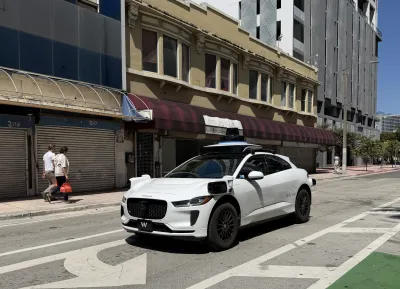
Bike advocates say Waymo representatives have told them that it is "normal practice" for the robotaxis to veer into bike lanes to pick up or drop off passengers, despite laws barring vehicles from doing so.
As Ryan Mallon notes in a piece on Road.cc, a San Francisco cyclist sued Waymo after one of its cars stopped in a bike lane, causing her to crash into its open door and sustain severe injuries. "According to the lawsuit, the Safe Exit system employed by Waymo, which aims to alert passengers of surrounding dangers and hazards, failed – leading 26-year-old Jenifer Hanki to claim that Waymo knows its cars are 'dooring' cyclists."
According to reporting in Streetsblog NYC, Christopher White, executive director of the San Francisco Bicycle Coalition, says Waymo has stated that expecting its cars to respect bike lanes is "too high a bar" and that pulling into bike lanes is a "normal practice" that customers expect.
Read the full story: Expecting driverless taxis to respect bike lanes “too high a bar” – because customers want to be dropped off in them, autonomous vehicle firm Waymo tells cyclists

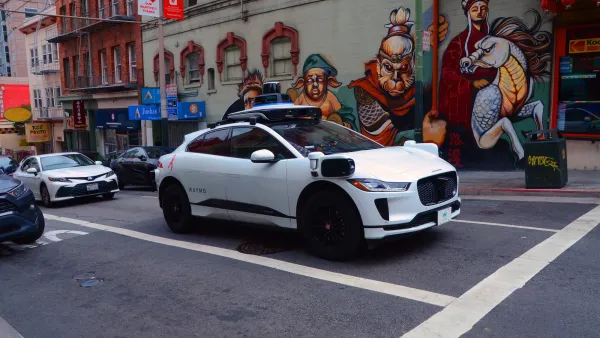
Feds say robotaxis interfering with first responders is a 'functional insufficiency,' demand solutions by August
The NHTSA issued a letter to autonomous carmakers, noting that 'Every second matters when law enforcement officers, firefighters, or paramedics are answering a call.'
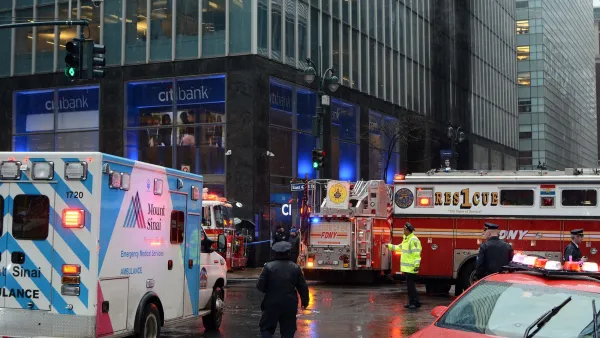
Waymo's troubles with emergency vehicles are getting worse
In one case, first responders waited 53 minutes to reach a Waymo support representative during an emergency.
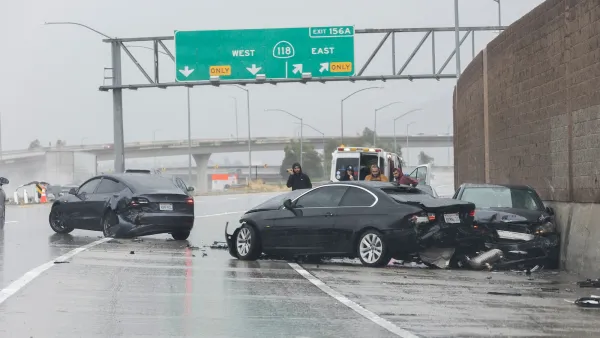
Tesla 'completely' redacts robotaxi crash reports
Reports submitted to the NHTSA also reveal differences in the types of crashes Tesla cars are involved in as opposed to its competitors.

Planetizen Federal Action Tracker
A weekly monitor of how Trump’s orders and actions are impacting planners and planning in America.

The state-sanctioned urbicide of Austin
People don’t kill cities. Freeways do.

Colorado’s Largest Data Center Could Rise Next to Homes — Without a Public Hearing
The proposed campus would consume 11 times the power of Denver International Airport; as it has across the country, opposition mounts.

Nation's most wind-powered state turns to coal as data centers increase energy demand
For the first time in decades, Iowa has increased its generation of coal power.

NYC cools commuters with city's first rain garden above a bus stop
New York City officials say the plants in the rain garden can absorb 16 gallons of rainwater during heavy storms.

Brightline West’s future may rely on $6 billion federal loan
The company has until Nov. 2 to make a $400 million equity investment into its proposed high-speed rail line.

FREE Course: Walkable City 1: Why Walkability?
After describing his path towards focusing on walkability as the essence of good planning, Jeff Speck marches through his five principal reasons for making more walkable places.
Reinventing Malls: Planning Alchemy—Turning Gray Fields Into Gold
The course focuses on the opportunities and imperatives that shape reinvention of mall sites.


Greater Baltimore Committee
Eagle County Government
Harvard University Graduate School of Design
The Architects Foundation
University of Cincinnati Online
The Pocatello Development Authority
The Urban Renewal Agency of the City of Pocatello
Journal of the American Planning Association