At the turn of the 20th century, moving sidewalks promised efficient, comfortable movement of pedestrians. Then cars took over.


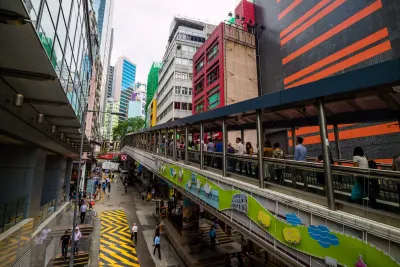
Despite making its debut almost a century and a half ago at the 1893 Chicago World's Fair, the moving sidewalk hasn't made much headway in the modern world outside of airports and theme parks.
An article by Bill Gourgey in Popular Science traces the history of the moving sidewalk concept and its various applications since it was first invented. One of its early champions, Alfred Speer, first proposed an elevated moving sidewalk on New York City's Broadway as a solution to congestion. "Today, a confluence of factors, including aging populations in need of mobility assistance, the spread of 'complete streets' to establish more car-free zones, and the climate-driven pressure to rethink mass transit, may be creating favorable conditions for new versions of Speer’s vision."
Cities and companies have made various attempts at using moving sidewalks with varied degrees of success. Ultimately, they have found their niche in airports, theme parks, and other contained places with limited destinations. Today, Hong Kong's Central-Mid-Levels Escalator, which connects hillside neighborhoods with the city center, is the world's longest covered escalator system.
Read the full story: In 1871, cities almost got moving sidewalks. Why are we still waiting?
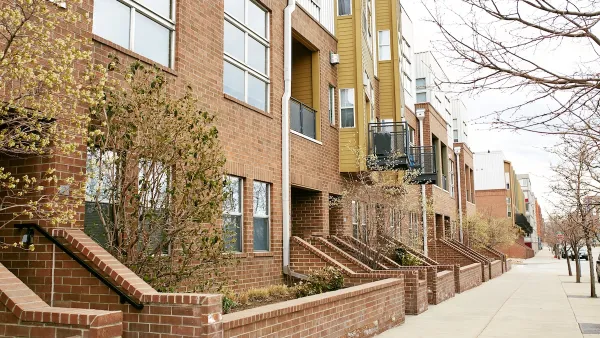
Denver to Shift Sidewalk Repair Work to City, Funded by Property Owners
The city is shifting from a piecemeal approach to sidewalk repairs that charged property owners with doing the work to a more streamlined, city-led process.
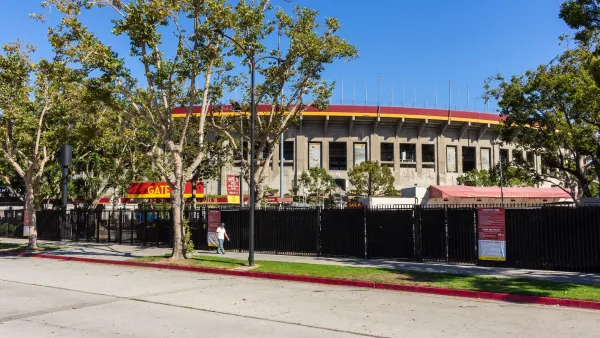
LA authorizes $9.5M for sidewalk repairs around Olympic venues
The city is hosting the Olympic and Paralympic Games in 2028.
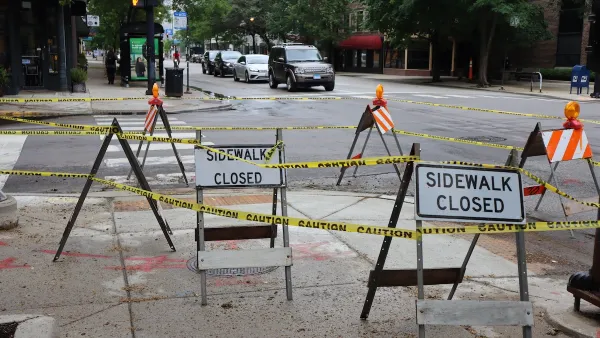
Chicago Residents Sue City Over Inaccessible Sidewalks
The suit alleges the city has failed to create a “coordinated, proactive system” for complying with ADA and ensuring accessibility on the city’s sidewalks and crosswalks.

Planetizen Federal Action Tracker
A weekly monitor of how Trump’s orders and actions are impacting planners and planning in America.

California plans to bury El Niño’s downpour
If the state plays its cards right, it may be able to store a billion acre-feet of El Niño’s water in aquifers.

Desperate measures: Advocates weigh draining Lake Powell to fill Colorado River
Draining the reservoir could reduce evaporation losses by a couple hundred thousand acre-feet.

In Texas, data centers are swallowing promised parkland
Residents who moved to Taylor, Texas for a rural community now have to contend with three data centers in their backyard.

How a Chicago-sized wind farm beat the odds and powered on
The project spanned five presidential administrations and a standoff with a U.S. military base.

MTA gives itself 30 days to transform pit into basketball court
The site has been under construction since 2022; the city originally estimated it would finish the court in 2024.

FREE Course: Walkable City 1: Why Walkability?
After describing his path towards focusing on walkability as the essence of good planning, Jeff Speck marches through his five principal reasons for making more walkable places.
Reinventing Malls: Planning Alchemy—Turning Gray Fields Into Gold
The course focuses on the opportunities and imperatives that shape reinvention of mall sites.

City of Rosemead
Rutgers University, Edward J. Bloustein School of Planning and Public Policy
One Hundred Miles
Hunter College, City University of New York (CUNY)
The Architects Foundation
University of Cincinnati Online
City of Cambridge
Montrose County
The Pocatello Development Authority