The city approved a plan to build cap parks over parts of I-35 less than a year ago.


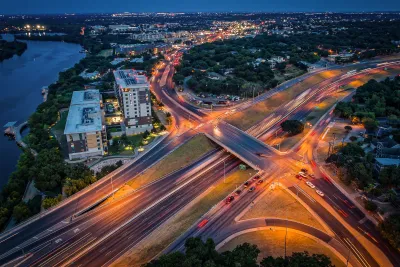
Austin city staff are urging the city council to postpone moving forward with an ambitious plan to cap portions of Interstate 35, citing budgetary concerns.
According to reporting by Nathan Bernier for KUT News, “Council members skeptical of the plan to fund expensive public parks over the highway took the news as a vindication of their earlier concerns. Those on the council who support concealing a more-than-200-foot-wide highway canyon beneath almost 14-acres of new parks bristled at the gloomy outlook from city staff.”
The project is part of an expansion of I-35 through downtown Austin and is designed to mitigate the damage the freeway would cause. The council committed $104 million to part of the project last May.
Facing new financial concerns, the council will decide whether to hold off on funding further work. “If City Council follows staff's recommendation and holds off, more chances to add caps could arise between 2028 and 2032. But those later additions would come with higher price tags.”
FULL STORY: Austin City Council urged to pause plan for parks over I-35

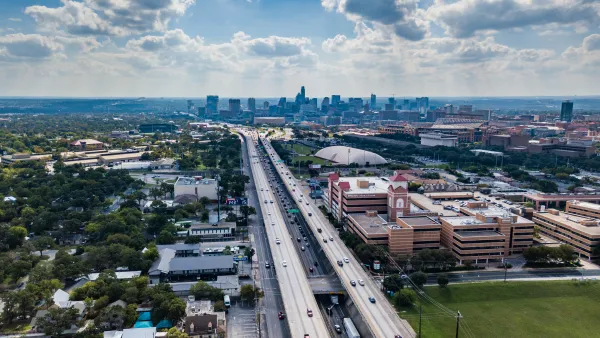
Letter Reveals Changes to I-35 Expansion Plan in Austin
In addition to new HOV lanes and a proposed boardwalk, TxDOT agreed to engineer the freeway for caps in some areas, but the city would have to fund their construction.
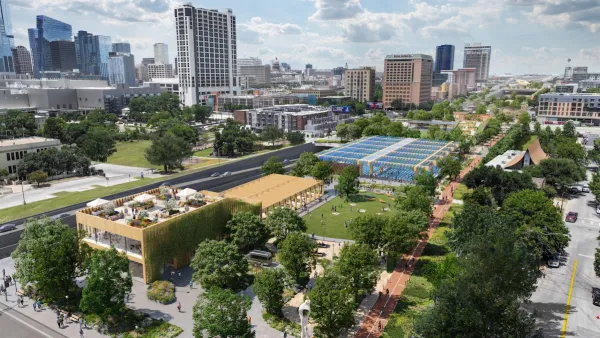
Austin’s Vision for I-35 Cap Parks Takes Final Shape
The city’s plan includes parks, entertainment pavilions, commercial space, sports fields, and other facilities over 30 acres of deck parks spanning a sunken Interstate 35.
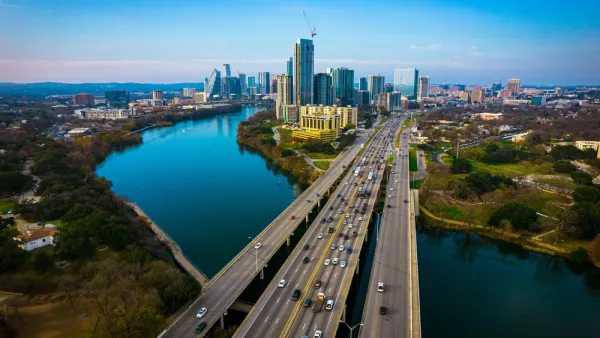
Austin Seeks Federal Grants for Freeway Caps as I-35 Expansion Plan Moves Forward
With TxDOT unwilling to cancel a controversial freeway expansion project, the city is looking for funding to mitigate the projected impacts.

Planetizen Federal Action Tracker
A weekly monitor of how Trump’s orders and actions are impacting planners and planning in America.

The state-sanctioned urbicide of Austin
People don’t kill cities. Freeways do.

US to reduce Colorado River water deliveries to Mexico
A new Colorado Treaty amendment reduces Mexico’s Colorado River water allocation by 250,000 acre feet.

5 New England states march closer to 800 megawatt wind energy project
Securing federal approval for the project may be complicated under the Trump administration, which has historically been hostile towards domestic wind power.

Baltimore to break ground on $50 million Transit Priority Project
The project will bring faster bus trips, safer streets and better bike connections to Baltimore.

Airbnb launches $250 million 'last-dollar financing' housing accelerator, makes first investment in Austin
The company will put $6.4 million towards affordable housing development in Texas’ capital.

FREE Course: Walkable City 1: Why Walkability?
After describing his path towards focusing on walkability as the essence of good planning, Jeff Speck marches through his five principal reasons for making more walkable places.
Reinventing Malls: Planning Alchemy—Turning Gray Fields Into Gold
The course focuses on the opportunities and imperatives that shape reinvention of mall sites.

Eagle County Government
Harvard University Graduate School of Design
Nashville Planning Department
The Architects Foundation
University of Cincinnati Online
The Pocatello Development Authority
The Urban Renewal Agency of the City of Pocatello
Journal of the American Planning Association