Roughly 20 percent of Super Bowl attendees arrived at the stadium by transit.


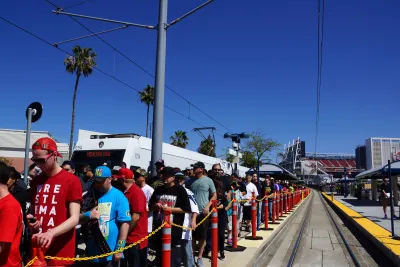
Transit ridership in Santa Clara, California hit a record high during the Super Bowl with 30,000 light rail and bus trips, according to the Valley Transportation Authority (VTA).
Roughly 20 percent of the Super Bowl crowd used transit in both directions, beating VTA’s expectations by 5,000 riders. According to a VTA spokesperson, “After the Super Bowl 60 game, VTA safely moved more than 15,000 passengers from Levi's Stadium by bus and light rail within 90 minutes -- beating the NFL's two-hour crowd management benchmark.”
The same stadium will host six FIFA World Cup matches later this year. “Last month, VTA General Manager Carolyn Gonot sent a letter to state legislators in the Bay Area seeking $44 million in extra funding for the World Cup.”
In Seattle, the Seahawks victory parade led to a surge in riders that may have also set ridership records for Sound Transit. The agency says preliminary numbers show roughly 200,000 riders on the day of the parade, more than the previous single-day record of 159,500.
Read the full story: San Jose Spotlight: Super Bowl Sets South Bay Public Transit Ridership Record

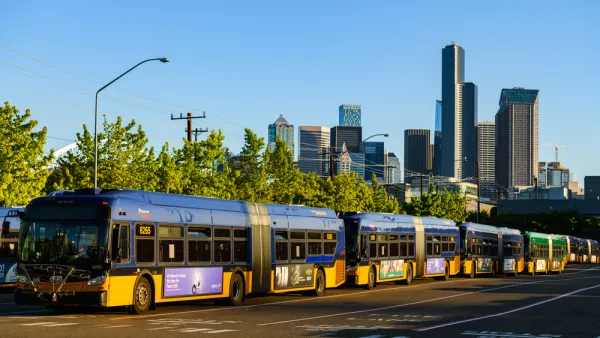
Seattle to Reinstate Bus Fare Enforcement
After a COVID-era move to eliminate fare inspections on city buses, King County Metro is reinstating checks for fare evasion.

‘The Power of the Kraken:’ Seattle Monorail Ridership Spikes for Hockey Games
Seattle’s new professional hockey team is drawing legions of enthusiastic fans. Around a quarter of them are taking public transit, such as the city’s often-maligned monorail, to games.
Big Wins for Urbanism in Cascadia
"Yes we actually did that."

Planetizen Federal Action Tracker
A weekly monitor of how Trump’s orders and actions are impacting planners and planning in America.

California plans to bury El Niño’s downpour
If the state plays its cards right, it may be able to store a billion acre-feet of El Niño’s water in aquifers.

Chicago breaks ground on $3 billion megadevelopment
The new neighborhood, titled Foundry Park, will one day host 3,700 residences.

Move over, LA: St. Louis gears up for Olympics, invests millions in downtown redevelopment
The Missouri city will host the 2028 Olympic soccer group stage and knockout matches.

Satanic place names
From streams and lakes to valleys and canyons, I mapped more than 1,000 places named after the Devil.

California High-Speed Rail Authority CEO resigns after $600,000 scandal
Under Ian Choudri, the authority used taxpayer dollars to fund first class flights and trips to nightclubs.

FREE Course: Walkable City 1: Why Walkability?
After describing his path towards focusing on walkability as the essence of good planning, Jeff Speck marches through his five principal reasons for making more walkable places.
Reinventing Malls: Planning Alchemy—Turning Gray Fields Into Gold
The course focuses on the opportunities and imperatives that shape reinvention of mall sites.

City of Rosemead
Rutgers University, Edward J. Bloustein School of Planning and Public Policy
One Hundred Miles
Hunter College, City University of New York (CUNY)
The Architects Foundation
University of Cincinnati Online
City of Cambridge
Montrose County
The Pocatello Development Authority