Dunkirk’s free buses are bringing social and economic rewards at a small cost to the city.


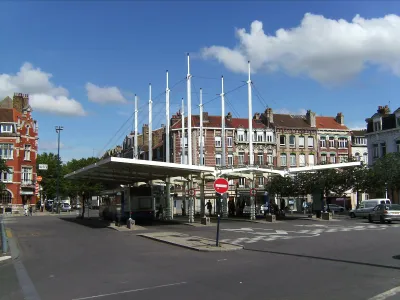
A French city that made its bus system free offers valuable lessons for New York City and other U.S. cities that want to transition to fare-free transit.
Dunkirk went fare-free in 2018, making it the largest city in France to do so, after four years of planning and soft launches, explains Peter Yeung in Reasons to be Cheerful.
Dunkirk focused on gradually improving the cleanliness, safety, and reliability of its buses. “You can’t just make buses free from one day to the next,” says Dunkirk deputy mayor Jean-François Montagne. “If the service is underused, timetables not well understood, if buses are always late, and you don’t change people’s views of public transit, then it won’t work.”
Today, its fleet of 150 buses is “100% free, 7 days a week” on 18 routes, serving Dunkirk’s 200,000 residents. “A 2019 study by the Observatory of Free Transport Cities, an independent body, found that the policy has led to residents making more trips to the city center, that about half of the new bus riders were taking bus journeys they previously made by car, and that the attractiveness and image of the city has improved.”
There are questions about whether free transit makes sense at a larger scale. A 2025 French report found that free transit in smaller cities yields more new riders at relatively little cost, while free transit in big cities creates a much higher financial burden for the system or city.
For Montagne, the 17 million euros that it costs to run the free buses (out of a city budget of 500 million euros) is “an important social investment” that “serves the population, it helps workers, but also families, for leisure, to attend healthcare.”
FULL STORY: The City Where Free Buses Changed Everything

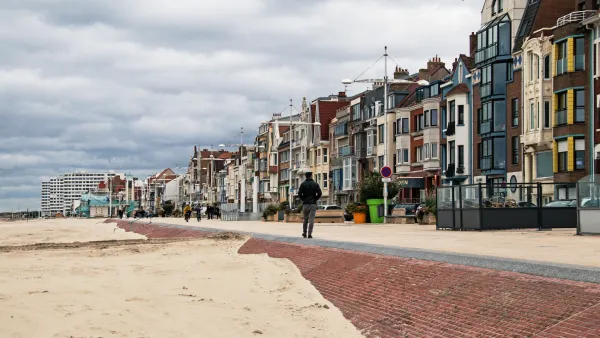
The City Where Free Buses Changed Everything
New York’s new mayor Zohran Mamdani has said he’ll make every bus free to ride. This French city did just that — and is reaping the rewards.
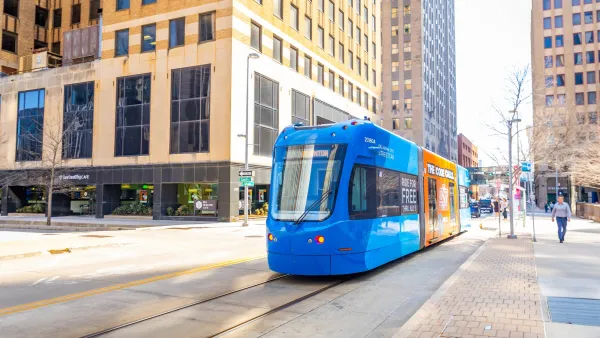
OKC streetcar will stay fare-free after ridership shot up 74%
The downtown streetcar saw a surge in ridership after it eliminated fares in January.
Fisticuffs: The argument FOR fare-free transit
When the barrier to entry drops to zero, magic can happen.

Planetizen Federal Action Tracker
A weekly monitor of how Trump’s orders and actions are impacting planners and planning in America.

The state-sanctioned urbicide of Austin
People don’t kill cities. Freeways do.

US to reduce Colorado River water deliveries to Mexico
A new Colorado Treaty amendment reduces Mexico’s Colorado River water allocation by 250,000 acre feet.

Baltimore to break ground on $50 million Transit Priority Project
The project will bring faster bus trips, safer streets and better bike connections to Baltimore.

Airbnb launches $250 million 'last-dollar financing' housing accelerator, makes first investment in Austin
The company will put $6.4 million towards affordable housing development in Texas’ capital.

Guerilla urbanists are building DIY bus stop benches in Chicago
A before-and-after of one of the bus stops with a new bench. The new benches are not officially sanctioned or permitted, but the residents who placed them hope they will be the start of a network of DIY benches across the city.

FREE Course: Walkable City 1: Why Walkability?
After describing his path towards focusing on walkability as the essence of good planning, Jeff Speck marches through his five principal reasons for making more walkable places.
Reinventing Malls: Planning Alchemy—Turning Gray Fields Into Gold
The course focuses on the opportunities and imperatives that shape reinvention of mall sites.


Eagle County Government
Harvard University Graduate School of Design
Nashville Planning Department
The Architects Foundation
University of Cincinnati Online
The Pocatello Development Authority
The Urban Renewal Agency of the City of Pocatello
Journal of the American Planning Association