The Northern California surf haven could lose its iconic waves as projects designed to protect coastal infrastructure alter its coastline.


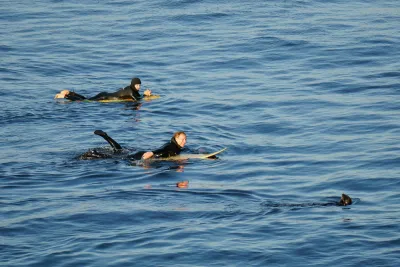
Santa Cruz, California’s famous surf breaks — and its surf-based economy — is at risk due to coastal erosion and a constantly evolving shoreline that could, in coming years, be dramatically reshaped by policy decisions aimed at preserving land.
According to a report from the nonprofit Save the Waves Coalition, the city could lose millions in revenue that depends on surfing, explains Kari Goodbar in The Mercury News. The report “urges city and county leaders to factor surfing’s economic and cultural value into long-term coastal planning, and calls for surf breaks to be made more welcoming to historically marginalized groups, ensuring broader access to the sport’s benefits.”
The report estimates that surf-related businesses generate about $150.2 million for Santa Cruz each year, with an additional $4.5 million in indirect economic activity generated by surfing trips to the city. According to the report, “One foot of sea level rise would reduce surfability across Santa Cruz by 29%, cutting annual surf-related revenue by an estimated $12.8 million.”
The report notes that projects aimed at protecting coastal infrastructure could change how waves behave and make Santa Cruz a less desirable place to surf. In response to the report, the Santa Cruz city Council voted in November to recognize surfing as a coastal resource.
Read the full story: Surfing generates nearly $200 million a year for Santa Cruz — and coastal changes could put it at risk

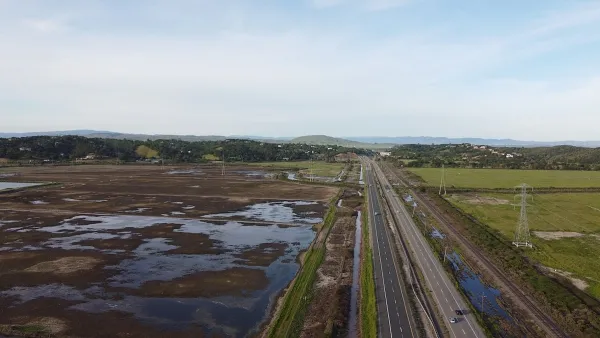
Sinking Into Wetlands, This Northern California Highway Needs a Rescue
A plan to elevate the roadway and restore adjacent wetlands could take decades to complete.
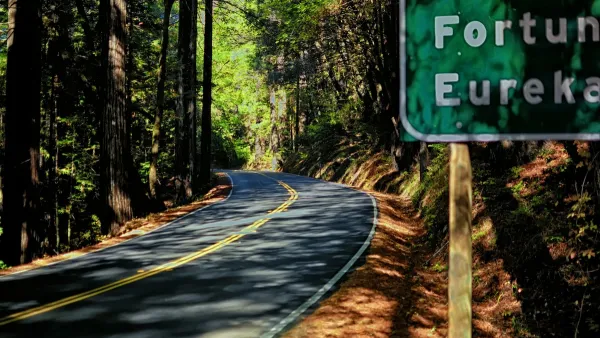
Caltrans Plans $2 Billion Tunnel to Save Crumbling Coastal Highway
A roadway connecting Eureka and Crescent City is a lifeline for local residents, but its future is uncertain as rock slides force repeated closures.
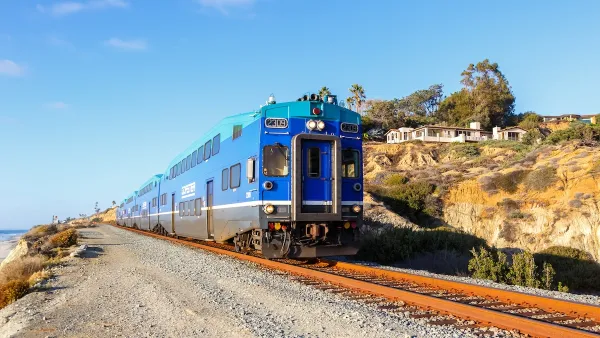
SoCal Leaders Debate Moving Coastal Rail Line
Train tracks running along the Pacific Ocean are in danger from sea level rise, but residents are divided on how to fix the problem.

Planetizen Federal Action Tracker
A weekly monitor of how Trump’s orders and actions are impacting planners and planning in America.

Amtrak, CN end decades-long dispute with eight-year agreement
The new operating agreement establishes an updated framework for the companies to work together, including processes to resolve disputes.

Judges permit Denver to divert 77,000 acre feet from the Colorado River for reservoir expansion
Overuse and climate change have caused the Colorado River’s water levels to plummet.

NYC DOT wants faster, more permanent street upgrades
The city is examining ways to build more concrete infrastructure without getting entangled in 'decades-long' projects.

'Something we’ve never seen before:' rising utility rates could strain city finances nationwide
Data centers, climate change and other factors have caused utility rates in the United States to increase by 38% since 2020.

Trump to overrule local leaders, lease millions of acres of America’s Pacific Island territories’ seafloors to mining companies
International law says that the Indigenous people of America’s territories have a right to prior and informed consent regarding projects that impact their countries.

FREE Course: Walkable City 1: Why Walkability?
After describing his path towards focusing on walkability as the essence of good planning, Jeff Speck marches through his five principal reasons for making more walkable places.
Reinventing Malls: Planning Alchemy—Turning Gray Fields Into Gold
The course focuses on the opportunities and imperatives that shape reinvention of mall sites.

Harvard University Graduate School of Design
KFH Group Inc.
Greater Baltimore Committee
The Architects Foundation
University of Cincinnati Online
The Pocatello Development Authority
The Urban Renewal Agency of the City of Pocatello