The city’s buses and trolleys are close to pre-pandemic ridership numbers but face a $120 million deficit that could require service cuts.


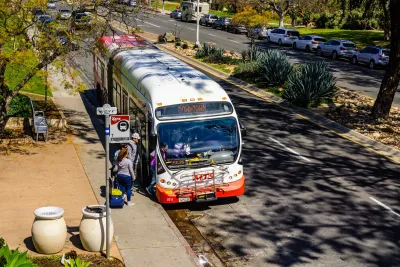
San Diego’s Metropolitan Transit System (MTS) has been making significant ridership gains, reaching 95 percent of pre-pandemic numbers this summer, reports David Garrick in the San Diego Union-Tribune.
According to Garrick, “Annual ridership on Metropolitan Transportation System buses and trolleys rose more than 7% to 81.2 million during the fiscal year that ended in June — only 4.2 million lower than the pre-pandemic ridership of 85.4 million.”
However, MTS faces a looming $120 million per year budget shortfall that could jeopardize the system’s growth. System officials are analyzing all of MTS’s 100 bus routes to understand where cuts could be made. “MTS officials have also begun exploring a possible November 2028 ballot measure that could raise the local sales tax half a cent to generate revenue only for transit projects.” The tax could generate up to $300 million a year for transit services.
FULL STORY: San Diego transit at a crossroads? MTS boasts robust ridership recovery — but faces financial crisis

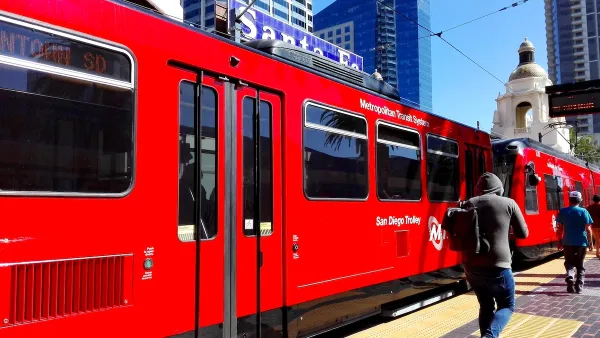
San Diego Trolley Nation’s Most Popular Light Rail
The system's ridership benefited from an extension project and free transit for youth.
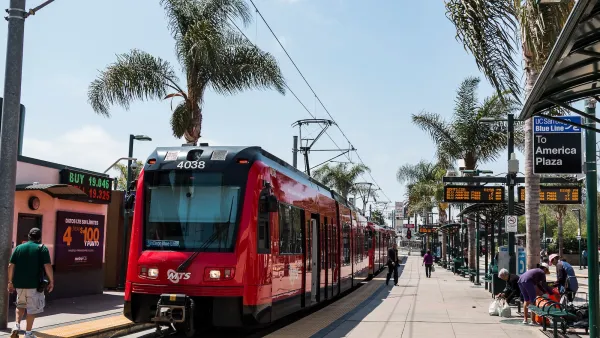
San Diego could raise fares for North County buses and trolleys
A SANDAG committee voted to raise single-ride fares from $2.50 to $3.
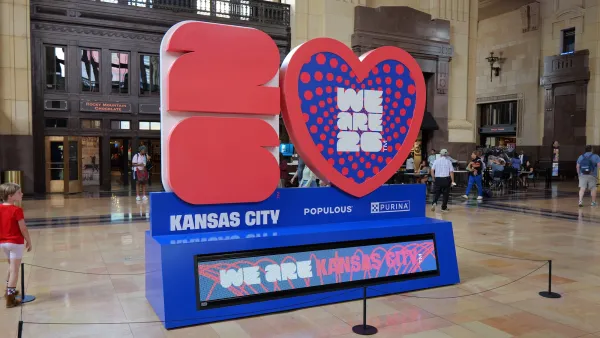
World Cup crowds offer 'stress test' for Kansas City transit planners
Transportation officials are closely monitoring travel patterns during the World Cup to understand how the city's transit system can be improved as the population grows.

Planetizen Federal Action Tracker
A weekly monitor of how Trump’s orders and actions are impacting planners and planning in America.

The state-sanctioned urbicide of Austin
People don’t kill cities. Freeways do.

US to reduce Colorado River water deliveries to Mexico
A new Colorado Treaty amendment reduces Mexico’s Colorado River water allocation by 250,000 acre feet.

5 New England states march closer to 800 megawatt wind energy project
Securing federal approval for the project may be complicated under the Trump administration, which has historically been hostile towards domestic wind power.

Baltimore to break ground on $50 million Transit Priority Project
The project will bring faster bus trips, safer streets and better bike connections to Baltimore.

Airbnb launches $250 million 'last-dollar financing' housing accelerator, makes first investment in Austin
The company will put $6.4 million towards affordable housing development in Texas’ capital.

FREE Course: Walkable City 1: Why Walkability?
After describing his path towards focusing on walkability as the essence of good planning, Jeff Speck marches through his five principal reasons for making more walkable places.
Reinventing Malls: Planning Alchemy—Turning Gray Fields Into Gold
The course focuses on the opportunities and imperatives that shape reinvention of mall sites.

Eagle County Government
Harvard University Graduate School of Design
Nashville Planning Department
The Architects Foundation
University of Cincinnati Online
The Pocatello Development Authority
The Urban Renewal Agency of the City of Pocatello
Journal of the American Planning Association