The project is funded by a private group that will collect future toll revenue for the first 50 years after the new toll lanes open.


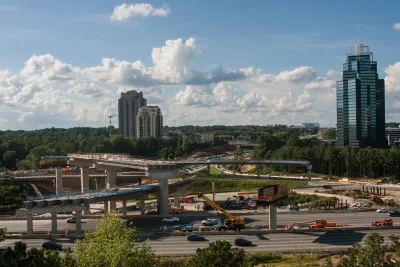
A $5 billion highway revamp project in Atlanta is taking its first steps as crews began clearing trees from a 16-mile stretch of GA Highway 400 as part of a plan to add new toll lanes, reports Josh Green in Urbanize Atlanta.
“As 11Alive News relays, Georgia Department of Transportation officials selected a private-sector partner—an LLC called SR 400 Peach Partners—to foot the bill, meaning taxpayers won’t be on the hook for financing construction, operations, or maintenance of the toll lanes project.” The private group will receive toll revenue for 50 years, after which the project will become property of the state.
The lanes will operate on variable pricing based on time of day and real-time traffic conditions. “All 16 miles of toll lanes and BRT routes will be constructed with enhanced concrete that limits maintenance needs and boosts driver safety, along with radar-monitored traffic and accident alerts, according to SR 400 Peach Partners.”
The new toll lanes are expected to open sometime in 2031.
FULL STORY: Billion-dollar highway overhaul, BRT project officially barreling ahead

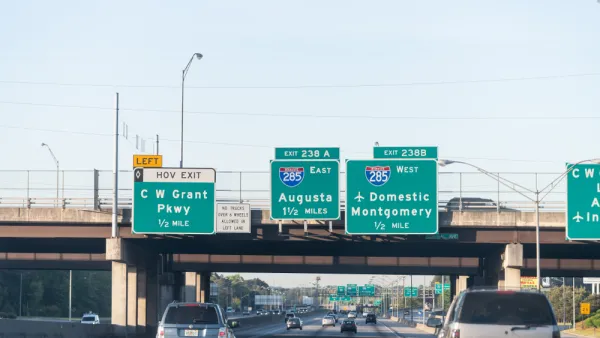
Georgia's $11 Billion Road-Building Program Evolves
Recently announced changes to a massive road-building program in Georgia will shift moves projects aimed at improvements for the trucking industry earlier onto the calendar, while pushing back projects located closer to Atlanta.
Georgia DOT Takes $4.6 Billion Highway Expansion Plan on the Road
The Georgia Department of Transportation held a series of public meetings this month to reveal details of a plan to add toll lanes to I-285 and Georgia 400 outside Atlanta.
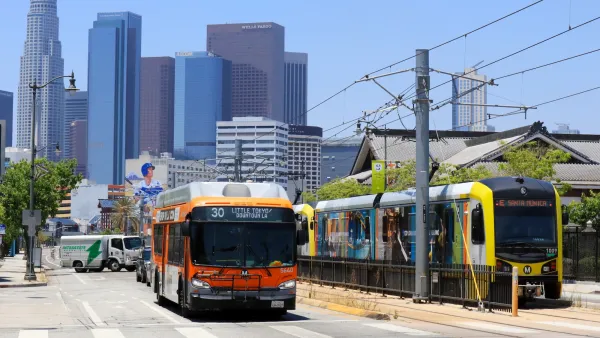
LA Metro Increases Highway Expansion Budget by 40%
Metro has plans to expand freeways including the 5, 105, and 405, among others.

The state-sanctioned urbicide of Austin
People don’t kill cities. Freeways do.

US to reduce Colorado River water deliveries to Mexico
A new Colorado Treaty amendment reduces Mexico’s Colorado River water allocation by 250,000 acre feet.

New Jersey’s second-largest city bans standalone data centers
Jersey City will continue to allow co-location facilities, such as those meant for research institutions that store their own data.

Amtrak not solely to blame for New Jersey commuter rail's unreliability, report finds
A new study from the Garden State Initiative found that NJ Transit’s budget grew 20% across a 4 year period, but reliability declined significantly over the same period.

EPA erases limits on planet-warming pollution from power plants
Under Monday’s plan, power plants would still have some limits on how much mercury, arsenic and other contaminants they can emit.

Phoenix announces new on-demand transit service, more frequent RAPID buses
Both new services will launch in October, and are part of Phoenix's Project Effective Access Solutions for Easing Congestion.

FREE Course: Walkable City 1: Why Walkability?
After describing his path towards focusing on walkability as the essence of good planning, Jeff Speck marches through his five principal reasons for making more walkable places.
Reinventing Malls: Planning Alchemy—Turning Gray Fields Into Gold
The course focuses on the opportunities and imperatives that shape reinvention of mall sites.

Eagle County Government
Harvard University Graduate School of Design
Nashville Planning Department
The Architects Foundation
University of Cincinnati Online
The Pocatello Development Authority
The Urban Renewal Agency of the City of Pocatello
Journal of the American Planning Association