Businesses who want to offer paid public charging will have to pay $150 per charger starting in January.


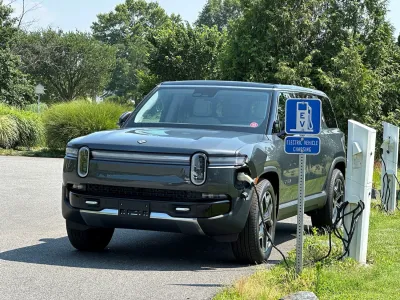
A Maryland law that requires all commercial EV chargers to be registered with and inspected by the state could have a chilling effect on the proliferation of EV charging infrastructure, reports Christine Condon in Maryland Matters.
The program will cost companies or property owners who want to offer paid public charging $150 per charging port, which Agriculture Secretary Kevin Atticks says will help cover the cost of regular inspections. “Inspectors will begin visual checks in January, Atticks said, ensuring that chargers are registered (and affixing decals confirming that) and clearly display key information like the responsible party and the method of sale.”
EV advocates say the fees could discourage businesses from installing chargers and slow the adoption of EV infrastructure in the state. The fees could most severely impact condo and apartment buildings where chargers aren’t used very often. Robert Borkowski, owner of EV charging company Plug IO, suggests that chargers at multifamily dwellings should be charged differently and that “the department should focus on fast-chargers being used by travelers in need of rapid power, rather than slower chargers used by building residents who are not necessarily in a rush to find a charge.”
Read the full story: Maryland’s EV charger inspection program rolls on, despite consumer, industry pushback
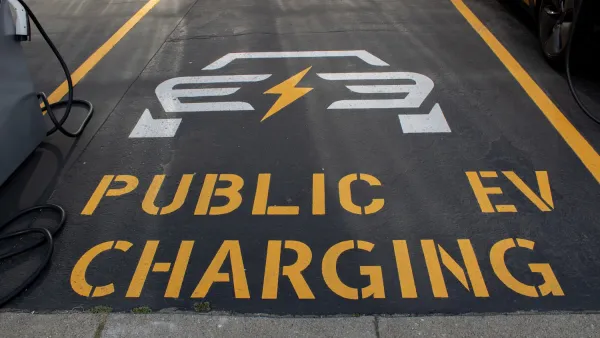
The Future of EV Charging Stations and Urban Planning
Explore the future of EV charging in cities and discover urban planning strategies for integrating electric vehicle infrastructure and promoting sustainable transportation.
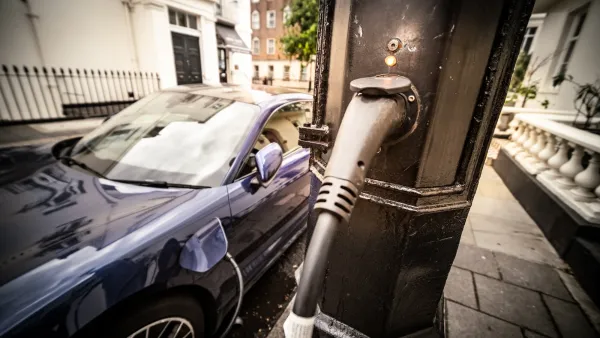
DC light poles will soon charge your electric car
The city awarded three grants to companies that will install more publicly available EV chargers.

DC Installing Public, Curbside EV Chargers in All Wards
DDOT hopes the pilot program will make EV charging easier and more accessible for residents in denser neighborhoods and apartment dwellers.

Planetizen Federal Action Tracker
A weekly monitor of how Trump’s orders and actions are impacting planners and planning in America.

California plans to bury El Niño’s downpour
If the state plays its cards right, it may be able to store a billion acre-feet of El Niño’s water in aquifers.

Desperate measures: Advocates weigh draining Lake Powell to fill Colorado River
Draining the reservoir could reduce evaporation losses by a couple hundred thousand acre-feet.

US buildings threatened, destroyed by fires set to triple by 2060
Researchers found a high fire risk for socioeconomically vulnerable neighborhoods in the American West.

LA residents may be allowed to paint their own crosswalks
Councilwoman Katy Yaroslavsky put out a motion instructing the Los Angeles Department of Public Transportation to study the feasibility of allowing volunteers to paint crosswalks.

Dallas moves to overhaul its zoning code
The city's zoning reform will allow more multi-family and mixed-use developments.

FREE Course: Walkable City 1: Why Walkability?
After describing his path towards focusing on walkability as the essence of good planning, Jeff Speck marches through his five principal reasons for making more walkable places.
Reinventing Malls: Planning Alchemy—Turning Gray Fields Into Gold
The course focuses on the opportunities and imperatives that shape reinvention of mall sites.

City of Rosemead
Rutgers University, Edward J. Bloustein School of Planning and Public Policy
One Hundred Miles
Hunter College, City University of New York (CUNY)
The Architects Foundation
University of Cincinnati Online
City of Cambridge
Montrose County
The Pocatello Development Authority