The history of the United States can be told through its roadways.


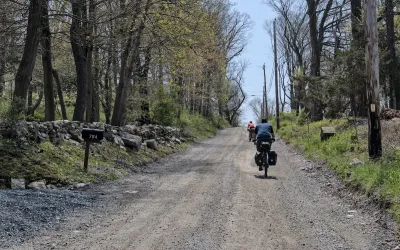
In a piece for Jalopnik, Abhik Das highlights five of the oldest roads in the United States, thoroughfares that often began as Native American routes or stagecoach routes.
Some of the oldest roads have been widened, paved, rerouted, and renamed. They run through bustling towns and sleepy suburbs, quietly reminding us that the foundations of American travel were laid centuries ago.
One of the country’s oldest roads, Old Mine Road, crosses from present-day New Jersey to New York and once served as a colonial ore-hauling trail. America’s first arterial road, the King’s Highway, stretched from Boston to South Carolina. Today, one segment, the Boston Post Road, still weaves its way from Boston to New York and is considered the nation’s oldest stretch of road.
For better or worse, roads — in one form or another — have shaped the history and development of the United States. From Native American migration routes to Pony Express routes to interstate highways, America’s history is plainly visible in the history of its roadways.
Read the full story: These Are The Oldest Roads In The U.S. Still Being Used Today

Analysis: What does America want from surface transportation reauthorization?
Over 13,000 comments were submitted in the federal Request for Information on surface transportation reauthorization. We analyzed all of them.
Follow Planetizen’s analysis of surface transportation reauthorization
Follow along as we explore the upcoming surface transportation reauthorization bill and its potential impacts on US transportation infrastructure in the coming years.

Five reasons infrastructure costs are spiking
State DOTs face a $86 billion shortfall over the next 10 years.

Planetizen Federal Action Tracker
A weekly monitor of how Trump’s orders and actions are impacting planners and planning in America.

The state-sanctioned urbicide of Austin
People don’t kill cities. Freeways do.

Colorado’s Largest Data Center Could Rise Next to Homes — Without a Public Hearing
The proposed campus would consume 11 times the power of Denver International Airport; as it has across the country, opposition mounts.

Nation's most wind-powered state turns to coal as data centers increase energy demand
For the first time in decades, Iowa has increased its generation of coal power.

NYC cools commuters with city's first rain garden above a bus stop
New York City officials say the plants in the rain garden can absorb 16 gallons of rainwater during heavy storms.

Brightline West’s future may rely on $6 billion federal loan
The company has until Nov. 2 to make a $400 million equity investment into its proposed high-speed rail line.

FREE Course: Walkable City 1: Why Walkability?
After describing his path towards focusing on walkability as the essence of good planning, Jeff Speck marches through his five principal reasons for making more walkable places.
Reinventing Malls: Planning Alchemy—Turning Gray Fields Into Gold
The course focuses on the opportunities and imperatives that shape reinvention of mall sites.

Greater Baltimore Committee
Eagle County Government
Harvard University Graduate School of Design
The Architects Foundation
University of Cincinnati Online
The Pocatello Development Authority
The Urban Renewal Agency of the City of Pocatello
Journal of the American Planning Association