As homeowners’ insurance companies and lenders increasingly factor climate risk into their business strategies, communities may see a resurgence of racial and economic exclusion that mimics redlining. But our hands aren’t tied.


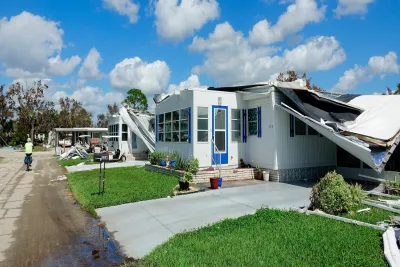
As climate disasters intensify, insurance companies are withdrawing from high-risk areas—a practice called “bluelining.”
Though not explicitly race-based, bluelining mirrors the effects of historical redlining, disproportionately harming low-income communities and communities of color, which already face greater climate vulnerability.
Authors from the Consumer Federation of America and The Greenlining Institute argue that this new form of financial exclusion could deepen racial and economic inequality unless policymakers act. They propose mandatory transparency in insurance pricing and claims data—similar to mortgage reporting under the Home Mortgage Disclosure Act—and state-level community reinvestment acts to ensure insurers contribute to local climate resilience instead of abandoning at-risk neighborhoods.
FULL STORY: Lessons from Redlining: How We Can Prevent Climate-Driven Insurance Discrimination

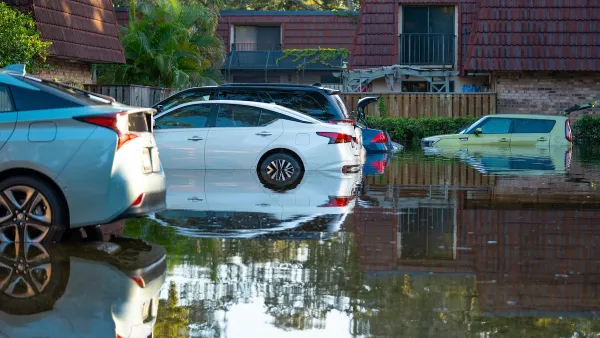
Auto Insurance Rates Spike Due to Extreme Weather
Car insurance costs around the country are going up as insurers receive more claims from areas struck by storms and other climate disasters.
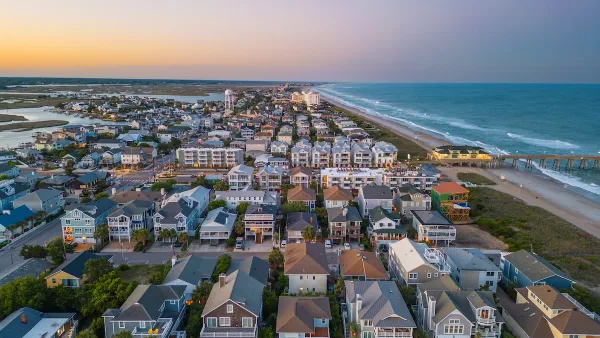
Rising Insurance Rates Squeezing Affordable Housing Developers
Spiking insurance costs in coastal areas prone to climate disasters are making it harder for low-income housing developers to keep building.

HUD Investigating Boston for “Redlining Against White People”
The agency says the city is breaking the law by prioritizing people of color in its affordable housing strategy.

Planetizen Federal Action Tracker
A weekly monitor of how Trump’s orders and actions are impacting planners and planning in America.

The state-sanctioned urbicide of Austin
People don’t kill cities. Freeways do.

US to reduce Colorado River water deliveries to Mexico
A new Colorado Treaty amendment reduces Mexico’s Colorado River water allocation by 250,000 acre feet.

Baltimore to break ground on $50 million Transit Priority Project
The project will bring faster bus trips, safer streets and better bike connections to Baltimore.

Airbnb launches $250 million 'last-dollar financing' housing accelerator, makes first investment in Austin
The company will put $6.4 million towards affordable housing development in Texas’ capital.

Guerilla urbanists are building DIY bus stop benches in Chicago
A before-and-after of one of the bus stops with a new bench. The new benches are not officially sanctioned or permitted, but the residents who placed them hope they will be the start of a network of DIY benches across the city.

FREE Course: Walkable City 1: Why Walkability?
After describing his path towards focusing on walkability as the essence of good planning, Jeff Speck marches through his five principal reasons for making more walkable places.
Reinventing Malls: Planning Alchemy—Turning Gray Fields Into Gold
The course focuses on the opportunities and imperatives that shape reinvention of mall sites.

Eagle County Government
Harvard University Graduate School of Design
Nashville Planning Department
The Architects Foundation
University of Cincinnati Online
The Pocatello Development Authority
The Urban Renewal Agency of the City of Pocatello
Journal of the American Planning Association