Roughly two-thirds of Bay Area workers are back in the office full-time.


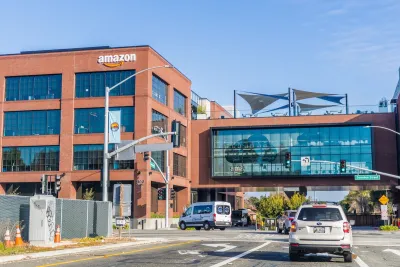
A new poll reveals that 63 percent of Bay Area workers are now back at the office full time, reports Ethan Baron in The Mercury News. This stands in contrast to last year, when half of the region’s workers were working fully in person.
According to Baron, “Remote and hybrid work schedules have played a villain’s role in the struggles of Bay Area downtowns, also hollowed out by society’s shift from in-person to online shopping.” Now, company executives are citing innovation, collaboration, and company culture as reasons to bring workers back. Amazon has asked its workers to return five days a week, while some companies, like Google and Apple, maintain hybrid policies.
Despite this, the office vacancy rate in the Bay Area is 24 percent, higher than the 19 percent national average, and many workers say they prefer to continue working remotely. If regional transit service takes a hit due to funding cuts (temporarily staved off by a $750 million state loan), it could further discourage workers from wanting to make the commute.
Paradoxically, the total number of visitors to downtown San Jose has grown by 7 percent since 2019. “Downtown Oakland saw just a 2% increase this year, to 3.6 million visitors, while downtown San Francisco received a 5% bump.”
FULL STORY: In-person work takes big leap in the Bay Area

Small Downtown Businesses Adapt to Fewer Office Workers
Businesses that traditionally serve commuters have had to make adjustments to stay in business as remote work empties out central business districts.
The Future of Central Business Districts
Urbanist Richard Florida assesses post-pandemic possibilities for neighborhoods that once relied on 9-to-5 workers.

Census Bureau: Remote Work Tripled Between 2019 and 2021
The percentage of Americans working primarily from home tripled to over 27 million people during the pandemic. Will the popularity of remote work last?

Planetizen Federal Action Tracker
A weekly monitor of how Trump’s orders and actions are impacting planners and planning in America.

The state-sanctioned urbicide of Austin
People don’t kill cities. Freeways do.

US to reduce Colorado River water deliveries to Mexico
A new Colorado Treaty amendment reduces Mexico’s Colorado River water allocation by 250,000 acre feet.

5 New England states march closer to 800 megawatt wind energy project
Securing federal approval for the project may be complicated under the Trump administration, which has historically been hostile towards domestic wind power.

Baltimore to break ground on $50 million Transit Priority Project
The project will bring faster bus trips, safer streets and better bike connections to Baltimore.

Airbnb launches $250 million 'last-dollar financing' housing accelerator, makes first investment in Austin
The company will put $6.4 million towards affordable housing development in Texas’ capital.

FREE Course: Walkable City 1: Why Walkability?
After describing his path towards focusing on walkability as the essence of good planning, Jeff Speck marches through his five principal reasons for making more walkable places.
Reinventing Malls: Planning Alchemy—Turning Gray Fields Into Gold
The course focuses on the opportunities and imperatives that shape reinvention of mall sites.

Eagle County Government
Harvard University Graduate School of Design
Nashville Planning Department
The Architects Foundation
University of Cincinnati Online
The Pocatello Development Authority
The Urban Renewal Agency of the City of Pocatello
Journal of the American Planning Association